.png)
-p-130x130q80.png)
When we talk about food logistics at Buske Logistics, we consider the processes involved to move food-grade products to be completely separate and unique, vs. an industry such as automotive. Why? Because moving food and food-grade materials comes with its own challenges and risks if not managed correctly. If done incorrectly, it can make a consumer sick, leading to significant lawsuits and irreparable harm to the responsible parties.
This guide breaks down what food logistics is, the pitfalls of food supply chains, and the solutions and best practices used by the best food logistics providers.
Food logistics is the end-to-end management of how food products move through the supply chain, from production and storage to distribution and final delivery. It focuses on accuracy, product integrity, compliance, handling discipline, and speed. In practice, food logistics connects growers, manufacturers, processors, distributors, retailers, and food service operators through coordinated transportation, warehousing, and inventory control.
Effective food supply chain logistics ensures the right product reaches the right destination on time, with full traceability and proper documentation. As food and logistics networks grow more complex, companies often rely on experienced 3PL food logistics partners to maintain consistency, reduce operational risk, and keep order flow predictable.
For insight into some of the top players shaping the food logistics industry today, check out our in-depth list of the top food logistics companies in North America.
While general logistics focuses on storage and movement, food logistics has stricter requirements and higher accountability. Key distinctions include:
Because of these heightened requirements, many companies transition from traditional providers to specialized food logistics companies who can support higher visibility, stronger inventory control, and more reliable throughput.
Food and logistics operations move under more pressure than most supply chains. Products age, demand shifts quickly, and documentation must be airtight. These challenges make it essential for companies to work with food logistics companies that can maintain accuracy, flow, and compliance at scale.
Even without cold storage, food products have strict shelf-life requirements. Manufacturers, distributors, and retailers rely on precise FIFO/FEFO rotation, batch tracking, and real-time visibility to avoid premature expiration, write-offs, or production delays. Poor rotation discipline is one of the fastest ways to lose margin in food supply chain logistics.
Food logistics operates under federal rules designed to protect product integrity and ensure safe handling practices. Many companies align their processes with the FDA’s Food Safety Modernization Act (FSMA), a standard that strengthens traceability, documentation, and preventive controls across the food supply chain.
Seasonal Demand and Volume Fluctuations
Food and logistics teams often deal with highly volatile volume - holidays, harvest seasons, retail promotions, and menu changes can dramatically shift demand. Without responsive labor, space planning, and transportation capacity, brands risk stockouts, backlogs, or service failures with retail and food service partners.
Food products, ingredients, and packaged goods require tight process control:
These operational details become difficult to maintain internally as a business scales. This is why many organizations turn to a 3PL food logistics company equipped with the systems, people, and processes to manage complexity.
Food transportation logistics must move fast, especially when products feed production lines or retail replenishment cycles. Delays at inbound receiving, poor dock management, or inefficient routing quickly cascade through the food supply chain. Reliable scheduling, short dwell times, and coordinated deliveries are essential to keep throughput stable.
Food logistics covers a wide range of services designed to keep product moving accurately, safely, and on time. The best food logistics companies combine strong processes, disciplined handling, and reliable transportation to support manufacturing, distribution, and retail networks. These are the core solutions companies rely on when partnering with a 3PL food logistics provider.
Food and logistics programs depend on organized, disciplined warehousing. This includes:
Strong inventory control reduces waste, prevents stockouts, and keeps production lines running smoothly.
Manufacturers often operate with tight production schedules and limited buffer stock. JIT delivery ensures ingredients, packaging, and finished goods arrive when needed, not hours early and not minutes late. A reliable 3PL food logistics partner supports:
This helps brands avoid downtime and maintain consistent throughput.
Restaurant supply chains move quickly and require dependable delivery cycles. Food service logistics solutions focus on:
These programs keep menus stocked, minimize shortages, and support predictable service levels.
Food supply chain logistics requires transparency. Leading 3PL food logistics companies leverage warehouse management systems (WMS) and integrated data tools for:
This level of traceability reduces risk and strengthens supplier relationships.
Even the best food and logistics networks face returns, rejected loads, overages, and occasional product recalls. Effective reverse logistics programs include:
A structured reverse logistics process protects brand reputation and minimizes operational disruption.
Food logistics grows more complex as brands scale - more SKUs, faster turns, tighter compliance, and higher expectations from retailers, distributors, and food service partners. This is where 3PL food logistics providers step in. A strong 3PL food logistics partner doesn’t just move product; they stabilize operations, improve flow, and give supply chain teams visibility and control.
Scalability without added overhead
Growing manufacturers and distributors often reach a point where internal teams and facilities can’t keep up with volume. A 3PL food logistics company provides the labor, space, and processes to expand quickly without new capital investment.
Disciplined warehousing and inventory accuracy
3PLs bring structured receiving, rotation, stock control, and order processing - the backbone of any successful food and logistics program.
Reliable transportation and distribution support
Integrated food transportation logistics helps keep production lines fed, store shelves stocked, and restaurant supply chains consistent. A 3PL coordinates routing, scheduling, and load management to reduce delays and keep dwell times low.
Compliance and documentation expertise
Food logistics requires strong paperwork, audit readiness, and traceability. Experienced 3PL providers use documented processes, quality checks, and digital systems to protect brands from compliance issues.
Improved throughput and on-time performance
With optimized labor, warehouse layouts, and transportation planning, 3PLs streamline product flow, reducing bottlenecks, preventing slowdowns, and keeping operations predictable.
Companies typically turn to a food logistics company when they experience:
A 3PL food logistics partner becomes especially valuable when internal systems hit capacity or when accuracy, scalability, or compliance issues begin to impact profitability.
Food logistics requires discipline, speed, and accuracy - and Buske is built for exactly that. As a proven 3PL food logistics partner for manufacturers, distributors, and retailers across the U.S., Buske delivers the operational consistency that food and logistics networks depend on every day.
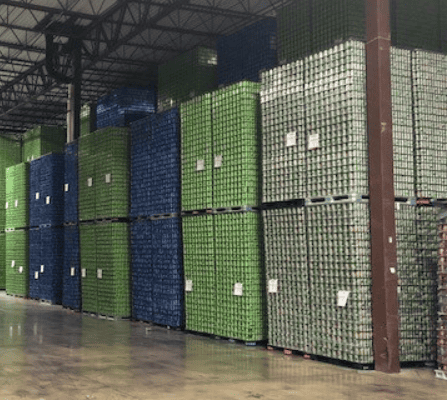
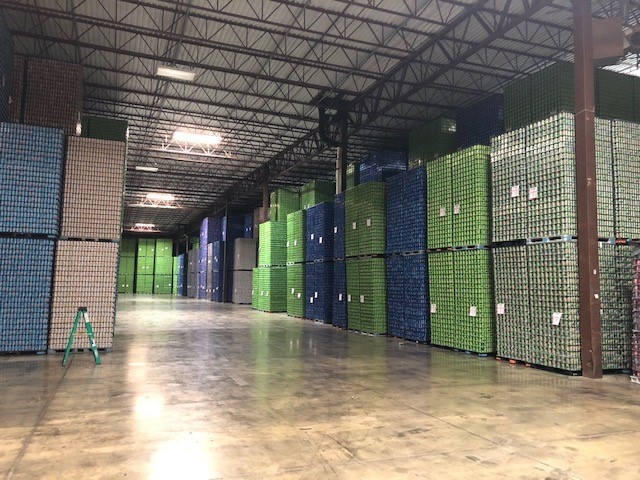
Buske manages high-volume food warehousing programs with strict receiving standards, clean environments, and accurate inventory control. Our teams are trained for FIFO/FEFO rotation, lot/batch tracking, and case-level handling - the essentials of a reliable food logistics company.
From scheduled line-feeding loads to distributor and retailer deliveries, Buske provides stable, predictable routing and transportation performance. Integrated food transportation logistics reduces dwell time, improves delivery reliability, and keeps supply chains moving.
Food supply chain logistics demands precision. Buske follows structured SOPs, audit-ready documentation, and traceable movement of all inbound and outbound products. Our compliance-driven approach helps brands meet FDA and industry requirements with confidence.
Whether it’s ingredient movement, packaged goods, restaurant supply chains, or last-mile distribution, Buske supports a wide range of food and logistics models. This cross-industry experience helps clients stabilize throughput, improve fill rates, and scale without disruption.
Buske operates as an extension of your team, aligning with your systems, KPIs, and production needs. We support flexible scaling, rapid onboarding, and tailored workflows built around each client’s operational requirements.
Food logistics is the coordinated process of storing, handling, transporting, and distributing food products through the supply chain with strict attention to safety, traceability, temperature control, and regulatory compliance. It covers every stage from manufacturing and inbound receiving to warehousing, order fulfillment, and final delivery to grocery retailers, foodservice operators, club stores, and direct-to-consumer customers. Effective food logistics relies on FDA-registered facilities, FSMA-aligned processes, HACCP plans, FIFO and FEFO rotation, lot-level traceability, and integrated WMS technology to ensure products move without delays, contamination, or quality loss. Companies like Buske Logistics specialize in food logistics across CPG, beverage, dairy, frozen, and ingredient supply chains.
Food logistics teams face complex challenges including shelf-life and expiration management, lot and batch tracking, temperature compliance, allergen segregation, regulatory documentation, inventory accuracy, retailer compliance, and fluctuating demand cycles tied to seasonality and promotions. Other common issues include FSMA recordkeeping, recall readiness, OTIF (On-Time In-Full) penalties from major retailers like Walmart, Kroger, Publix, Costco, and Target, cold chain integrity, and labor availability for high-velocity operations. Mistakes in any of these areas can result in product waste, rejected shipments, regulatory fines, or production line shutdowns. Operational discipline, validated SOPs, and experienced food-grade 3PL partners are essential to managing these challenges and maintaining consistent supply chain performance.
Compliance is critical in food logistics because it ensures that food products are handled, stored, transported, and documented according to federal and state food safety standards, protecting both consumers and brands. Key regulatory frameworks include the Food Safety Modernization Act (FSMA), FDA registration, USDA oversight for meat and poultry, HACCP plans, Good Distribution Practice (GDP), and audit standards such as AIB, SQF, and BRC. Non-compliance can lead to costly recalls, rejected shipments, retailer chargebacks, regulatory penalties, and serious damage to brand reputation. Food logistics providers like Buske Logistics maintain documented sanitation programs, integrated pest management (IPM), allergen controls, temperature monitoring, and audit-ready recordkeeping to ensure every shipment meets compliance requirements.
Food logistics companies provide a full range of services including FDA-registered warehousing, ambient and temperature-controlled storage, cross-docking, transloading, inventory control, lot and batch tracking, order processing, retail compliance, transportation management, reverse logistics, and value-added services such as kitting, repacking, labeling, and co-packing. Many also offer EDI integration, real-time WMS visibility, ASN reporting, and dedicated account management to support large CPG, beverage, and grocery shippers. Specialized providers like Buske Logistics support both B2B retail distribution to chains such as Walmart, Target, Publix, Kroger, Costco, and Sam's Club, as well as DTC and foodservice channels, giving food brands a single partner for omnichannel supply chain execution.
3PL food logistics improves supply chain efficiency by providing scalable labor, validated processes, advanced WMS technology, and reliable transportation networks that reduce delays, errors, and operating costs. Outsourcing to a food-grade 3PL like Buske Logistics gives manufacturers, distributors, and retailers access to FDA-registered facilities, FSMA-aligned compliance programs, and proven retailer routing expertise without the capital investment of operating their own warehouses. Shared infrastructure allows brands to flex capacity during peak seasons, expand into new geographies, and consolidate freight for lower transportation costs. The result is faster cycle times, higher inventory accuracy, stronger OTIF performance, reduced waste, and a more resilient food supply chain capable of meeting rising consumer and retailer expectations.
Food logistics sits at the center of production, distribution, and retail performance. With shelf-life pressure, compliance requirements, growing SKU counts, and rising customer expectations, brands need food logistics companies that can operate with precision and consistency. Strong food supply chain logistics protects margin, prevents disruption, and keeps product moving where it needs to go - on time, every time.
Buske Logistics brings the structure, reliability, and operational control that modern food and logistics networks demand. For manufacturers, distributors, or retailers looking to stabilize flow, improve accuracy, and scale without risk, Buske is a 3PL food logistics partner built for long-term performance.
If you need a food logistics company that delivers accuracy, consistency, and operational discipline every day, Buske is built for it. Our team supports high-volume food and logistics programs with reliable warehousing, inventory control, and transportation performance that keeps production and distribution moving without interruption.
Get a customized food logistics solution for your operation. Email us at info@buske.com or contact us to get started.

Buske Logistics is a Top 20 Private Warehousing 3PL. Let's build a solution for your supply chain.