.png)
-p-130x130q80.png)
Las marcas premium de alimentos para mascotas están creciendo rápidamente. Sin embargo, las fórmulas deshidratadas y liofilizadas vienen con estrictos requisitos de almacenamiento, seguridad y trazabilidad. Si se está dedicando al comercio minorista, ampliando las suscripciones o preparándose para las auditorías, necesita algo más que un almacenamiento básico.
Necesita un socio de 3PL de alimentos deshidratados para gatos y 3PL de alimentos para gatos liofilizados que comprenda la seguridad alimentaria, los controles ambientales y la distribución omnicanal.
Buske Logistics ofrece soluciones 3PL personalizadas para marcas de alimentos para gatos deshidratados y liofilizados que requieren un cumplimiento estricto de la seguridad alimentaria, trazabilidad de los lotes y una distribución escalable. Nuestros controles operativos y de almacenamiento aptos para alimentos están diseñados para ayudar a los fabricantes de alimentos de primera calidad para mascotas a vender a través de canales minoristas, comerciales y directos al consumidor.
UN comida para gatos deshidratada y liofilizada 3PL proporciona almacenamiento de calidad alimentaria, gestión de inventario, seguimiento de lotes y distribución de productos alimenticios para mascotas regulados pero no perecederos. Estos proveedores garantizan el cumplimiento de los requisitos de almacenamiento de alimentos para mascotas de la FDA y, al mismo tiempo, mantienen la integridad y la trazabilidad del producto.
A diferencia de los proveedores de logística de bienes de consumo generales, un 3PL especializado en alimentos para mascotas se basa en:
A pesar de que los productos deshidratados y liofilizados son perecederos, siguen siendo productos alimenticios regulados. Según la Administración de Alimentos y Medicamentos de los Estados Unidos, las instalaciones de alimentos para mascotas deben seguir los controles preventivos en virtud de la Ley de Modernización de la Seguridad Alimentaria (FSMA). Puedes revisar guía reguladora federal de alimentos para mascotas directamente de la FDA aquí.
Un 3PL estándar puede almacenar productos secos. Un 3PL especializado en alimentos liofilizados para gatos está estructurado para gestionar a gran escala las SKU de alimentos para mascotas regulados y de primera calidad.
Si está evaluando a los proveedores, comience por revisar nuestra Soluciones 3PL completas de alimentos y suministros para gatos para entender cómo los productos deshidratados y liofilizados encajan en una estrategia más amplia de logística para mascotas.
Logística de comida deshidratada para gatos requieren un almacenamiento apto para alimentos, un control de la humedad y un seguimiento preciso de los lotes para proteger la calidad del producto y mantener el cumplimiento de las normas.
Aunque la comida deshidratada para gatos no se puede almacenar, es muy sensible a las condiciones ambientales. Esto es lo que lo hace diferente:
Incluso pequeños aumentos de humedad pueden comprometer la textura, la vida útil y la seguridad del producto. Un alimento deshidratado para gatos 3PL debe mantener niveles de humedad controlados y monitorear las condiciones climáticas del almacén a diario.
Los productos deshidratados de primera calidad suelen utilizar:
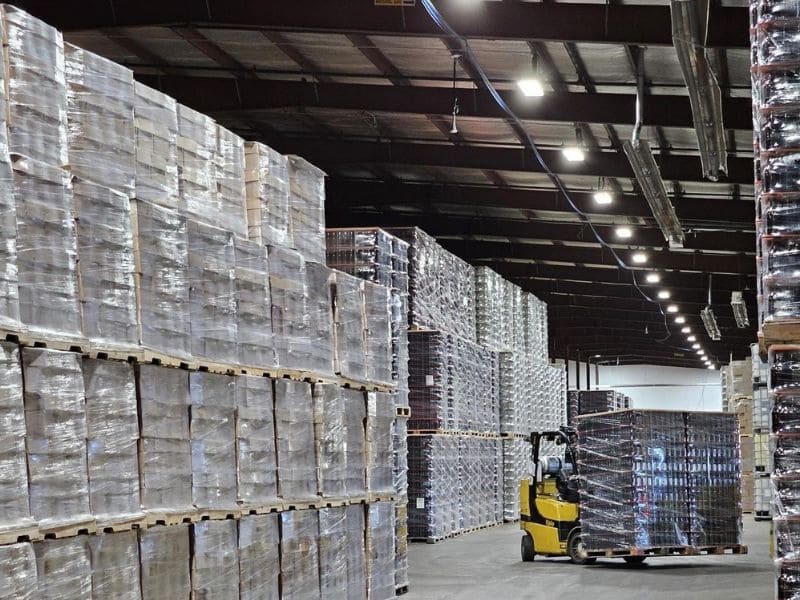
El apilamiento incorrecto de los palés o una manipulación deficiente pueden dañar el embalaje y comprometer la vida útil.
Debido a que estos productos son aptos para uso alimentario, requieren:
Las instalaciones que cumplen con los requisitos de almacenamiento de alimentos para mascotas de la FDA mantienen programas de control preventivo y registros de inspección escritos.
Las marcas premium suelen operar con:
Su socio logístico de alimentos para mascotas de larga duración debe respaldar la rotación impulsada por el sistema dentro del WMS para evitar el riesgo de caducidad.
La comida deshidratada para gatos a menudo se posiciona como un producto de primera calidad. Eso significa:
La precisión del inventario debe mantenerse por encima del 99% para evitar que se agoten las existencias y los pedidos pendientes.
La distribución de alimentos liofilizados para gatos debe cumplir con los estándares de almacenamiento alineados con la FDA, incluidos los protocolos de saneamiento, los controles documentados y la trazabilidad total a nivel de lote.
Si bien los alimentos liofilizados no se pueden almacenar, siguen siendo un producto alimenticio regulado bajo la supervisión de la FDA. Un alimento para gatos liofilizado 3PL que cumpla con las normas debe ser compatible con:
Las instalaciones deben mantener prácticas de zonificación y documentación aptas para alimentos que se ajusten a las regulaciones federales. El La FDA describe los requisitos de control preventivo aquí.
Esto incluye:
Su 3PL debe estar totalmente preparada para ser auditada en todo momento para cumplir de manera consistente con los estrictos estándares de venta minorista, de cumplimiento y reglamentarios exigidos por los principales minoristas y grandes almacenes. Los minoristas y las grandes superficies suelen requerir:
Aquí es donde el seguimiento de los lotes de alimentos para mascotas se vuelve absolutamente fundamental, ya que su proveedor debe poder responder de inmediato y ejecutar un proceso de retirada controlado y que cumpla con las normas sin interrumpir las operaciones más amplias. Si se produce una retirada del mercado, su proveedor debe:
Un entorno 3PL con temperatura controlada no siempre significa almacenamiento refrigerado. Para los productos deshidratados y liofilizados, la estabilidad es más importante que el almacenamiento en frío.
La mayoría de los productos liofilizados son perecederos pero sensibles a:
Las mejores prácticas ambientales incluyen:
La ubicación estratégica multirregional reduce el riesgo de degradación del producto durante los picos de calor del verano.
Si está evaluando socios, consulte nuestra Soluciones de almacenamiento aptas para alimentos.
Marcas premium de alimentos para mascotas dependen de la trazabilidad a nivel de lote dentro del sistema de gestión de almacenes de su 3PL para garantizar la preparación para la retirada y el cumplimiento normativo.
El seguimiento de los lotes de alimentos para mascotas no es opcional. Su WMS debe rastrear:
En Buske, el escaneo de códigos de barras está integrado en los procesos de recepción, recolección y envío para mantener una visibilidad total.
Si se produce un retiro del mercado, usted debería poder:
Para conocer las normas de cumplimiento, muchas marcas también hacen referencia a las directrices de la Asociación Estadounidense de Funcionarios de Control de Alimentos (AAFCO), que respalda estándares uniformes de seguridad alimentaria en todos los estados.
Puede obtener más información sobre nuestros Programas de cumplimiento y garantía de calidad.
Un 3PL personalizado permite marcas de comida para gatos deshidratada y liofilizada para escalar en los canales minoristas y de DTC sin comprometer el cumplimiento ni el control del inventario.
Las marcas premium de comida para gatos de hoy en día rara vez venden a través de un solo canal. Es posible que estés gestionando:
La administración de estos canales por separado crea un riesgo de fragmentación del inventario y de cumplimiento.
Una red 3PL integrada y con temperatura controlada admite:
Descubra cómo nuestros Servicios de cumplimiento omnicanal apoya a las marcas de mascotas.
También puedes revisar nuestra estrategia más amplia de logística para mascotas en nuestro Guía Pet Care 3PL.
Muchas marcas comienzan con la gestión logística interna o con un 3PL general. Sin embargo, el crecimiento introduce riesgos. Los factores desencadenantes comunes para cambiar a un pienso deshidratado especializado para gatos (3PL) incluyen:
A medida que su distribución crece, también lo hace la exposición regulatoria. Su 3PL debe crecer con usted.
El alimento para gatos deshidratado o liofilizado adecuado 3PL ofrece una infraestructura logística personalizada y segura para los alimentos diseñada para proteger la integridad del producto y apoyar el crecimiento empresarial.
Sí, los alimentos deshidratados y liofilizados para gatos requieren un almacenamiento apto para alimentos, controles ambientales y trazabilidad de los lotes. Un 3PL especializado garantiza el cumplimiento de los requisitos de almacenamiento de alimentos para mascotas de la FDA y, al mismo tiempo, protege la calidad del producto.
Los alimentos liofilizados para gatos no se pueden almacenar, pero son sensibles a la humedad y a las fluctuaciones extremas de temperatura. Un entorno 3PL con temperatura controlada ayuda a preservar la integridad del producto durante el almacenamiento y la distribución.
Los números de lote y las fechas de caducidad se rastrean en el sistema de gestión de almacenes a nivel de unidad o caja. Esto permite una respuesta rápida a las retiradas y el cumplimiento total de las normativas.
Sí, una 3PL personalizada puede respaldar los programas de distribución minorista, gestión logística en el mercado y suscripción a DTC dentro de una única red integrada. Esto reduce la fragmentación del inventario y mejora la eficiencia operativa.
Los requisitos de almacén alineados con la FDA incluyen programas de saneamiento, control de plagas, controles preventivos documentados, trazabilidad de lotes y protocolos de preparación para la retirada. Un 3PL de alimentos para mascotas que cumple con las normas incorpora estos controles en las operaciones diarias.
La logística de alimentos para mascotas no perecederos se refiere al almacenamiento y la distribución de productos alimenticios para mascotas que no requieren refrigeración, pero que deben mantener condiciones ambientales controladas y cumplir con las normativas.
El seguimiento de los lotes de alimentos para mascotas garantiza que cada lote pueda rastrearse durante el almacenamiento y la distribución. Esto protege a los consumidores, apoya las retiradas del mercado y mantiene el cumplimiento de la normativa.
Los productos alimenticios para gatos deshidratados y liofilizados exigen más que el almacenamiento general. Requieren un cumplimiento estructurado, estabilidad medioambiental y trazabilidad integrados en cada flujo de trabajo.
Si está ampliando la distribución minorista, ampliando las suscripciones a DTC o preparándose para las auditorías, es hora de ponerse en contacto con un socio especializado.
Proteja sus productos alimenticios para gatos deshidratados o liofilizados con una solución 3PL hecha a medida y apta para uso alimentario.
Hable con un especialista en logística de mascotas en Buske Logistics acerca de la distribución escalable y compatible diseñada para marcas de alimentos para mascotas de primera calidad.

Buske Logistics is a Top 20 Private Warehousing 3PL. Let's build a solution for your supply chain.