.png)
-p-130x130q80.png)

Cosmetics 3PL companies in the United States manage the end-to-end flow of beauty products from international origin to national distribution. Providers like Buske Logistics deliver structured infrastructure that supports compliant importing, scalable warehousing, and retail-ready distribution across the U.S.
At a high level, cosmetics 3PL providers handle:
Custom 3PL solutions enable cosmetics importers to streamline cross-border logistics while maintaining compliance and scalability. As outlined in Buske’s cosmetics logistics solutions, integrated transportation, warehousing, and distribution systems allow brands to efficiently move products from international origin to U.S. consumers and retail shelves without operational fragmentation.
Importing cosmetics into the United States requires compliance with labeling regulations, ingredient documentation, and customs clearance procedures enforced by the U.S. Food and Drug Administration (FDA). Products must meet federal safety standards and documentation requirements before entering U.S. commerce, as outlined in FDA guidance on cosmetic products and ingredients.
Key compliance requirements include:
Failure to meet these requirements can result in shipment delays, customs holds, or refusal of entry at U.S. ports. Implementing structured compliance and quality control inspections helps reduce regulatory risk and ensures products meet U.S. standards before distribution.
Cosmetics importers require structured customs coordination and integrated transportation workflows to move products efficiently from port of entry to warehouse. This includes accurate classification, complete documentation, and synchronized inland transportation to prevent delays and additional handling costs.
Core components of customs coordination and port-to-warehouse integration include:
Without integrated coordination between customs brokers, carriers, and warehouse teams, shipments can face clearance delays, increased dwell time at port, and disrupted inventory flow into distribution networks.
National cosmetics distribution requires warehouse networks capable of servicing retail, wholesale, and ecommerce channels across multiple regions. This includes strategically located facilities, synchronized inventory systems, and transportation networks designed to meet strict delivery timelines and retail compliance requirements.
Core components of national cosmetics distribution infrastructure include:
Providers like Buske Logistics operate nationwide distribution networks designed to support high-volume cosmetics distribution across retail, wholesale, and direct-to-consumer channels. With integrated warehouse management systems and established carrier relationships, inventory can be positioned closer to demand while maintaining visibility and control across all distribution points.
With integrated warehouse management systems and established carrier relationships, inventory can be positioned closer to demand while maintaining visibility and control across all distribution points. This becomes especially important when scaling cosmetic order fulfillment 3PL operations across ecommerce and retail channels.
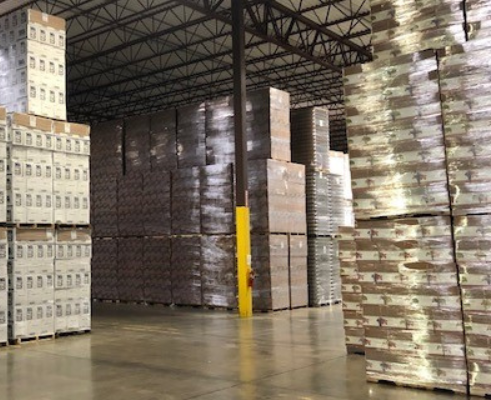
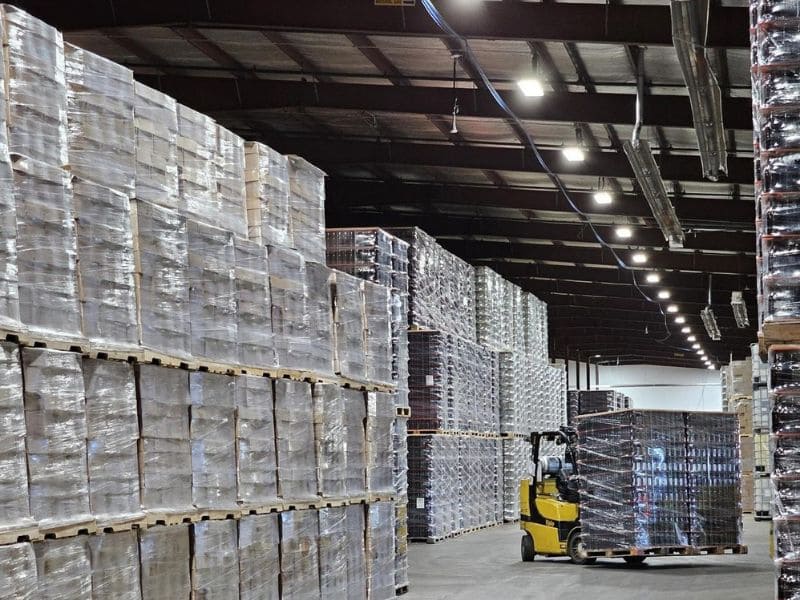
Transportation and warehousing of cosmetics must protect product integrity while meeting strict retail and distribution requirements. Products are often sensitive to temperature, handling conditions, and packaging standards, requiring controlled environments and precise logistics execution.
Products are often sensitive to temperature, handling conditions, and packaging standards, requiring controlled environments and precise logistics execution. This is where structured cosmetics warehousing and inventory management systems become critical to maintaining product integrity and inventory accuracy.
Key considerations in cosmetics transportation and warehousing include:
Managing these requirements at scale requires coordinated handling across transportation and warehouse operations. Providers like Buske Logistics implement structured processes to maintain product quality, ensure compliance with retail standards, and support consistent distribution across channels.
Cosmetics retail logistics requires strict routing adherence and EDI-enabled documentation systems to ensure shipments meet retailer-specific requirements. Non-compliance can result in chargebacks, rejected shipments, or delays in distribution.
Core components of retail distribution and compliance include:
Retailers enforce detailed compliance standards across packaging, labeling, and delivery execution. Strong retail distribution services ensure shipments meet routing requirements, documentation standards, and delivery timelines across major U.S. retailers.
Failure to meet these requirements can lead to financial penalties, strained retailer relationships, and disruptions in product availability across stores.
International beauty brands typically require a U.S.-based 3PL partner when logistics complexity increases beyond basic import and storage. This often happens as brands expand into regulated markets, scale distribution, or enter retail channels that require strict compliance and coordination.
Common triggers include:
At this stage, fragmented logistics processes can lead to delays, compliance risks, and inconsistent inventory flow. Providers like Buske Logistics offer integrated import, warehousing, and national distribution infrastructure designed to support growth without operational disruption.
The right U.S.-based cosmetics 3PL partner provides customized import coordination, regulatory compliance support, and scalable distribution systems aligned with long-term expansion goals.
3PL cosmetics importers manage freight coordination, customs documentation, FDA compliance support, bonded warehousing, inventory storage, and nationwide fulfillment. They streamline the end-to-end supply chain from international manufacturer to U.S. retail, Amazon FBA, and DTC distribution.
Yes, importing cosmetics into the United States is regulated by the U.S. Food and Drug Administration (FDA), which oversees product safety, labeling, and ingredient compliance. Importers must ensure proper documentation, facility registration, and adherence to federal regulations before products enter U.S. commerce.
Yes, a full-service cosmetics 3PL can manage international freight, customs clearance coordination, warehousing, inventory management, and retail distribution from a single U.S. facility. This integrated model reduces handling costs, improves inventory visibility, and accelerates time-to-market.
National cosmetics distribution requires strategically located warehouses, climate-controlled storage, WMS technology, barcode scanning systems, and strong carrier partnerships. Scalable labor planning and automated inventory controls are also essential to support retail compliance, eCommerce fulfillment, and high-volume shipping across the U.S.
Yes, experienced cosmetics 3PL providers handle Amazon FBA prep, labeling, carton compliance, and routing guide requirements for major U.S. retailers. This ensures shipments meet strict packaging, palletization, and documentation standards to avoid chargebacks and delays.
Once inventory is received and cleared, most 3PL warehouses can ship orders within 24-48 hours depending on order volume and cutoff times. With optimized carrier networks, ground shipping typically reaches most U.S. regions within two to four business days.
Using a U.S.-based cosmetics 3PL improves regulatory compliance, reduces customs delays, and enables faster retail and DTC fulfillment. It also provides centralized inventory control, lower shipping costs, and scalable infrastructure for national growth.
Entering or expanding within the United States cosmetics market requires more than warehousing. It requires structured import coordination, regulatory compliance, and scalable national distribution infrastructure. Without integrated transportation and warehousing systems, brands risk customs delays, retail penalties, and fragmented inventory that slows growth and impacts profitability.
Providers like Buske Logistics deliver enterprise-ready infrastructure designed to support compliant importation and long-term national distribution. With the right partner, brands gain operational control, regulatory confidence, and the scalability needed to grow across the U.S. market without disruption.
Build a U.S. cosmetics import and distribution strategy designed for compliance, scalability, and national retail success.
Talk to Buske Logistics about custom 3PL solutions built for cosmetics importers and expanding beauty brands.

Buske Logistics is a Top 20 Private Warehousing 3PL. Let's build a solution for your supply chain.