.png)
-p-130x130q80.png)
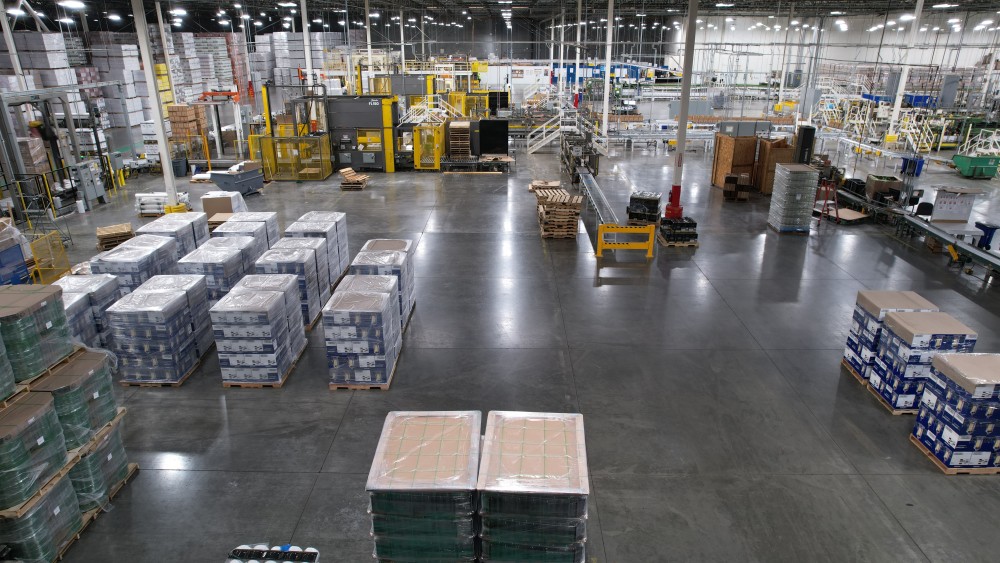
The advantages of 3PL for supplement fulfillment become clear when regulatory risk, channel complexity, and order volume begin to scale. For enterprise supplement brands, the advantages of a 3PL include:
Risk is one of the most underrated reasons to use a 3PL. You’re outsourcing the risk of overstaffing, a warehouse lease that can cost hundreds of thousands of dollars, prolonged start-up costs from never doing it before, extra overhead due to inexperience, and the list goes on.
At Buske Logistics, we work with supplement and nutrition brands that have reached this inflection point. They may already work with a 3PL, but what they often need is not another provider. They need custom 3PL solutions designed around regulated supplement logistics and enterprise growth.
For a deeper breakdown of how supplement fulfillment models are structured end-to-end, our guide on Custom 3PL Solutions for Supplement & Nutritional Brands walks through the full operational framework.
One of the biggest advantages of using a 3PL for any brand, especially supplements, is reducing the risk of operating a warehouse.
Reasons why it’s risky in more detail:
Supplements are also regulated under the Dietary Supplement Health and Education Act, with oversight from the FDA. Storage conditions, labeling accuracy, lot traceability, and handling procedures must comply with the FDA’s dietary supplement guidance.
When fulfillment processes are inconsistent, the risk sits with the brand.
If inventory is not stored properly or lot numbers are not tracked correctly, the liability can be costly. Warning letters, product holds, or retailer pullbacks can damage revenue and reputation quickly.
An experienced 3PL builds compliance into daily operations through documented procedures, controlled receiving, and lot-level tracking.
Retail partners and distributors often require documented processes before approving a supplier. If your fulfillment operation cannot produce clean documentation, you create friction at the partnership level.
A regulated supplement logistics partner maintains:
This makes audits manageable instead of stressful.
Recalls are rare, but they happen. When they do, the speed of your response determines the extent of the damage. If lot codes are unclear or inventory data is incomplete, isolating affected product becomes slow and expensive.
A compliant 3PL environment allows brands to isolate specific lots quickly and document the chain of custody. That level of control reduces both legal exposure and brand damage.
Large retailers such as Walmart and REI require structured documentation, lot traceability, and consistent service levels. That is where standard warehouse models begin to break down.
In-house teams often underestimate how much documentation supplement fulfillment requires. Manual tracking across spreadsheets or disconnected systems increases the chance of error.
A 3PL will provide an advanced warehouse management system (WMS) for a fraction of the cost, ensuring accurate documentation. As order volume grows, small documentation gaps become serious risks. Brands operating in regulated supplement logistics environments must maintain consistent documentation and traceability standards.
Outsourcing supplement fulfillment to a structured 3PL environment shifts documentation from reactive to standardized. Instead of chasing paperwork, your team operates within a system built for compliance.
Another major advantage of using a 3PL for supplement fulfillment is launch speed. For growing brands, working with a dedicated supplement order fulfillment 3PL reduces launch delays and removes internal bottlenecks.
Growth in supplements depends on how quickly you can move from product development to active sales. Delays in receiving, onboarding, or channel setup slow revenue before it even starts. A structured 3PL for supplement order fulfillment removes that friction.
Every new SKU requires:
In-house teams often rebuild parts of their process for every launch. That creates bottlenecks.
A 3PL with defined onboarding workflows shortens that cycle. New products move from dock to fulfillment-ready without internal restructuring. That speed compounds over time.
Supplement brands cannot afford inventory blind spots. Late receiving. Incorrect counts. Unclear lot tracking. These issues delay sales and create customer dissatisfaction.
A regulated supplement logistics environment uses structured inbound processes to:
That operational readiness supports revenue, not just logistics.
Most enterprise supplement brands do not sell in one place.
They manage:
Each channel has different requirements. Managing that complexity internally increases error rates and slows expansion.
A scalable 3PL integrates those channels into a single operational system. Orders flow through a centralized infrastructure without duplicating staff or processes.
Supplements are growth-driven categories. Brands regularly introduce new formulas, flavors, or bundle configurations. Generic fulfillment models struggle with SKU proliferation. Custom 3PL solutions are designed to handle SKU growth without operational breakdown.
For brands scaling beyond startup volume, this is where the advantages of a 3PL for supplement fulfillment become measurable.
When speed-to-market improves, opportunity cost decreases. Marketing campaigns convert. Retail launches stay on schedule. Growth feels controlled instead of chaotic.
One of the most misunderstood advantages of using a 3PL for supplement fulfillment is cost structure.
This is not about chasing the lowest price per order. It is about building a cost model that supports growth without locking you into fixed overhead.
In-house fulfillment requires:
Those are fixed costs. They remain even if order volume fluctuates.
A supplement order fulfillment 3PL converts most of those into variable costs tied to actual order volume. When demand rises, you scale. When demand softens, you are not carrying unused space and payroll.
That flexibility improves financial predictability.
Regulated supplement logistics often requires climate control, documented storage standards, and structured inventory systems. Building that infrastructure internally requires capital.
A 3PL already operates within structured warehouse environments built to handle regulated products. Brands leverage that existing infrastructure instead of funding it themselves.
For enterprise brands, that capital can be redirected toward product development, marketing expansion, or other enterprise fulfillment benefits that directly drive growth.
Hiring warehouse staff is not just about headcount. It involves training, supervision, turnover management, and process control. As supplement brands grow, labor complexity increases quickly.
A 3PL absorbs that responsibility. Operational teams are already trained, structured, and accountable to service-level agreements. Leadership no longer manages warehouse hiring cycles.
Shipping costs in supplements can vary significantly based on weight, packaging, and carrier selection. 3PL environments often secure stronger carrier relationships due to aggregate shipping volume.
More importantly, routing systems and packaging processes are optimized to reduce errors and avoid unnecessary dimensional weight charges. The result is more stable per-order economics.
For enterprise brands evaluating long-term growth, the advantages of using a 3PL for supplement fulfillment become clear when cost stability supports expansion instead of restricting it.
One of the less obvious advantages of using a 3PL for supplement fulfillment is leadership clarity. Fulfillment problems rarely stay in the warehouse. They escalate to founders, operations leaders, and executive teams.
When internal teams spend time solving pick errors, investigating inventory discrepancies, or managing staffing shortages, growth slows. Outsourcing supplement fulfillment changes that dynamic.
Enterprise supplement brands need leadership focused on expansion, not daily warehouse troubleshooting. If fulfillment requires constant oversight, your structure is under pressure.
A 3PL for supplements moves day-to-day execution to a team built for it. Leadership can step out of operational firefighting.
Supplement markets move fast. New formulations, packaging updates, and bundle strategies require speed and flexibility. When internal resources are consumed by fulfillment management, innovation slows. A scalable 3PL environment supports product changes without forcing internal process rebuilds.
Marketing campaigns only work when fulfillment can support demand. If spikes in volume cause backlogs or stockouts, growth initiatives lose momentum.
A 3PL built for enterprise fulfillment benefits can absorb volume fluctuations without disrupting service levels. Marketing teams gain confidence that operations can keep up.
As brands grow, operational maturity becomes part of the story. Investors and retail partners look for structured systems, not founder-managed warehouses.
Using custom 3PL solutions signals that fulfillment is scalable, compliant, and structured for enterprise growth. For many enterprise brands, this is the point where the advantages of a 3PL outweigh maintaining internal control.
As supplement brands scale, fulfillment structure becomes part of their competitive strategy.
Many large supplement companies rely on structured 3PL models to manage compliance and multi-channel complexity. You can see how that plays out in our breakdown of 3PL Solutions Used by Major Supplement & Nutritional Brands.
Not every supplement brand needs to outsource immediately. Early-stage brands with low order volume and simple SKU structures can often manage fulfillment internally.
But certain signals show when in-house fulfillment starts limiting growth.
If your team is consistently:
Your infrastructure is under pressure.
When daily order volume becomes unpredictable or consistently high, scaling internally requires hiring, training, and expanding warehouse space.
At that stage, transitioning to a structured supplement order fulfillment 3PL often becomes the more scalable option.
If regulatory documentation feels reactive instead of structured, risk exposure is rising.
Questions to consider:
If the answer is uncertain, choosing to outsource supplement fulfillment to a regulated supplement logistics partner may significantly reduce operational and compliance risk.
Managing DTC, Amazon, retail, wholesale, and subscription channels from a single internal operation increases error rates.
Each channel has different requirements for:
As channel complexity grows, fulfillment mistakes multiply. A centralized 3PL structure absorbs that complexity under one system.
Rising pick errors, inventory mismatches, or delayed shipments are warning signs. Small errors at low volume become expensive problems at scale.
When operational friction starts affecting customer experience or retail relationships, the advantages of using a 3PL for supplement fulfillment become measurable.
For enterprise brands operating in regulated environments, the shift to custom 3PL solutions is rarely about convenience. It is about control.
If your brand is experiencing sustained growth, increasing compliance demands, or operational strain, it may be time to reassess whether in-house fulfillment is still serving your long-term strategy.
The main advantages of using a specialized 3PL for supplement fulfillment include regulatory risk reduction, compliance assurance, scalable infrastructure, operational efficiency, lower fulfillment costs, and faster product launches. For enterprise dietary supplement brands, outsourcing reduces FDA exposure under 21 CFR Part 111 cGMP requirements, improves audit readiness, stabilizes cost structures as volume grows, and provides immediate access to enterprise WMS technology, EDI integration, and retailer compliance with chains like Whole Foods, GNC, Vitamin Shoppe, Sprouts, Costco, and Amazon. A specialized supplement 3PL also delivers parcel volume discounts, batch and lot traceability, expiration management, and integrated DTC and subscription fulfillment through Shopify, Amazon, BigCommerce, WooCommerce, and TikTok Shop. Buske Logistics combines over 100 years of food grade contract warehousing with custom supplement programs.
Yes. Dietary supplements and nutraceutical fulfillment are regulated in the United States under FDA oversight, including the DSHEA, cGMP requirements, FSMA where applicable, FTC oversight of marketing and label claims, and Proposition 65 in California. Supplement brands are responsible for proper storage, accurate labeling, lot and batch traceability, allergen controls, Certificate of Analysis (CoA) recordkeeping, and complete documentation that supports FDA inspections, audit readiness, and rapid recall response. Fulfillment processes must include FDA registered facilities, FEFO (First Expired First Out) rotation, sanitation programs, integrated pest management (IPM), and validated SOPs. Buske Logistics maintains documented compliance programs, audit ready facilities, and trained operators that help supplement brands meet regulatory and retailer requirements while scaling across channels.
In house supplement fulfillment typically stops making sense when order volumes outgrow internal capacity, channel complexity expands beyond a single DTC store, regulatory documentation becomes harder to maintain, retailer compliance demands increase, or leadership is spending more time solving warehouse issues than driving growth. Common triggers include surpassing 200 to 500 orders per day, expanding into Amazon, Whole Foods, GNC, Vitamin Shoppe, Sprouts, or Costco, launching subscription DTC programs, entering international markets, or facing FDA inspections that reveal documentation gaps. Other indicators include rising labor costs, weak expiration management, missed retailer routing guides, slow new SKU launches, and inability to scale during peak seasons. At this stage, a specialized 3PL like Buske Logistics provides stronger cGMP aligned compliance controls, automation, dedicated infrastructure, and retailer expertise that frees brand leaders to focus on product, brand, and growth.
Yes, when outsourcing is done with a 3PL specifically structured for regulated supplement logistics. Specialized supplement 3PLs reduce operational risk through standardized SOPs, documented sanitation and pest control programs, lot level tracking through enterprise WMS, allergen controls, FEFO rotation, segregated holds for quarantined product, mock recall testing, and audit ready recordkeeping that meets FDA and retailer expectations. These controls reduce recall exposure, FDA warning letter risk, retailer chargebacks, audit stress, and the cost of customer experience failures from expired or mislabeled products. Strong 3PLs also maintain trained operators, documented training records, and continuous improvement programs that compound risk reduction over time. Buske Logistics applies these structures across its food grade operations, helping supplement brands protect compliance, brand reputation, and consumer trust at scale.
Yes. A reputable supplement 3PL is designed to absorb seasonal spikes, product launches, viral demand moments, promotional surges, and influencer driven growth without requiring brands to hire internal warehouse staff or expand facility space. Strong 3PLs use flexible labor pools, surge cross docking, multi facility coordination, parcel carrier diversification, and pre built peak season playbooks designed for events like New Year wellness surges, Q4 holiday gifting, Black Friday and Cyber Monday, and major retailer launches at Amazon, Costco, and GNC. This stability protects customer experience, retailer relationships, and OTIF (On Time In Full) performance during high demand periods. Buske Logistics supports supplement brands with proven scalability and dedicated account management designed to anticipate growth and remove operational friction.
For regulated supplement brands operating at scale, custom 3PL solutions provide significantly better alignment than generic shared fulfillment models because they are structured around cGMP compliance, SKU complexity, lot traceability, and multi channel operations rather than basic pick and pack execution. Standard fulfillment providers often rely on rigid pricing, limited SKU flexibility, weak compliance controls, and one size fits all workflows that struggle with regulated dietary supplements. Custom 3PLs build dedicated workflows, KPIs, WMS configurations, custom SOPs, and retailer routing programs around each brand's exact needs, including allergen controls, audit readiness, and CoA management. This tailored approach reduces compliance risk, improves OTIF performance, and supports new product launches and retailer expansions. Buske Logistics delivers custom supplement 3PL programs designed for emerging brands and large enterprise wellness shippers.
If your brand is growing, expanding channels, or preparing for retail and investor scrutiny, fulfillment structure matters. The right supplement order fulfillment 3PL does more than ship boxes. It reduces liability, supports compliance, and creates operational stability at scale.
Build a supplement fulfillment strategy that reduces risk and supports long-term growth. Talk to Buske Logistics about custom 3PL solutions designed for regulated supplement brands.

Buske Logistics is a Top 20 Private Warehousing 3PL. Let's build a solution for your supply chain.