.png)
-p-130x130q80.png)
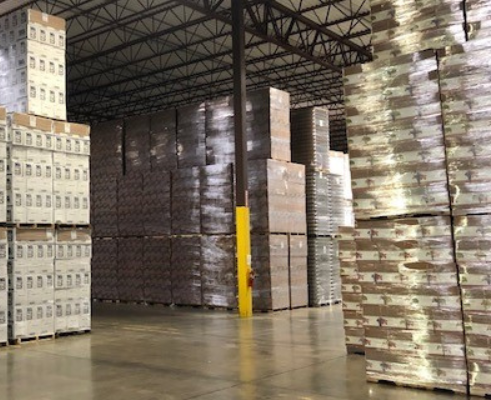
3PL warehouse services are any activity within a warehouse that can be outsourced to a 3rd party, or a separate company.
Typically, those services include anything from inbound receiving to outbound shipment:
In this complete guide to 3PL warehouse services, you'll understand what they are, how they work, and what you should know about each if you're engaging a 3PL provider to meet your needs.
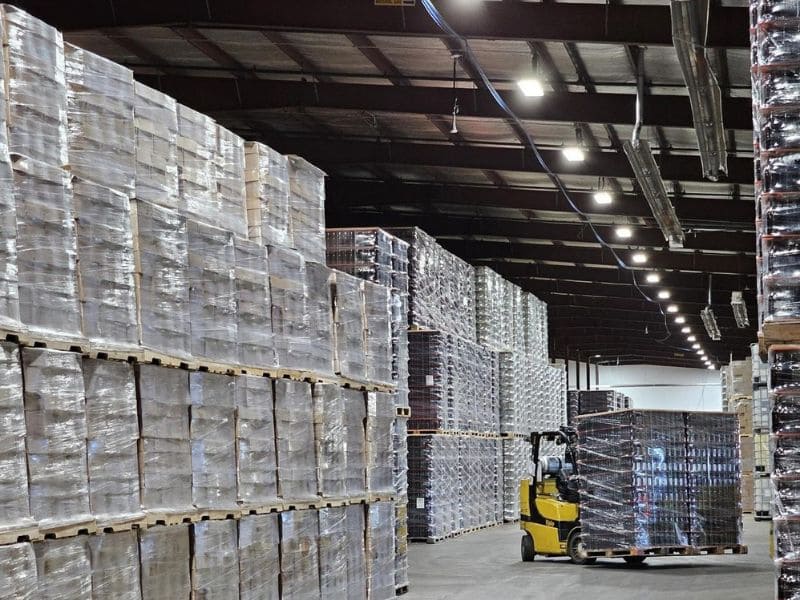
A 3PL warehouse (third-party logistics warehouse) is a facility operated by a logistics provider that stores, manages, and moves inventory on behalf of businesses. Instead of owning warehouse space, hiring staff, and managing systems, companies outsource these responsibilities to a specialized partner.
In simple terms, a 3PL warehouse handles your inventory so you can focus on growing your business.
A 3PL warehouse provides:
A standard warehouse is just space. You are responsible for staffing, systems, equipment, and daily operations. A 3PL warehouse, on the other hand, includes:
This model is especially common across the 3PL warehouse USA market, where businesses need national reach and flexible capacity without long-term commitments.
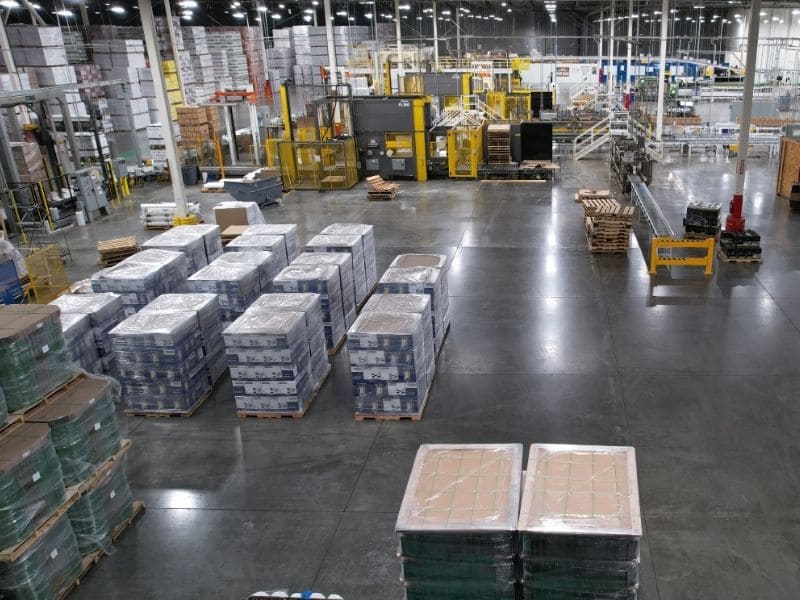
3PL warehouse services go far beyond storing pallets. Modern 3PL warehouse solutions are designed to support complex supply chains, multiple sales channels, and fast delivery expectations.
Effective control of inventory ensures smooth operations across the supply chain. The goal is accuracy, visibility, and lower carrying costs.
3PL warehouses offer different storage options depending on your products:
Inventory services typically include:
Streamlined processes ensure orders are accurate and shipped on time. This helps businesses meet faster delivery timelines without expanding internal teams. Most 3PL warehouse services include fulfillment for:
Core fulfillment activities include:
These services are especially valuable for retail, CPG, and promotional products. Value-added services allow customization without internal labor:
Efficient planning and route optimization ensure goods reach their destination reliably. This reduces transit times and shipping costs. While a 3PL warehouse focuses on storage, many providers like Buske support outbound distribution through:
Advanced systems provide instant insights into inventory and order status across all locations. This level of visibility is difficult and expensive to build in-house. A modern 3PL warehouse runs on advanced WMS technology that provides:
Strict adherence to regulations and safety protocols protects both employees and assets. This reduces risk and ensures consistent operations. 3PL warehouse providers manage:
A 3PL warehouse manages every step of the supply chain, from receiving goods to shipping them to customers. Understanding how a 3PL warehouse operates helps set expectations and build trust.
Step 1: Receiving
Inbound shipments are scheduled, unloaded, counted, and entered into the WMS.
Step 2: Quality Inspection
Products are inspected for damage, accuracy, and compliance before storage.
Step 3: Putaway & Storage
Inventory is stored in optimized locations based on SKU velocity and handling needs.
Step 4: Picking & Fulfillment
Orders are picked using system-directed workflows to minimize errors.
Step 5: Packing & Value-Added Handling
Orders are packed, labeled, and prepared for shipment, including any VAS requirements.
Step 6: Shipping
Orders are shipped using optimized carriers and routes.
Step 7: Inventory Control & Reporting
Ongoing reporting provides insight into inventory levels, order accuracy, and performance metrics.
Outsourcing can help when internal resources are stretched or operations become too complex to manage efficiently. Many businesses wait too long before outsourcing warehousing. Common signs include:
If several of these apply, a 3PL warehouse solution may be the smarter move.
Partnering with a 3PL allows companies to focus on core operations while experts handle logistics. Outsourcing warehousing delivers measurable business outcomes including:
Many companies partner with providers like Buske to gain these benefits through scalable warehousing solutions. Learn more about our contract warehousing options.
In-house warehousing may work for stable, low-growth operations. A 3PL warehouse is often better for growing, seasonal, or multi-channel businesses.
Choosing the right 3PL warehouse provider is critical to your business’s success. The ideal partner should align with your business goals, offer the flexibility to scale as you grow, and communicate transparently at every stage. A strong 3PL should feel like an extension of your team; not just a vendor.
When evaluating potential partners, look for the following:
Asking the right questions ensures the partnership meets your operational and growth needs. Before signing, ask:
Understanding the cost of a 3PL warehouse is essential for accurate budgeting and long-term planning. Transparent pricing models allow businesses to forecast expenses more effectively and avoid unexpected fees.
3PL warehouse pricing typically depends on several key factors, including:
See how different companies are using 3PL warehouses to keep up with growth, ship faster, and simplify operations. From busy eCommerce brands to seasonal businesses, these examples show how smart logistics can make scaling easier and more efficient.
eCommerce Brand: Uses a 3PL warehouse to manage rapid order growth and fast shipping.
CPG Company: Leverages national distribution without building new facilities.
SKU-Heavy Business: Improves inventory accuracy and visibility.
Seasonal Brand: Scales space and labor up and down without risk.
Companies choose Buske as their 3PL warehouse partner because of its proven reliability, scalable solutions, and commitment to transparency. Businesses partner with Buske for:
Explore Buske’s warehousing solutions for more details.
A 3PL warehouse helps businesses reduce costs, improve fulfillment, and scale with confidence. As supply chains continue to evolve in 2026, outsourcing warehousing earlier can create long-term advantages.
If you’re looking into 3PL warehouse services, the next step is an easy, no-pressure conversation. Contact Buske to explore your options today.
A 3PL warehouse is a third-party logistics facility that stores inventory and manages order fulfillment, shipping, and distribution on behalf of brands, retailers, and ecommerce businesses. Instead of operating their own warehouse, companies outsource receiving, storage, pick and pack, shipping, and returns processing to a 3PL provider that owns or leases the facility and supplies the technology, labor, and carrier relationships.
This lets businesses scale logistics without capital investment in real estate, equipment, or staff, while gaining access to professional warehouse management systems (WMS), trained labor, and pre-negotiated freight rates.
3PL warehouse services work by managing the full lifecycle of inventory inside the warehouse, from inbound receiving through outbound shipping. The 3PL receives inbound shipments at the dock, verifies and puts away inventory, tracks every SKU through a warehouse management system (WMS), picks and packs orders as they come in from connected sales channels via EDI or API integration, and ships them through pre-negotiated carriers like FedEx, UPS, USPS, and LTL freight providers. Most 3PL warehouses also handle returns, reverse logistics, kitting, labeling, and other value-added services as part of the same workflow.
The main benefits of outsourcing warehousing to a 3PL are lower overhead costs, faster scalability, improved fulfillment speed, and better inventory visibility through advanced technology. Partnering with a 3PL eliminates the capital expense of leasing warehouse space, buying equipment, and hiring labor, and converts those fixed costs into variable, pay-as-you-go pricing tied to actual storage and order volume.
Businesses also gain immediate access to multi-node distribution networks, WMS and OMS software, pre-negotiated carrier rates, and the operational flexibility to scale up during peak season without long-term commitments.
To choose the best 3PL warehouse provider, evaluate candidates on technology capabilities (WMS, OMS, EDI/API integrations), order accuracy and on-time shipping rates, geographic footprint and proximity to your customer base, industry experience, scalability, customer support, and transparency in pricing and reporting.
The right 3PL partner should integrate cleanly with your ecommerce platform (Shopify, Amazon, BigCommerce, NetSuite, or your ERP), provide real-time inventory and order visibility, offer references from similar-sized or industry-matched clients, and clearly explain every fee in their pricing model. A facility tour and a service level agreement (SLA) review before signing are both strongly recommended.
3PL warehouse costs typically include receiving fees (charged per pallet, carton, or unit), storage fees (charged per pallet position, bin, or cubic foot per month), pick and pack fees (per order or per item), shipping costs (passed through with markup or discount), and account management or onboarding fees.
Total cost varies based on storage requirements, monthly order volume, SKU count, value-added services like kitting or labeling, special handling needs (climate-controlled, hazmat, or FDA-regulated), and the complexity of integrations. For most small and mid-sized brands, 3PL warehouse fulfillment costs range from a few dollars per order for simple items to significantly more for bundled, regulated, or specialty products.
The industries that benefit most from 3PL warehousing include ecommerce and direct-to-consumer (DTC) brands, retail and consumer packaged goods (CPG), food and beverage, health and beauty, apparel and footwear, automotive and aftermarket parts, healthcare and pharmaceuticals, industrial manufacturing, and seasonal or promotional businesses.
These sectors gain the most value from 3PL warehousing because they typically deal with fluctuating order volumes, complex retail compliance requirements, multi-channel sales, or specialized handling needs that an experienced 3PL can handle more efficiently than an in-house operation. A specialized 3PL also provides regulatory expertise for industries with strict requirements like FDA, TTB, FSMA, or DOT compliance.
Yes, most 3PL warehouses provide end-to-end fulfillment and distribution services, including inbound receiving, inventory storage, pick and pack, packaging and labeling, shipping through parcel, LTL, and truckload carriers, last-mile delivery coordination, and returns processing.
Many 3PLs also support both B2B wholesale distribution (pallet-level shipments to retailers and distributors) and direct-to-consumer (DTC) fulfillment (individual ecommerce orders) from the same facility, with separate workflows, packaging, and compliance processes for each channel. This combined fulfillment and distribution capability is one of the main reasons brands choose 3PL warehousing instead of building self-managed operations.

Buske Logistics is a Top 20 Private Warehousing 3PL. Let's build a solution for your supply chain.