

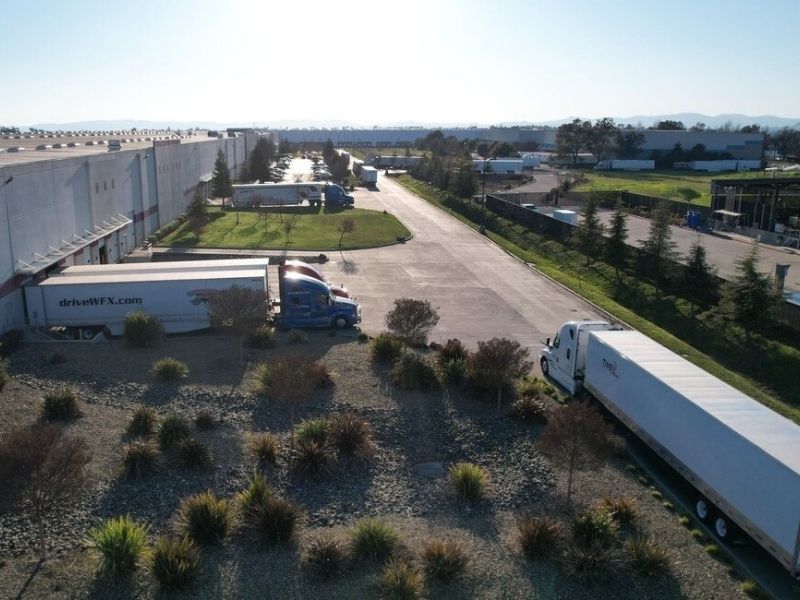
Dedicated transportation services give shippers exclusive use of a carrier's trucks, drivers, and routes, contracted specifically for their freight lanes and schedules. Unlike common carriers or spot freight, you are not sharing capacity with other shippers or subject to unpredictable availability.
If your operation runs consistent freight volumes on predictable lanes, this model is built for exactly that scenario.
If your business moves consistent freight volumes along established routes, dedicated transportation can give you greater control over capacity, delivery schedules, and costs. The following sections explain how this model works, what to expect, and how it can help your business streamline transportation operations.
Dedicated trucking services operate on a contract model. A logistics provider assigns a specific set of assets, trucks, drivers, and routes, exclusively to your account for the duration of the agreement.
The provider handles fleet management, driver compliance, Hours of Service tracking, and route planning. You get the predictability of a private fleet without the capital cost or operational burden of owning one.
This is distinct from contract transportation, where the broader arrangement may include multiple service types and lanes managed under a single agreement. Dedicated transportation is a narrower commitment: defined assets, defined routes, defined schedules.
What we often see with manufacturers and distributors is that they outgrow spot freight long before they realize it. Late deliveries start eating into production time, and it usually takes a full quarter of tracking the impact before they understand what it's really costing them.
A dedicated fleet services arrangement typically starts with a lane and volume analysis. The provider maps your freight flows, identifies your peak and baseline volumes, and designs a fleet configuration to match.
From that point forward, the provider owns the operational layer. Here is what that includes:
The trade-off is contractual commitment. You are agreeing to minimum volume thresholds. If your freight drops significantly below that threshold, you may still pay for capacity you are not fully using. That is not a flaw in the model; it is the cost of guaranteed availability.
Fleet management is where the operational complexity lives, and it is also the strongest argument for outsourcing to a 3PL with dedicated shuttle services capability.
A qualified transportation provider manages regulatory compliance across applicable jurisdictions, including FMCSA safety requirements. This includes maintaining driver qualification files, monitoring CSA safety data, and managing carrier safety ratings.
Outsourcing transportation also shifts equipment procurement, depreciation, and replacement planning off your balance sheet, reducing internal administrative and capital burdens.
Beyond compliance and equipment costs, outsourcing also reduces the administrative burden of driver management, including recruiting, turnover, payroll, and driver relations. With 40+ facilities across the U.S. and Canada, Buske Logistics brings established recruiting pipelines and compliance infrastructure to help businesses manage these responsibilities more efficiently.
The headline rate from a common carrier often looks cheaper. However, the per-load rate does not always reflect the true cost of transportation.
With common carriers, you're competing for capacity in the open market. During tight capacity cycles, rates spike, load rejections increase, and tender acceptance can fall below production needs. MIT research confirms that rejected loads can force shippers into the spot market, increasing costs and supply chain uncertainty.
When comparing the total cost of transportation, businesses should consider:
Companies that account for these additional expenses frequently find that dedicated transportation is the more cost-effective model. However, it typically requires consistent shipping volume to justify the contract structure.
For shippers managing retail replenishment, Buske's retail freight solutions help address strict retailer appointment windows, compliance requirements, and penalties for missed deliveries, providing more consistent transportation support.
Scheduled delivery programs are one of the strongest use cases for dedicated transportation. Businesses running daily or weekly replenishment to the same distribution centers, plants, or stores can benefit from fixed routes, predictable schedules, and consistent capacity.
Dedicated shuttle services are a specific application, providing closed-loop, high-frequency transportation between locations such as suppliers and assembly plants or distribution centers and cross-docks. With a fixed operating cycle, businesses gain visibility into:
Buske operates dedicated shuttle programs for automotive and manufacturing clients where transportation schedules are measured in hours, not days. For Stellantis-tier supply chain operations, a missed shuttle can result in production delays rather than just a service failure.
The regional shipping services complement dedicated routes by covering lanes outside the core dedicated network, helping businesses maintain reliable transportation without relying entirely on the spot market.
Pricing for dedicated transportation is built around asset commitment, not per-load rates. Expect cost structures that include:
There is no single published rate for dedicated transportation because the model is scoped per shipper. Lane density, miles per driver per day, loading and unloading complexity, and equipment type all shape the final cost.
What we consistently observe is that shippers comparing dedicated transportation against spot rates are comparing the wrong things. The right comparison is dedicated transportation against the full loaded cost of their current approach: spot rates plus expedites plus detention plus the internal labor managing those exceptions.
The drayage trucking services model at Buske illustrates this point well. Port and rail ramp drayage is highly time-sensitive. Shippers who have tried to manage drayage on spot find that detention and demurrage charges often exceed the rate savings they were targeting.
Dedicated transportation is a strong fit when:
It is not a fit when freight is highly seasonal, when lanes shift frequently, or when volumes are too low to justify the minimum commitment in a contract. In those cases, contract transportation programs with broader flexibility, or LTL arrangements, serve better.
Brands like PepsiCo, Molson Coors, and Golden State Foods operate at the scale where dedicated transportation is not just useful, it is operationally necessary. The same logic applies to any high-volume distributor or manufacturer whose supply chain depends on predictable lane performance.
The selection criteria that matter most are not always the ones in an RFP template.
Ask what the provider's driver turnover rate looks like and how they recruit in markets where you operate. A provider with thin driver pipelines will struggle to maintain your dedicated headcount.
Route optimization, GPS tracking, and electronic proof of delivery are modern transportation essentials. Ask providers to demonstrate their actual TMS platform, not just describe it. FMCSA requires electronic logging devices but does not mandate real-time tracking or route optimization.
A provider strong on the coasts but thin in the Midwest creates gaps. Buske's 40+ facilities across the U.S. and Canada give clients geographic depth, not just lane coverage on paper.
A provider with proven performance for a food and beverage manufacturer, an automotive parts supplier, or a retail distributor is a faster path to operational confidence than a generalist with broad but thin experience.
Volume minimums, term length, and equipment swap provisions matter. Push for clear language on what happens if your volume shifts 20% in either direction.
Buske Logistics has operated in the transportation and logistics industry for over 100 years. As a top 20 private 3PL company, Buske serves Fortune 500 and Fortune 1,000 clients across manufacturing, food and beverage, automotive, and retail distribution.
Our dedicated transportation solutions are tailored to each client's freight profile and operational requirements rather than built around a standardized service model. This includes:
Clients like Diageo and Mother Parkers rely on Buske for complex, time-sensitive replenishment programs where carrier reliability is essential. Through its dedicated fleet services, Buske provides committed equipment, trained drivers, and customized routes designed around each client's transportation needs.
For additional supply chain coverage, Buske also offers:
These complementary services help businesses extend transportation coverage while reducing carrier management complexity.
Your freight deserves committed capacity, not leftover space on a shared truck. See how Buske's dedicated fleet services provide committed trucks, drivers, and routes built around your freight, and explore dedicated shuttle and contract transportation programs designed for high-frequency, time-sensitive lanes.
Need regional reach beyond your core network? See regional shipping solutions that extend your dedicated program without adding carrier complexity.
Contact Buske today to request a dedicated transportation assessment, and a Buske logistics specialist will map your lanes, volumes, and delivery requirements to the right dedicated solution.
Dedicated transportation services provide trucks, drivers, and fleet management committed to a customer’s freight under a contractual agreement. This arrangement gives businesses guaranteed capacity, consistent service, and customized routes based on their shipping needs without the expense and responsibility of owning and managing their own fleet.
The provider evaluates a customer’s freight volume, delivery requirements, and shipping patterns to design a fleet, route structure, and service plan that meets its needs. Once the contract and pricing are established, the provider manages daily dispatch, transportation, and delivery while monitoring performance, vehicle utilization, and operating costs to identify opportunities for improvement.
A common carrier provides transportation services to multiple businesses through a shared network, with capacity and pricing generally determined by shipment demand and market conditions. Dedicated transportation assigns specific trucks and drivers to one customer, allowing for customized routes, more predictable capacity, consistent service, and greater control over transportation operations.
Spot transportation involves purchasing truck capacity on a load-by-load basis at prevailing market rates, without guaranteed availability or long-term commitments. A dedicated fleet secures trucks and drivers in advance under a contractual agreement, providing more reliable capacity and consistent service while requiring sufficient freight volume to maintain efficient fleet utilization.
Dedicated routes and scheduled deliveries are recurring transportation schedules designed around a customer's delivery locations, shipment volumes, and required arrival windows. They help businesses maintain predictable delivery times, build consistency through familiar drivers, improve inventory replenishment, and reduce disruptions across their supply chain.
Dedicated shuttle operations involve scheduled, recurring transportation movements between designated locations, such as warehouses, manufacturing plants, distribution centers, or ports. These programs often use assigned trucks, staged trailers, and coordinated yard management to maintain a steady flow of goods, minimize waiting times, and support uninterrupted operations.
Dedicated transportation pricing typically combines fixed expenses, including truck leases, driver wages, insurance, equipment, and fleet management, with variable costs such as mileage, fuel, maintenance, and accessorial charges. Fleet utilization, shipment volume, route efficiency, and operating requirements all influence the overall cost per mile, shipment, or delivery.
Dedicated fleet management involves overseeing the daily operations of trucks and drivers assigned to a customer's transportation program, including equipment maintenance, driver scheduling, safety compliance, dispatch, and route planning. Providers also use transportation management technology and performance reporting to track delivery reliability, fleet utilization, operating costs, and opportunities to improve efficiency.
Evaluate the provider’s fleet capacity and flexibility, driver qualifications, safety record, geographic coverage, technology capabilities, and performance reporting to ensure they can meet your transportation requirements. You should also consider industry experience, customer references, contract terms, pricing transparency, and the provider’s ability to integrate transportation services with your warehousing and broader supply chain operations.
If your freight runs on predictable lanes, tight delivery windows, and schedules where missed trucks have real operational consequences, dedicated transportation is not a premium option. It is the operationally sound choice. Fixed costs, committed assets, and outsourced fleet management eliminate the daily friction of spot freight and common carriers in high-volume supply chains.
Buske Logistics has spent over 100 years building the infrastructure, driver networks, and operational depth that dedicated transportation requires at scale. With 40+ facilities across the U.S. and Canada and a client roster that includes Fortune 500 companies like PepsiCo, Diageo, and Ball Corporation, Buske has the lane coverage and vertical experience to design a dedicated program around your freight.
Connect with Buske's team today to start the lane analysis that tells you exactly what a dedicated program would look like for your operation.

Buske Logistics is a Top 20 Private Warehousing 3PL. Let's build a solution for your supply chain.


