.png)
-p-130x130q80.png)

If you are scaling your business in 2026, choosing between a warehouse and a fulfillment center is not just a logistics decision. It directly impacts your costs, delivery speed, customer experience, and long term growth.
Many businesses use these terms interchangeably, but they serve very different purposes. Understanding the fulfillment center vs warehouse debate is essential if you want to avoid operational bottlenecks and missed revenue opportunities.
In this guide, we will break down the warehouse vs fulfillment center comparison in a clear and practical way. You will learn what each option does, when to use them, and how to choose the right solution for your business.
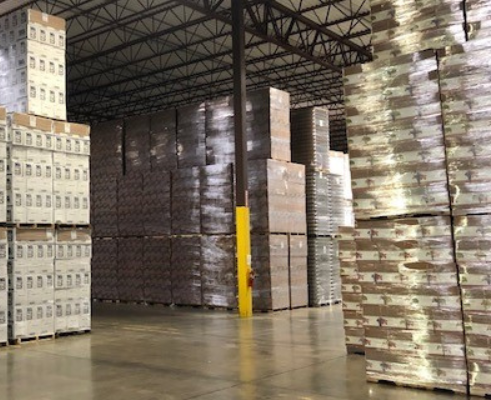
A warehouse is a facility used to store goods for extended periods. Its primary role is inventory storage, not order processing.
Key Features of a Warehouse
Warehouses are often used by manufacturers, wholesalers, and businesses that need to store large quantities of goods before distribution.
For example, if you import products in bulk and distribute them later to retailers, a warehouse is typically the right fit.
A fulfillment center is designed for speed and efficiency. It stores inventory but also processes, picks, packs, and ships orders directly to customers.
Key Features of a Fulfillment Center
Unlike traditional warehousing, fulfillment centers are built for high volume order turnover. If you run an eCommerce brand or sell directly to customers, a fulfillment center is essential.
Understanding the fulfillment center vs warehouse differences is important if you want to avoid costly operational mistakes and choose the right setup for your business.
Warehouse: Primarily focused on storage
Fulfillment Center: Focused on order fulfillment and distribution
Warehouse: Designed for slower moving inventory
Fulfillment Center: Built to handle fast moving ecommerce inventory
Warehouse: Not typically designed for individual order handling
Fulfillment Center: Built for picking, packing, and shipping individual orders efficiently
Warehouse: Often uses basic inventory tracking systems
Fulfillment Center: Uses advanced systems with automation and ecommerce integrations
Warehouse: No direct impact on end customer experience
Fulfillment Center: Directly impacts delivery speed, accuracy, and customer satisfaction
Choosing the right model can significantly affect your efficiency, scalability, and overall customer experience as your business grows.
Choosing between a warehouse and a fulfillment center depends on how your business operates and how you fulfill customer demand. Each serves a different purpose, so the right choice comes down to your shipping model and growth goals.
Choose a Warehouse If You:
A warehouse works best when your priority is long term storage and bulk distribution rather than individual order fulfillment.
Choose a Fulfillment Center If You:
A fulfillment center is designed to support ecommerce growth, helping you process orders quickly, maintain accuracy, and deliver a better customer experience as demand increases.
If you’re evaluating your logistics setup, it’s important to understand how warehouses, distribution centers, and fulfillment centers differ. Each plays a distinct role in the supply chain, depending on how your inventory moves and how orders are fulfilled.
Warehouse
A warehouse is primarily used for long term storage of inventory with limited product movement. It is best suited for businesses that need to hold stock rather than process frequent orders.
Distribution Center
A distribution center sits between storage and final delivery. It handles bulk shipments and redistributes goods to other locations, retailers, or regional hubs, but may not process individual customer orders.
Fulfillment Center
A fulfillment center is designed for fast paced ecommerce operations. It handles picking, packing, and shipping individual orders directly to customers, making it essential for businesses focused on speed and scalability.
A distribution center essentially bridges the gap between a warehouse and a fulfillment center, supporting bulk flow of goods without always managing end customer orders.
Making the wrong choice in the fulfillment and warehousing strategy can quietly drain your resources and slow down your growth. What may seem like a simple operational decision often has a direct impact on customer experience, costs, and scalability.
Common Issues Include:
For example, if you rely on a warehouse when your business actually needs a fulfillment center, your orders may take longer to process and ship. Over time, these delays can lead to negative reviews, reduced customer loyalty, and damage to your brand reputation.
Making the right choice early helps you avoid unnecessary costs and ensures your operations are built to support long term growth and customer expectations.
The logistics and fulfillment landscape is evolving quickly, and these changes are reshaping how businesses decide between warehousing and fulfillment center solutions.
Customer expectations for faster shipping continue to rise. Fulfillment centers are specifically designed to meet these speed requirements with efficient picking, packing, and shipping processes.
Modern logistics systems are increasingly powered by AI. These tools help predict demand, optimize picking routes, reduce errors, and improve overall operational efficiency.
Businesses are no longer selling through a single channel. With ecommerce, marketplaces, and retail all working together, fulfillment operations need to be flexible enough to support multiple sales channels seamlessly.
Being closer to your customers helps reduce shipping times and lower transportation costs. As a result, location strategy is becoming more important than ever when building a fulfillment network.
According to the U.S. Department of Commerce, ecommerce continues to grow year over year, which is increasing demand for faster, more efficient, and more scalable fulfillment solutions.
Most providers force you to choose between warehousing or fulfillment. At Buske Logistics, we take a different approach by combining both into a flexible, scalable solution designed for enterprise and high growth brands.
1. Hybrid Model
We integrate warehousing and fulfillment into one seamless system. This means you can store inventory and fulfill orders through a single partner without the complexity of managing multiple providers.
2. Industry Specific Expertise
Buske specializes in complex industries such as food, beverage, and consumer goods, where compliance, accuracy, and speed are critical to success.
3. Scalable Infrastructure
Whether you are expanding regionally or scaling nationwide, our operations are built to grow with you without disrupting your existing workflows.
4. Data Driven Optimization
We use advanced analytics to improve inventory accuracy, reduce operational costs, and enhance overall delivery performance so your supply chain becomes more efficient over time.
If you are comparing options, it is also important to understand how outsourcing compares to internal operations. Read more here: 3PL vs In-house Logistics
In many cases, the right decision is not choosing one over the other. As your operations grow, you may find that you need both a warehouse and a fulfillment center working together.
Example Scenario
Use a warehouse for bulk inventory storage
Use fulfillment centers near customers for fast shipping
This hybrid approach allows you to store inventory more cost efficiently while still delivering orders quickly. It helps you reduce overall logistics costs, improve delivery speed, and create a more flexible fulfillment strategy that can scale with your business.
→ Learn how to optimize storage capacity.
Understanding cost is essential when deciding between a warehouse and a fulfillment center. Each option comes with a different pricing structure based on how your inventory is stored, handled, and shipped.
Warehouse Costs
Warehouses are generally more cost effective if your focus is on storing large volumes of inventory with minimal movement.
Fulfillment Center Costs
Fulfillment centers involve more operational activity, which is why costs are typically higher. However, they also provide faster order processing, better visibility, and improved customer experience.
The right choice depends on how your business operates and what you need to prioritize, whether that is cost efficient storage or fast, scalable order fulfillment.
→ To understand pricing in more detail, check our 3PL pricing guide.
Managing logistics in house is becoming more complex and more expensive as customer expectations continue to rise. For many growing brands, outsourcing to a 3PL is no longer just an option, it is a strategic move to stay competitive.
Benefits of a 3PL Partner
By working with a 3PL, you can offload day to day logistics challenges and focus more on growing your business. You also gain access to systems, infrastructure, and expertise that would be costly and time consuming to build internally.
If you are considering off site solutions, this resource will help: Off-Site Warehousing
Not all providers are built the same, so choosing the right warehouse or fulfillment partner is a decision that can directly impact your growth, efficiency, and customer experience.
Key Factors to Consider
You want a partner that understands your industry, offers the technology you need for visibility and control, and has the infrastructure to support your growth across different regions.
A strong partner does more than just store or ship your products. They operate as an extension of your business, helping you improve performance, adapt to demand, and scale with confidence.
The main difference between a warehouse and a fulfillment center is purpose and pace. A warehouse is primarily used for long term storage of goods, often with minimal handling, focused on bulk pallet inventory, slow inventory turnover, and inbound freight from manufacturers or importers. A fulfillment center, by contrast, is a high velocity facility designed to process, pick, pack, and ship orders directly to customers, retailers, or marketplaces with same day or next day turnaround. Fulfillment centers typically use advanced WMS technology, barcode and RFID scanning, optimized pick paths, automation, and integrations with platforms like Shopify, Amazon, Walmart Marketplace, BigCommerce, WooCommerce, and TikTok Shop. Buske Logistics operates both contract warehouses and fulfillment centers, allowing brands to combine bulk storage with high velocity order fulfillment within a single integrated network.
Some warehouses offer limited fulfillment services such as basic picking, packing, and outbound shipping, but they are typically not optimized for the speed, accuracy, automation, technology integration, and high volume order processing that dedicated fulfillment centers provide. A warehouse converted to fulfillment without proper WMS technology, slotting design, parcel automation, and trained labor will struggle with eaches level picking, peak season surges, OTIF (On Time In Full) retail compliance, and the 1 to 2 day delivery expectations set by Amazon and major DTC brands. Modern fulfillment requires real time inventory visibility, EDI reporting, parcel carrier diversification, and seamless eCommerce integrations. Buske Logistics designs each facility around its primary use, whether contract warehousing for bulk storage or fulfillment center operations for high velocity order shipping, ensuring optimal performance for each function.
Yes. Fulfillment centers typically cost more per unit than basic warehousing because they include value added services like eaches level picking, packing, custom branded packaging, kitting, parcel shipping, returns processing, and integrated technology, plus the labor and equipment needed to operate at high speed and accuracy. Standard warehouse storage is usually charged per pallet position per month with minimal handling fees, while fulfillment centers charge inbound receiving fees, storage fees, pick and pack fees per order, packaging materials, and parcel postage. Despite higher per unit costs, fulfillment centers improve overall efficiency by reducing labor strain, lowering shipping zones through strategic placement, decreasing returns through accuracy, and improving customer satisfaction through faster delivery. Buske Logistics offers transparent pricing for both warehouse and fulfillment models tailored to each shipper's product mix and channel strategy.
Yes. If you want fast delivery, accurate order processing, and a competitive customer experience, a fulfillment center is essential for eCommerce success. Modern online shoppers expect 1 to 2 day shipping speeds set by Amazon Prime, branded unboxing experiences, and seamless returns, all of which require purpose built fulfillment infrastructure with WMS technology, parcel automation, integrated platforms (Shopify, Amazon, Walmart Marketplace, BigCommerce, WooCommerce, TikTok Shop), and trained operators. Fulfillment centers also help eCommerce brands manage Amazon FBA prep, subscription box assembly, kitting, gift wrapping, and reverse logistics. Without a true fulfillment center, eCommerce brands often miss delivery windows, accumulate negative reviews, and lose marketplace performance scores. Buske Logistics provides eCommerce fulfillment across a national network designed for fast, accurate, and scalable online order processing.
Industries that benefit most from fulfillment centers include eCommerce, retail, apparel and footwear, beauty and personal care, nutraceuticals, food and beverage, beverage alcohol, consumer packaged goods (CPG), pet products, electronics, home goods, and subscription box brands. These industries typically experience high order volumes, eaches level picking demands, frequent product launches, seasonal peaks, and retailer compliance requirements that demand fast, accurate, and scalable order fulfillment. For example, beauty brands need ISO aligned handling and premium packaging, food and beverage shippers need FDA registered FSMA compliant facilities, nutraceuticals need cGMP processes and lot tracking, and pet brands need food grade compliance and mixed product handling. Buske Logistics serves all of these verticals with FDA registered facilities, advanced WMS technology, and proven retail compliance.
Yes. Many businesses use a hybrid model combining bulk warehouse storage with high velocity fulfillment center operations to balance cost efficiency with delivery speed and customer experience. In a hybrid setup, slow moving inventory, container imports, seasonal stock, and bulk reserves are stored in lower cost contract warehouses, while fast moving SKUs and active fulfillment inventory are positioned in fulfillment centers near major population centers to reduce parcel zones and shipping times. Multi node networks also support omnichannel inventory pooling across DTC, marketplace, and retail channels. Strong 3PLs coordinate replenishment between warehouses and fulfillment centers automatically through unified WMS visibility. Buske Logistics operates both warehouse and fulfillment center facilities across its national network, supporting hybrid models that lower total logistics costs while maintaining 1 to 2 day shipping reach.
You should consider switching from a warehouse to a fulfillment center when order volume grows, customers expect faster delivery, retailer compliance becomes more demanding, or operational complexity exceeds what basic warehousing can support. Common triggers include processing more than 100 to 200 orders per day, expanding into Amazon FBA, Walmart Marketplace, or TikTok Shop, launching subscription programs, adding DTC channels alongside B2B retail distribution, or experiencing rising shipping delays, inventory errors, and customer complaints. Other indicators include weak technology integration, manual order processing, missed OTIF performance, and inability to scale during peak seasons. A fulfillment center provides the technology, speed, and accuracy needed to manage modern customer expectations. Buske Logistics supports brands transitioning from warehouse only operations to integrated fulfillment center programs through proven onboarding playbooks designed for minimal disruption.
Choosing between a warehouse vs fulfillment center is not just an operational decision. It plays a key role in how efficiently you can grow and meet customer expectations.
If your focus is on storage and bulk distribution, a warehouse is likely the right fit. If you are prioritizing speed, customer experience, and scalability, a fulfillment center will better support your goals.
For many businesses in 2026, the most effective approach is combining both. With the support of a reliable 3PL partner, you can create a flexible logistics strategy that balances cost efficient storage with fast, accurate order fulfillment.
If you are ready to scale your logistics without the complexity, talk to our logistics team today.

Buske Logistics is a Top 20 Private Warehousing 3PL. Let's build a solution for your supply chain.