.png)
-p-130x130q80.png)

If your retail supply chain is slow, inaccurate, or disconnected, your customers notice immediately.
Late deliveries, stockouts, excess inventory, poor visibility, and rising transportation costs can damage customer trust and cut into profits fast. In today’s market, retailers cannot afford supply chain inefficiencies.
That is why understanding how the retail supply chain actually works matters more than ever. Whether you manage a growing ecommerce brand, a national retail network, or a consumer packaged goods (CPG) company, your supply chain directly affects customer experience, operating costs, and long-term growth.
At Buske Logistics, we’ve spent more than 100 years helping companies build stronger, faster, and more reliable retail supply chain operations across North America. Trusted brands including PepsiCo, Diageo, Golden State Foods, and Starbucks rely on proven logistics strategies to keep products moving efficiently from suppliers to customers.
In this guide, you’ll learn:
The retail supply chain is the complete process of moving products from manufacturers and suppliers to retail stores, distribution centers, e-commerce fulfillment centers, and ultimately to your customers. It includes:
In simple terms, the retail supply chain connects every stage involved in getting products onto store shelves or delivered directly to customers.
Retailing is typically the final stage of the supply chain before products reach the end consumer. At this stage, products move from distribution and fulfillment networks directly into the hands of customers through retail stores, ecommerce platforms, or omnichannel fulfillment channels.
A basic retail supply chain flow looks like this:
Suppliers → Manufacturers → Warehouses → Distribution Centers → Retailers → Customers
Because retailers operate closest to the customer, they rely heavily on efficient supply chain management to keep products available, maintain inventory accuracy, and support fast fulfillment across both online and in-store channels.
Retail supply chain management is the process of planning, coordinating, optimizing, and managing every movement of products across the retail supply chain. The goal is simple:
Modern retail supply chain management in retail industry operations also depends heavily on technology, automation, analytics, and real-time data to keep operations running efficiently.
As your business grows across ecommerce, retail, and omnichannel channels, your supply chain needs to be fast, flexible, scalable, omnichannel-ready, and driven by accurate data insights.
This has become even more important as ecommerce growth continues to reshape retail supply chain operations across North America. According to the U.S. Census Bureau Retail Trade Data, ecommerce sales continue to increase year over year, putting greater pressure on retailers to improve fulfillment speed, inventory accuracy, and overall supply chain performance.
Understanding how the retail supply chain works can help you identify operational inefficiencies, improve inventory flow, and create a more reliable fulfillment process across your business. From sourcing products to final delivery, every stage of the retail supply chain must work together efficiently to keep products moving and maintain inventory availability.
Here’s how the process typically works:
Everything in your retail supply chain starts with accurate demand forecasting and planning. To make smarter inventory and operational decisions, retailers analyze historical sales data, seasonal demand patterns, market trends, customer buying behavior, promotional schedules, and broader economic conditions.
The better your forecasting process is, the easier it becomes to maintain inventory accuracy, prevent stock issues, and keep fulfillment operations running efficiently. Accurate forecasting helps your business avoid two major inventory problems:
Poor forecasting creates major retail supply chain risk because inventory imbalances increase storage costs, create fulfillment delays, and lead to missed sales opportunities. Poor forecasting also adds unnecessary pressure across your retail supply chain operations.
To improve planning accuracy, many businesses now use AI-powered forecasting tools as part of their retail supply chain digital transformation strategies. These tools help analyze demand patterns, seasonal trends, and purchasing behavior more effectively so you can make smarter inventory decisions.
Once you’ve established demand forecasts, the next step is sourcing products or raw materials from suppliers. This stage plays a major role in maintaining inventory availability and keeping your supply chain running efficiently.
Supplier and procurement management typically involves:
Strong supplier relationships are especially important in modern retail and supply chain management because disruptions can quickly affect inventory levels, fulfillment performance, and product availability.
To reduce supply chain risk and improve resilience, many retailers now diversify their supplier networks instead of relying too heavily on a single source.
For manufacturers and CPG brands, production begins once procurement and material sourcing are completed. At this stage, manufacturing operations need to stay closely aligned with forecasted retail demand to keep inventory flowing efficiently through the supply chain.
When production schedules fall behind or fail to match demand, it can create major fulfillment and inventory issues downstream, including stock shortages, delayed shipments, and replenishment disruptions. This is especially important for businesses managing:
In retail supply chain management, efficient production planning helps you maintain inventory availability, improve fulfillment consistency, and reduce costly operational disruptions.
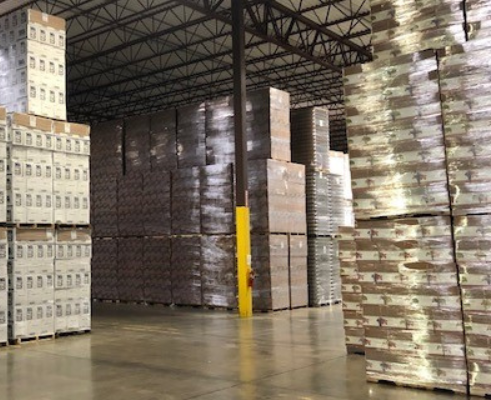
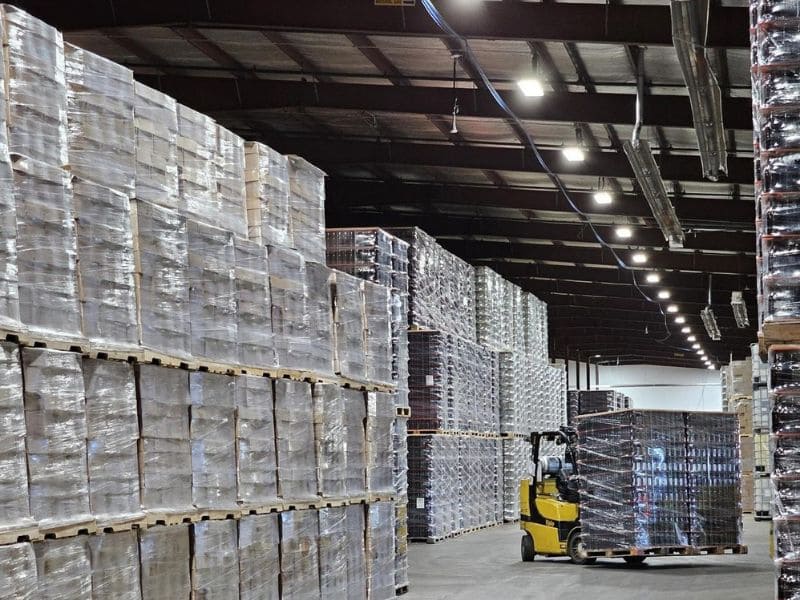
Once your products are manufactured, inventory moves into warehouses or distribution centers where efficient retail supply chain logistics becomes critical. This stage includes receiving, putaway, inventory tracking, slotting, picking, packing, and shipping, all of which directly impact fulfillment speed and order accuracy.
To keep operations running efficiently, modern retailers rely heavily on advanced inventory management systems and warehouse management systems (WMS) that improve visibility, reduce errors, and provide better control across the entire fulfillment process.
Related Reading:
Efficient warehousing directly improves your order accuracy, inventory visibility, labor productivity, fulfillment speed, and overall customer experience. When your warehouse operations run efficiently, you can process orders faster, reduce operational errors, and create a more reliable fulfillment process across your entire supply chain.
Transportation is one of the most critical parts of your retail supply chain because it keeps products moving efficiently throughout the entire distribution network. Your products must travel smoothly between manufacturers, ports, distribution centers, retail stores, fulfillment centers, and ultimately to your end customers.
When transportation operations are well-coordinated, you can reduce delays, lower shipping costs, and improve overall delivery performance. This stage includes:
Transportation inefficiencies can quickly lead to higher operational costs, shipment delays, and poor customer experiences, especially in fast-moving retail environments. The U.S. Department of Transportation continues to highlight how freight movement and infrastructure play a major role in overall supply chain performance across North America.
At Buske Logistics, we help you improve transportation efficiency, strengthen distribution performance, and reduce operational complexity through flexible retail logistics solutions designed to support modern retail supply chains.
Related Service:
Modern retail supply chains need to support multiple sales channels at the same time while still delivering a seamless customer experience. Your customers expect consistent service whether they shop through ecommerce stores, retail locations, online marketplaces, mobile apps, or B2B channels.
Managing all of these channels together creates significant complexity within retail supply chain operations, especially when it comes to inventory visibility, fulfillment coordination, and delivery speed. That’s why omnichannel fulfillment has become essential for retailers looking to stay competitive and meet growing customer expectations.
Retailers now require:
Omnichannel fulfillment has become a major focus in supply chain management in retail as businesses work to deliver faster, more connected customer experiences across every sales channel. As your operations grow, having the right fulfillment strategy and logistics infrastructure becomes critical for maintaining inventory accuracy, fulfillment speed, and customer satisfaction.
Related Reading:
Related Service:
Returns management has become a critical part of modern retail supply chain management, especially as ecommerce growth continues to increase return volumes across the retail industry. Today’s retailers need efficient reverse logistics processes to handle product returns, inspections, refurbishment, restocking, recycling, and disposal without disrupting overall operations.
When managed effectively, reverse logistics helps your business reduce operational costs, recover inventory value, improve customer satisfaction, and increase long-term customer retention. A streamlined returns process not only protects profitability but also creates a better overall customer experience.
Even the most established retailers face significant supply chain challenges in today’s fast-moving market environment. Rising customer expectations, global disruptions, and increasing operational complexity continue to put pressure on retail supply chain operations.
Here are some of the biggest challenges affecting the industry today:
Many retailers still struggle with disconnected systems and inaccurate inventory data, especially when managing multiple sales channels and fulfillment locations. Without real-time inventory visibility, your business is far more likely to experience stockouts, overselling, excess inventory, and delayed fulfillment, all of which can negatively impact customer satisfaction and operational efficiency.
This continues to be one of the biggest challenges in retail supply chain management, which is why centralized inventory systems and real-time data visibility have become essential for modern retail operations.
Rising fuel prices, labor shortages, and carrier capacity challenges continue to increase transportation expenses across the retail industry. As a retailer, you’re constantly balancing delivery speed, shipping costs, and growing customer expectations, all while trying to maintain operational efficiency and profitability.
This creates ongoing pressure throughout the retail supply chain network, making transportation optimization and cost control more important than ever for long-term supply chain performance.
Warehouses and transportation networks continue to face ongoing labor challenges, making it more difficult for retailers to maintain consistent fulfillment performance and operational efficiency. To address these issues, many businesses are increasingly investing in automation, robotics, and AI-powered systems to reduce manual workloads and improve productivity.
These technologies play a major role in supporting long-term retail supply chain automation initiatives while helping businesses build more scalable and resilient operations.
Global disruptions continue to impact retail operations, including port congestion, weather events, geopolitical issues, supplier delays, and inventory shortages. These challenges can create unexpected interruptions across the supply chain, affecting inventory availability, fulfillment speed, and overall service levels.
To stay competitive, your business needs a flexible and resilient supply chain that can quickly adapt to disruptions while maintaining consistent performance and customer experience.
Managing inventory across multiple sales channels can quickly become complex and challenging for your business. You need to coordinate ecommerce fulfillment, retail replenishment, marketplace inventory, and wholesale distribution simultaneously, all while maintaining accuracy and speed.
Without the right systems and logistics partner in place, this complexity can grow rapidly, leading to inefficiencies, inventory mismatches, and fulfillment delays that impact both operations and customer experience.
Retail supply chains continue to evolve rapidly as businesses adapt to changing consumer expectations, rising operational complexity, and new technology innovations. To remain competitive, retailers are investing in faster, more connected, and more flexible supply chain strategies.
Here are some of the biggest supply chain trends for retail businesses today:
Artificial intelligence is helping retailers improve supply chain decision-making by increasing visibility, improving forecasting accuracy, and automating operational planning processes. Today, AI-powered tools are improving:
By using predictive analytics and real-time data, your business can make faster, more accurate decisions while improving inventory flow and overall supply chain efficiency.
Automation is transforming modern warehouses and fulfillment centers by helping businesses improve speed, accuracy, and operational efficiency across the supply chain. Examples of supply chain automation include:
By implementing these technologies, your business can improve productivity, reduce manual processes, increase fulfillment accuracy, and lower overall operational costs. Businesses investing in best practices for retail automation in supply chain operations gain significant competitive advantages.
Retailers increasingly need centralized, real-time visibility across all inventory locations to manage fulfillment more efficiently and respond faster to customer demand. With better inventory visibility, your business can improve:
Integrated technology platforms play a major role in modern retail supply chain operations by helping you connect inventory, warehousing, fulfillment, and transportation systems into one coordinated network.
Many retailers are moving inventory and fulfillment operations closer to customers to improve delivery performance and reduce supply chain risk. As a result, regional distribution strategies continue to expand across North America.
By positioning inventory closer to demand, your business can benefit from:
Nearshoring and regional fulfillment strategies also give you greater flexibility to respond to market changes, manage replenishment more efficiently, and support faster omnichannel fulfillment operations.
Consumers increasingly expect businesses to operate with stronger environmental responsibility across their supply chain operations. As a result, many retailers are investing in sustainability initiatives to reduce waste, improve efficiency, and support long-term environmental goals.
Today, retailers are focusing on:
These initiatives can help your business reduce operational waste, improve resource efficiency, and support more sustainable supply chain operations over time.
The Environmental Protection Agency provides guidance on sustainable materials management and waste reduction strategies that support supply chain sustainability goals.
Running your retail supply chain in-house can quickly become expensive, complex, and difficult to scale as your business grows. That’s why many retailers choose to outsource logistics operations to experienced third-party logistics (3PL) providers who can bring efficiency, expertise, and flexibility to their supply chain.
A strong 3PL partner helps you reduce costs, improve scalability, increase fulfillment speed, access advanced logistics technology, strengthen inventory management, expand into new regions, and significantly reduce operational complexity. With the right support, you can focus more on growing your business while your logistics operations run more smoothly in the background.
At Buske Logistics, we work closely with you to streamline your retail supply chain through customized logistics solutions designed around your specific business goals and operational needs.
Related Reading:
Not all logistics providers truly understand the complexity of modern retail operations, but that’s exactly where we come in. At Buske Logistics, we bring more than a century of supply chain expertise to every client partnership, helping you manage the demands of today’s fast-moving retail environment with confidence and control.
Our solutions are designed to support your business whether you’re a retailer, ecommerce brand, consumer packaged goods company, manufacturer, or wholesale distributor. We provide:
Retailers that consistently outperform competitors often rely on the same foundational supply chain strategies to improve efficiency, maintain inventory availability, and support faster fulfillment operations.
Here are some proven best practices that can help your business strengthen retail supply chain performance:
Disconnected systems can quickly create inefficiencies across your retail supply chain, leading to delays, errors, and limited visibility. To avoid this, your business should focus on integrating key systems such as ERP platforms, warehouse management systems (WMS), transportation management systems, and order management systems (OMS).
When these technologies work together, you gain better data accuracy, improved coordination, and a more streamlined end-to-end supply chain that supports faster and more reliable operations.
Related Reading:
Inventory accuracy has a direct impact on your fulfillment performance and overall customer satisfaction. When your data is reliable, you can prevent costly errors, reduce delays, and maintain better control over your operations.
Best practices to improve inventory accuracy include cycle counting, real-time tracking, barcode scanning, and RFID technology. By implementing these methods, your business can maintain more precise inventory records and improve efficiency across your entire supply chain.
To support growth and handle demand fluctuations, your retail business needs a flexible and scalable distribution network. This means designing a supply chain that can adapt quickly to changing order volumes, seasonal spikes, and shifting customer expectations.
Key components of a flexible distribution strategy include regional fulfillment centers, distributed inventory placement, and flexible transportation options. Together, these help you reduce delivery times, improve inventory availability, and maintain consistent performance even as your business expands.
To improve performance across your retail supply chain, you need to continuously rely on data-driven decision-making. By monitoring key metrics such as inventory turnover, order accuracy, shipping costs, fill rates, and customer satisfaction, you can better understand how your operations are performing in real time.
Using this data consistently helps you identify inefficiencies, optimize processes, and make smarter long-term decisions that improve both operational efficiency and customer experience.
Working with an experienced retail 3PL can help your business avoid costly operational challenges while improving fulfillment performance and supply chain efficiency.
At Buske Logistics, we combine:
We help retailers improve operational efficiency, strengthen inventory management, and build more scalable supply chain operations that support long-term growth.
Even highly optimized retail supply chains have limitations. Market conditions, transportation disruptions, labor shortages, and changing consumer demand can all create operational challenges that impact fulfillment performance.
Common retail supply chain limitations include:
The key is building a resilient supply chain that can adapt quickly to changing conditions while maintaining operational efficiency and inventory flow.
This is where experienced logistics partners can create significant value by helping you improve flexibility, strengthen distribution operations, and respond more effectively to supply chain disruptions.
The future of retail supply chain management will continue to be shaped by automation, AI-driven forecasting, faster fulfillment, improved visibility, omnichannel optimization, sustainability, and predictive analytics. These advancements are helping businesses create more efficient, responsive, and customer-focused supply chains.
If you invest in modernizing your supply chain now, you’ll be in a much stronger position to stay competitive in the long term. On the other hand, delaying digital transformation can make it harder to keep up with rising customer expectations and increasingly complex operational demands.
Retail supply chains are more demanding than ever, and you need a logistics partner that understands the real challenges your business faces every day. From retail compliance and inventory accuracy to omnichannel fulfillment, transportation optimization, warehouse scalability, and supply chain technology, every part of your operation needs to work together efficiently.
At Buske Logistics, we help you build a faster, smarter, and more resilient supply chain across the United States and North America. With more than 100 years of experience, we understand what it takes to keep your retail operations moving efficiently while helping you stay competitive in a rapidly changing market.
Whether you need warehousing, fulfillment, transportation, or complete supply chain optimization, our team is ready to help you create a logistics strategy that supports your growth, improves operational performance, and delivers a better customer experience.
Contact Buske Logistics today.
Retail supply chain management is the process of managing the movement of products from suppliers and manufacturers to warehouses, retail stores, and end customers. It includes sourcing, inventory management, warehousing, transportation, fulfillment, and returns management to ensure products are delivered efficiently and accurately. Buske Logistics helps businesses optimize these operations through integrated logistics and fulfillment solutions. Effective supply chain management improves product availability while reducing delays and operational costs.
Retail supply chain management is important because it helps businesses reduce costs, improve delivery speed, maintain inventory accuracy, and enhance customer satisfaction. A well-managed supply chain minimizes stockouts, shipping delays, and operational inefficiencies that can negatively impact sales and brand reputation. Companies like Buske Logistics support retailers with scalable warehousing, fulfillment, and transportation solutions that improve overall performance. Strong supply chain operations also provide the flexibility needed to adapt to changing customer demand.
Some of the biggest challenges in retail supply chain management include inventory visibility issues, rising transportation costs, labor shortages, supply chain disruptions, and omnichannel fulfillment complexity. Retailers must balance customer expectations for fast delivery while maintaining accurate inventory across multiple sales channels. Buske Logistics helps address these challenges through advanced logistics systems, real-time inventory tracking, and scalable fulfillment operations. These solutions improve efficiency and reduce operational risk.
Omnichannel retail supply chain management involves coordinating inventory and fulfillment across eCommerce, retail stores, marketplaces, and wholesale distribution channels through one connected system. This approach allows businesses to provide a seamless customer experience regardless of where orders are placed. Providers such as Buske Logistics integrate warehousing and fulfillment systems to support accurate inventory visibility and faster order processing across all channels. Omnichannel strategies help retailers improve flexibility and customer satisfaction.
Automation improves retail supply chains by reducing manual tasks, increasing inventory accuracy, speeding up order fulfillment, and lowering operational costs. Technologies such as automated inventory tracking, warehouse systems, and data analytics help businesses operate more efficiently and make faster decisions. Buske Logistics leverages automation and integrated systems to improve warehouse productivity and fulfillment performance. This allows retailers to scale operations more effectively while maintaining service quality.
A 3PL provider manages logistics operations such as warehousing, fulfillment, transportation, inventory management, and distribution for retailers. This helps businesses improve efficiency, reduce operational complexity, and scale without building their own logistics infrastructure. Buske Logistics offers tailored 3PL solutions that support both retail and eCommerce operations across multiple channels. These services allow retailers to focus more on sales, merchandising, and customer experience.
Retailers outsource logistics operations to reduce costs, improve fulfillment speed, gain access to advanced technology, and increase scalability during growth or seasonal peaks. Working with a provider like Buske Logistics gives retailers access to experienced logistics teams, nationwide warehouse networks, and integrated supply chain technology. This improves operational flexibility while helping businesses meet customer expectations more efficiently. Outsourcing also allows retailers to focus on core business growth instead of day-to-day logistics management.

Buske Logistics is a Top 20 Private Warehousing 3PL. Let's build a solution for your supply chain.