.png)
-p-130x130q80.png)
If your warehouse is struggling with long travel distances, rising labor costs, slow pick rates, or complex orders, you’re not alone. Many retail, ecommerce, manufacturing, and omnichannel operations are reaching the limits of traditional picking. Goods-to-person automation systems bring inventory directly to pickers, transforming warehouse operations with improved speed, accuracy, ergonomics, and scalability.
In fact, recent industry data shows that warehouses using goods to person automation can increase picking throughput by up to 200% while reducing labor costs by as much as 70%, highlighting why adoption is accelerating across sectors. According to the CDC’s overview of robotics in the workplace, automation technologies can improve worker safety and productivity while reducing the need for hazardous manual tasks.
In this guide, we’ll walk you through how goods-to-person picking works, the different system types available, how automation fits into modern supply chains, and the latest trends in goods-to-person automation systems heading into 2026. By the end, you’ll have the clarity needed to decide whether this approach belongs in your warehouse roadmap.
Goods-to-person systems are warehouse automation solutions that transport inventory items directly to stationary picking or packing stations. Instead of employees walking long distances to find products, automated equipment delivers the goods to them.
At a high level, these systems combine:
The objective is simple but powerful: reduce human travel time, improve picking efficiency, and support higher throughput without proportional increases in labor.
Goods-to-person automation is especially effective in environments with:
Goods-to-person picking flips the traditional fulfilment model on its head.
In a conventional person-to-goods setup, workers travel through storage locations, manually retrieve items, and return them to a packing area. In a goods-to-person picking system, the process looks very different:
This approach dramatically reduces non-value-added labor, which is often the biggest hidden cost in warehouse operations.
Not all goods-to-person systems look the same. The right configuration depends on your product profile, order volume, space constraints, and growth trajectory.
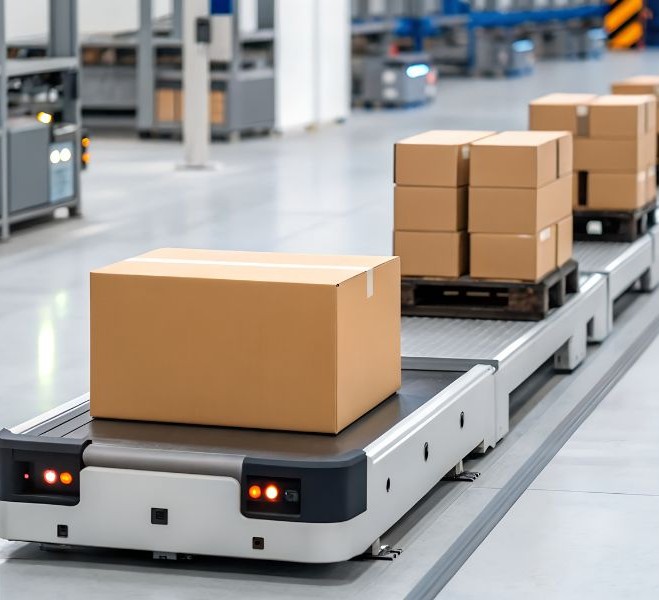
Shuttle systems use autonomous vehicles that move horizontally and vertically within racking structures to retrieve totes or trays. These are commonly paired with lift mechanisms and conveyors.
Best suited for:
Mobile robots transport shelving units or storage pods directly to human operators. These systems are highly flexible and can scale incrementally.
Best suited for:
VLMs store inventory in vertical trays and automatically deliver the required tray to the operator. These are compact and ideal for smaller footprints.
Best suited for:
Horizontal or vertical carousels rotate inventory to bring items to a fixed pick location.
Best suited for:
An automated goods-to-person picking system integrates hardware and software to orchestrate inventory movement with minimal manual intervention. Key components typically include:
The automation layer ensures:
Automation doesn’t eliminate people; it enables them to work smarter, faster, and more safely.
Understanding the difference between these two models is critical before making any automation investment. For enterprises planning long-term growth, goods-to-person automation often becomes a strategic necessity rather than a nice-to-have.
Automated Storage and Retrieval Systems (AS/RS) are often the backbone of goods-to-person operations. They provide structured, high-density storage while enabling rapid, automated retrieval.
In goods-to-person environments, AS/RS:
AS/RS solutions range from pallet-based cranes to tote-based systems and are frequently customized to the facility’s operational profile.
As we move into 2026, goods-to-person automation continues to evolve rapidly. Key trends shaping the future include:
Increased Use of AI-Driven Optimization
Artificial intelligence is increasingly used to optimize slotting, predict demand, and dynamically sequence picks for maximum efficiency.
Modular and Scalable Automation
Businesses are prioritizing systems that can scale gradually rather than requiring massive upfront investment.
Robotics-as-a-Service (RaaS)
Subscription-based robotics models are lowering barriers to entry and reducing capital risk.
Human-Centric Design
Ergonomics, safety, and worker experience are becoming central design considerations, not afterthoughts.
Deeper WMS and ERP Integration
Seamless data flow across systems is critical for visibility, reporting, and long-term optimization.
A goods-to-person picking system is a warehouse automation solution where inventory is automatically transported to stationary operators for order fulfillment. This approach eliminates walking time, increases picking speed, and significantly improves operational efficiency.
No, goods-to-person automation is no longer limited to large distribution centers or enterprises. Modular and scalable technologies now make it a practical option for mid-sized and rapidly growing warehouses.
Goods-to-person automation improves picking accuracy by reducing manual handling and human travel errors. Integrated barcode scanning, vision systems, and software validation ensure correct item selection at every step.
Industries such as ecommerce, retail, manufacturing, healthcare, and spare parts distribution gain the most value from goods-to-person systems. These sectors benefit from faster order fulfillment, higher accuracy, and better labor utilization.
Modern goods-to-person systems are designed with scalability and flexibility in mind. They can easily adapt to increasing order volumes, SKU expansion, and evolving fulfillment strategies.
Goods-to-person automation enables fast and accurate order processing across multiple sales channels. This makes it ideal for supporting B2B, B2C, ecommerce, and direct-to-consumer fulfillment from a single operation.
Key Takeaways
Goods-to-person automation isn’t about chasing technology—it’s about building a warehouse operation that can keep pace with your growth, customer expectations, and labor realities. The most successful implementations start with education, clear objectives, and a long-term view of operational efficiency.
If you’re exploring how goods-to-person systems could fit into your supply chain strategy, understanding the options and trends is the first step toward making confident, future-ready decisions.
Ready to explore how goods-to-person automation works in real-world warehouse environments? Learn how modern goods-to-person automation solutions are implemented to support scalable, high-performance fulfillment operations.
→ Contact a Buske Logistics automation expert today to see how your warehouse can benefit.

Buske Logistics is a Top 20 Private Warehousing 3PL. Let's build a solution for your supply chain.