.png)
-p-130x130q80.png)
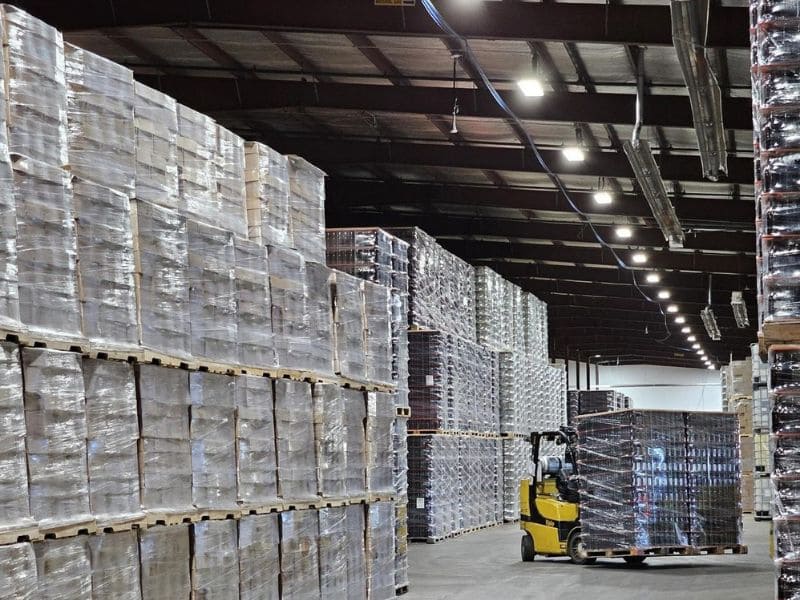
An inventory management system for warehouse operations is software that tracks, organizes, and controls the movement of goods across every stage of your supply chain. When implemented correctly, it eliminates guesswork, reduces costly errors, and gives your team real-time visibility into every SKU, pallet, and bin location on the floor.
At its core, a warehouse inventory management system is the operational backbone of any distribution or fulfillment facility. It connects people, processes, and technology to ensure that the right products are in the right place at the right time.
Unlike spreadsheets or manual counts, modern inventory platforms provide real-time visibility. They connect with barcode scanners, RFID readers, conveyor systems, and WMS software to give you an accurate, up-to-date view of stock. For large operations managing thousands of SKUs, this visibility is essential.
At Buske Logistics, we have seen firsthand what happens when a business runs its warehouse on outdated or fragmented inventory tools. Products get misplaced, orders ship late, and customer trust erodes fast. The right system prevents all of that.
Buske operates more than 40 facilities across the U.S. and Canada, serving Fortune 500 companies and growing mid-market brands alike. The inventory systems we work with are built to handle complexity at scale, from automotive sequencing to consumer goods fulfillment.
A solid inventory system does more than count boxes. Here is what it actually manages day to day:
Each of these functions connects to the others. A delay or error in one area ripples through the rest, which is why integration matters as much as the software itself.
For operations managing retail inventory management across multiple channels, these functions need to handle both high-volume replenishment and individual e-commerce orders simultaneously.
Warehouse inventory tracking is the process of monitoring product location, quantity, and movement throughout your facility in real time. The method you choose affects your accuracy rate, labor costs, and how quickly you can respond to discrepancies.
Here is a comparison of the most commonly used tracking methods:
For most mid-size and large warehouse operations, barcode scanning paired with a real-time WMS is the practical starting point. RFID becomes worthwhile when you are tracking high-value inventory at speed, such as automotive parts, electronics, or pharmaceuticals.
Brands like Stellantis and Molson Coors, which Buske serves across multiple facilities, require tracking precision at a level that only RFID and advanced WMS integrations can reliably deliver.
As warehousing continues to grow, accurate inventory tracking is essential for reducing errors and improving efficiency. The U.S. Bureau of Labor Statistics projects continued growth in transportation and warehousing, reinforcing the need for reliable tracking methods.
The business case for upgrading your inventory tools is straightforward. Here is what you gain:
For businesses operating a retail warehouse environment, scalability is especially critical as seasonal demand swings can double or triple order volumes almost overnight.
Not every platform is built the same. When evaluating options, prioritize these features:
The system should update the moment a scan happens. Batch updates every few hours are not sufficient for active warehouse environments.
Your inventory system should talk directly to your warehouse management system and your enterprise resource planning platform. Siloed data creates blind spots.
If you operate more than one facility, you need consolidated visibility across all sites from a single dashboard.
Workers need to scan and update inventory from handheld devices anywhere on the floor. Desktop-only platforms create bottlenecks.
Look for configurable dashboards, automated reorder alerts, and the ability to export data in formats your team already uses.
A strong returns processing module helps you quickly assess returned product condition, restock sellable items, and dispose of damaged goods properly.
Cloud-hosted systems offer faster updates, lower IT overhead, and better uptime compared to on-premise solutions.
According to APICS Supply Chain Council, warehouse KPIs are often unique to each operation, making it important to evaluate inventory software based on the metrics and performance goals that matter most to your business.
Implementation is where most companies either succeed or struggle. Here is a practical, phase-based approach that actually works:
Phase 1: Audit your current state
Before buying anything, document what you have. Map your current processes, identify your biggest pain points, and inventory your existing technology stack.
Phase 2: Define your requirements
List the features you need versus the ones that would be nice to have. Involve warehouse supervisors, IT staff, and anyone who touches inventory daily.
Phase 3: Select a platform
Evaluate vendors against your requirements list. Request demos using your actual product data, not their canned examples.
Phase 4: Data cleanup
Before going live, clean up your product master data. Remove duplicate SKUs, standardize naming conventions, and reconcile physical counts.
Phase 5: Pilot in one area
Roll out the system in one zone or product category first. Fix issues before expanding to the full operation.
Phase 6: Train your team
Training is not optional. Workers who understand why the system works the way it does will use it correctly. Workers who do not will find workarounds that break your data.
Phase 7: Go live and monitor
Launch the full system and watch your KPIs closely for the first 90 days. Track order accuracy, pick rates, and inventory discrepancy rates as your baseline metrics.
For companies working with a 3PL partner, much of this implementation work is handled collaboratively. Buske Logistics, for example, integrates its systems directly with client platforms, reducing the burden on internal IT teams and shortening time to value.
Understanding retail logistics requirements is often a key input during Phase 2, particularly for clients who distribute through large retail channels.
Once your system is live, these practices will keep it performing at its best:
The U.S. Food and Drug Administration (FDA) requires additional traceability records for certain foods on its Food Traceability List, including lot-level tracking to support faster tracing and recalls. Pharmaceutical supply chains also have product-tracing requirements under the Drug Supply Chain Security Act (DSCSA).

With over 100 years in the logistics industry, Buske Logistics has built systems and processes that work for some of the most demanding supply chains in North America. Our experience serving major brands like PepsiCo and Starbucks demonstrates our ability to meet demanding standards for inventory accuracy, speed, and compliance.
Across more than 40 facilities in the U.S. and Canada, we integrate advanced warehouse inventory tracking with contract warehousing, value-added logistics, and automotive sequencing to deliver end-to-end supply chain control.
Whether you are a Fortune 500 company managing national distribution or a growing DTC brand building out your first 3PL relationship, our team has the infrastructure and expertise to support you.
If you want to learn more about how Buske approaches inventory at scale, contact our team directly to discuss your operation.
If your current system is costing you time, accuracy, or customer trust, now is the time to make a change. Buske Logistics has spent over 100 years building inventory solutions that work for some of the most complex supply chains in North America, and we are ready to bring that same expertise to your operation.
Whether you need a full 3PL partnership or a more targeted warehousing solution, our team will help you design a system that fits your volume, your products, and your growth goals.
Reach out to our team today and let us show you what better inventory management looks like in practice.
A WMS manages the physical operations of a warehouse, while an inventory management system focuses specifically on tracking stock levels, locations, and movement.
A WMS manages warehouse operations such as labor, slotting, and dock scheduling, while inventory management tracks what you have, where it is, and when to reorder. Modern platforms often combine both into one integrated solution.
Warehouse inventory tracking reduces errors by verifying product identity and quantity at every stage of the pick, pack, and ship process using barcode scans or RFID reads.
When a worker scans a product during picking, the system verifies it against the order and immediately flags any mismatch. This helps catch incorrect items, quantities, or locations before they reach your customer, reducing costly returns and complaints.
Implementation timelines vary, but most mid-size warehouse operations can expect a phased rollout to take anywhere from 60 to 180 days depending on complexity, data readiness, and integration requirements.
Smaller operations with fewer SKUs and simpler processes can move faster. Larger facilities with multiple integrations, legacy systems, and high SKU volumes need more time for data cleanup, testing, and training. An experienced 3PL partner like Buske Logistics can shorten the timeline because much of the infrastructure is already in place.
Look for a 3PL with real-time inventory visibility, proven system integrations, multi-location capability, and a track record of managing inventory for businesses at your scale and in your industry.
Ask about their technology stack, how they handle discrepancies, and what reporting they provide to clients. Transparency matters: you should be able to see your inventory data at any time without waiting for a weekly report. Buske Logistics provides clients with direct system access and dedicated account support across all of its facilities in the U.S. and Canada.
For most warehouse operations, cloud-based inventory software offers faster implementation, lower IT overhead, automatic updates, and better scalability compared to on-premise systems.
On-premise solutions can suit businesses with strict security requirements or highly customized workflows. However, most growing mid-market and enterprise operations benefit from cloud platforms, which scale without costly hardware and enable real-time data sharing across facilities and trading partners.
Choosing and implementing the right inventory management system for warehouse operations is one of the highest-leverage decisions a supply chain team can make. When your inventory data is accurate, your fulfillment speeds up, your costs come down, and your customers stay satisfied. When it is not, every other part of your operation suffers for it.
Buske Logistics brings over 100 years of warehousing and logistics expertise to every client relationship, backed by 40+ facilities across North America and a client roster that includes some of the most recognized brands in food, beverage, automotive, and consumer goods.
If you are ready to build a warehouse inventory operation that performs at the level your business demands, our team is ready to help you get there. Reach out to Buske Logistics today and take the first step toward a smarter, more accurate supply chain.

Buske Logistics is a Top 20 Private Warehousing 3PL. Let's build a solution for your supply chain.


