.png)
-p-130x130q80.png)
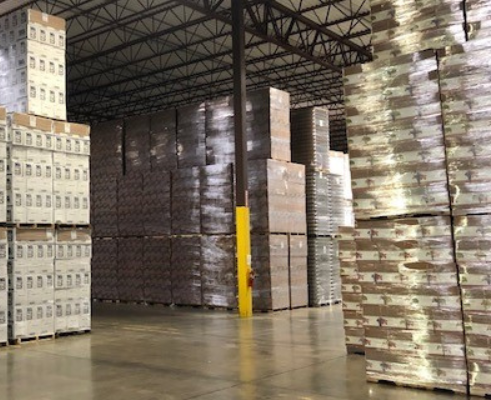
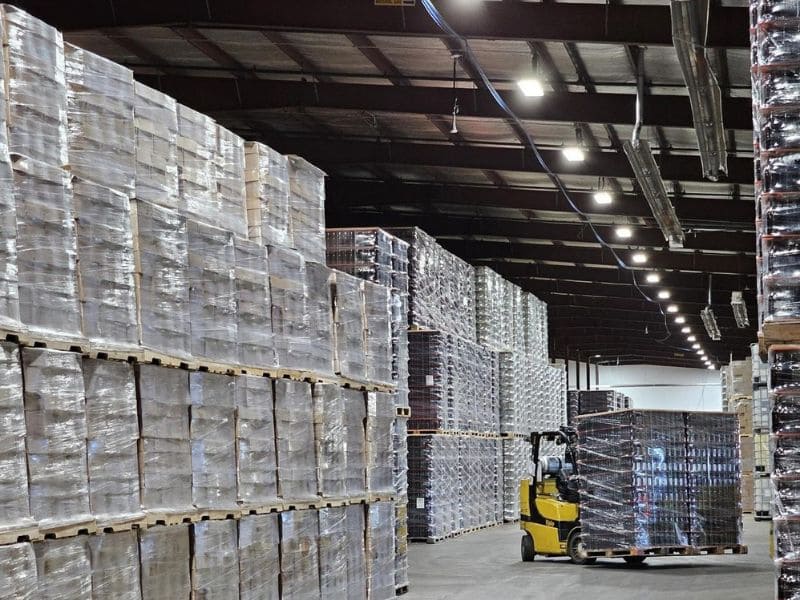
Retail inventory solutions are the software platforms, tools, and services you use to track, manage, and optimize stock across your stores, warehouses, and online channels. As your SKU count, locations, or sales channels grow, manual or disconnected inventory tracking becomes harder to sustain. Inaccurate or delayed data can leave you dealing with stockouts, excess inventory, unnecessary reconciliation work, and capital tied up in the wrong products.
At Buske Logistics, more than 100 years of logistics experience has shown us how inventory accuracy affects everything from replenishment and allocation to warehouse fulfillment and distribution. The right solution should give you more than a stock count - it should help you make better inventory decisions as your operation grows.
In this guide, we'll walk you through the types of retail inventory solutions, optimization tools, key features and benefits, and what you should evaluate when choosing the right solution for your business.
Retail inventory solutions are the software platforms, tools, and services you use to track, manage, and optimize stock across stores, warehouses, and online sales channels. They give you a more reliable view of what inventory you have, where it is located, and how it is moving through your retail operation.
It helps to distinguish these solutions from retail inventory management itself. Inventory management is the broader discipline of deciding how you receive, track, replenish, allocate, and control stock. Retail inventory solutions are the technologies and services that help you put those practices into action at scale.
For example, your inventory management strategy might establish when a SKU should be replenished. Your inventory system can provide the real-time stock data needed to identify when that threshold has been reached and help your team act on it.
The solution you need also depends on the complexity of your operation. If you manage one store and a relatively small assortment, basic inventory tracking may be enough. Once you're coordinating inventory across multiple stores, warehouses, e-commerce channels, or retail partners, you need greater visibility and tighter coordination between systems.
That's why evaluating retail inventory solutions isn't simply about finding software that tells you how much stock you have. You need to consider whether the solution can support how your inventory is actually received, stored, sold, replenished, and distributed across your network.
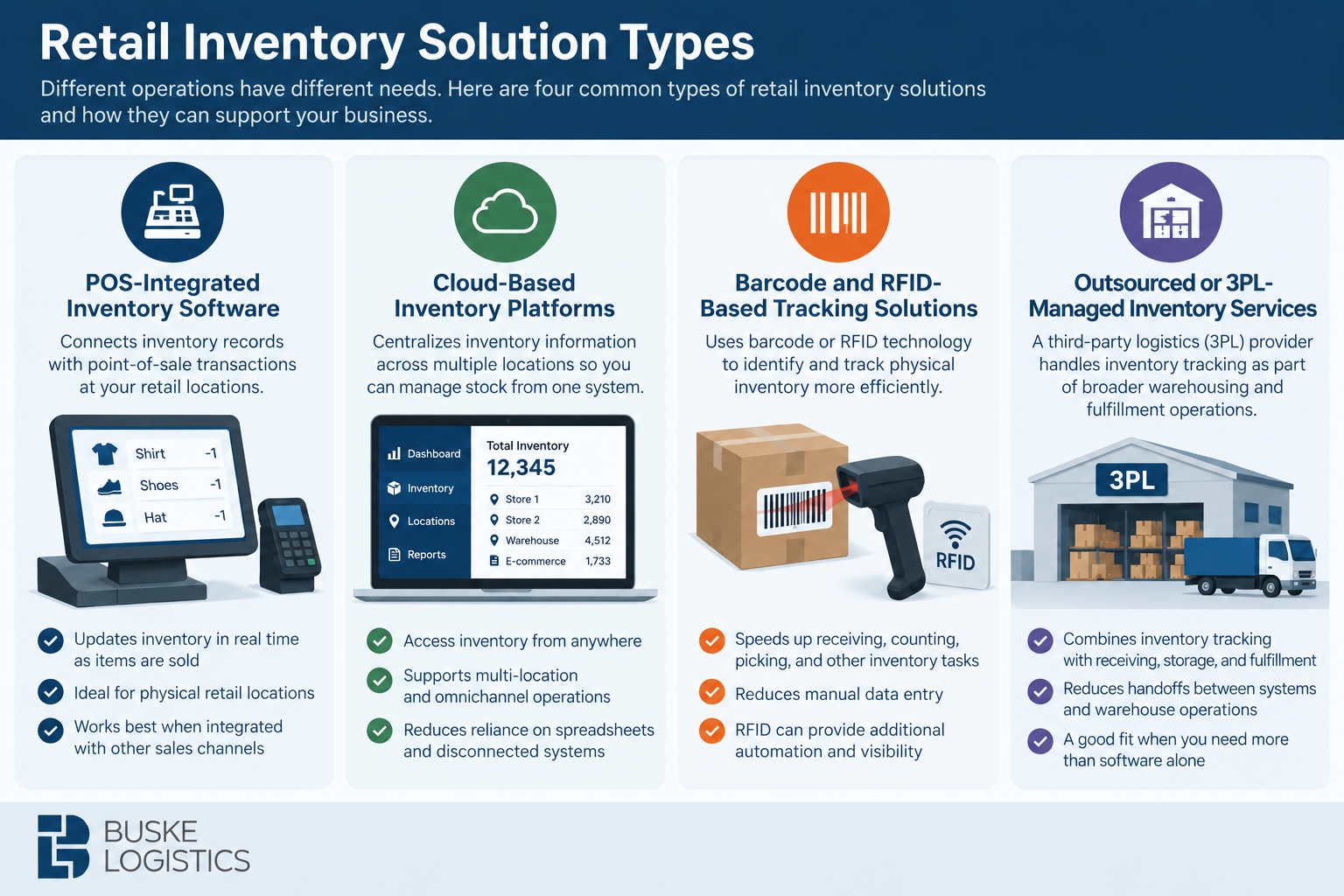
Retail inventory solutions range from basic stock-tracking systems to platforms and outsourced services that help you manage inventory across multiple locations and sales channels. The right type depends on your operation, existing technology, inventory volume, and how much control you want to keep in-house.
POS-integrated inventory software connects inventory records with transactions at the point of sale. When you sell an item, the system updates available inventory so your team has a more current view of stock levels.
This approach can work well if your inventory activity is closely tied to physical retail locations. As you add e-commerce channels, warehouses, or additional stores, however, you'll need to make sure your POS can exchange accurate inventory data with those systems.
Cloud-based platforms centralize inventory information so you can access and manage stock across multiple locations from one system. Instead of maintaining separate records for individual stores or facilities, your teams can work from a shared inventory view.
For a growing or multichannel retailer, this can make it easier to monitor stock movement and coordinate inventory without relying on disconnected spreadsheets or location-specific systems.
Barcode and RFID technologies help you identify and track physical inventory more efficiently. Scanning products, cases, or pallets can reduce the amount of manual data entry required during receiving, counting, picking, and other inventory activities.
RFID can provide additional automation because tagged inventory can be identified without scanning each item individually. According to the National Retail Federation, RFID can help retailers achieve inventory tracking rates around 99%, while also speeding up cycle counts and reducing stockouts.
You don't necessarily have to manage every part of inventory control internally. With a 3PL-managed solution, a third-party logistics provider can handle inventory tracking as part of broader warehousing or fulfillment operations.
This option can make sense when your inventory challenges extend beyond software. If you also need physical storage, receiving, order processing, or distribution support, combining those activities with inventory management services can reduce handoffs between your systems and warehouse operations.
The important distinction is that these solutions primarily help you track and manage inventory. If you need your system to determine how much inventory you should carry, when you should replenish it, or where stock should be allocated, you'll need to look at inventory optimization capabilities next.
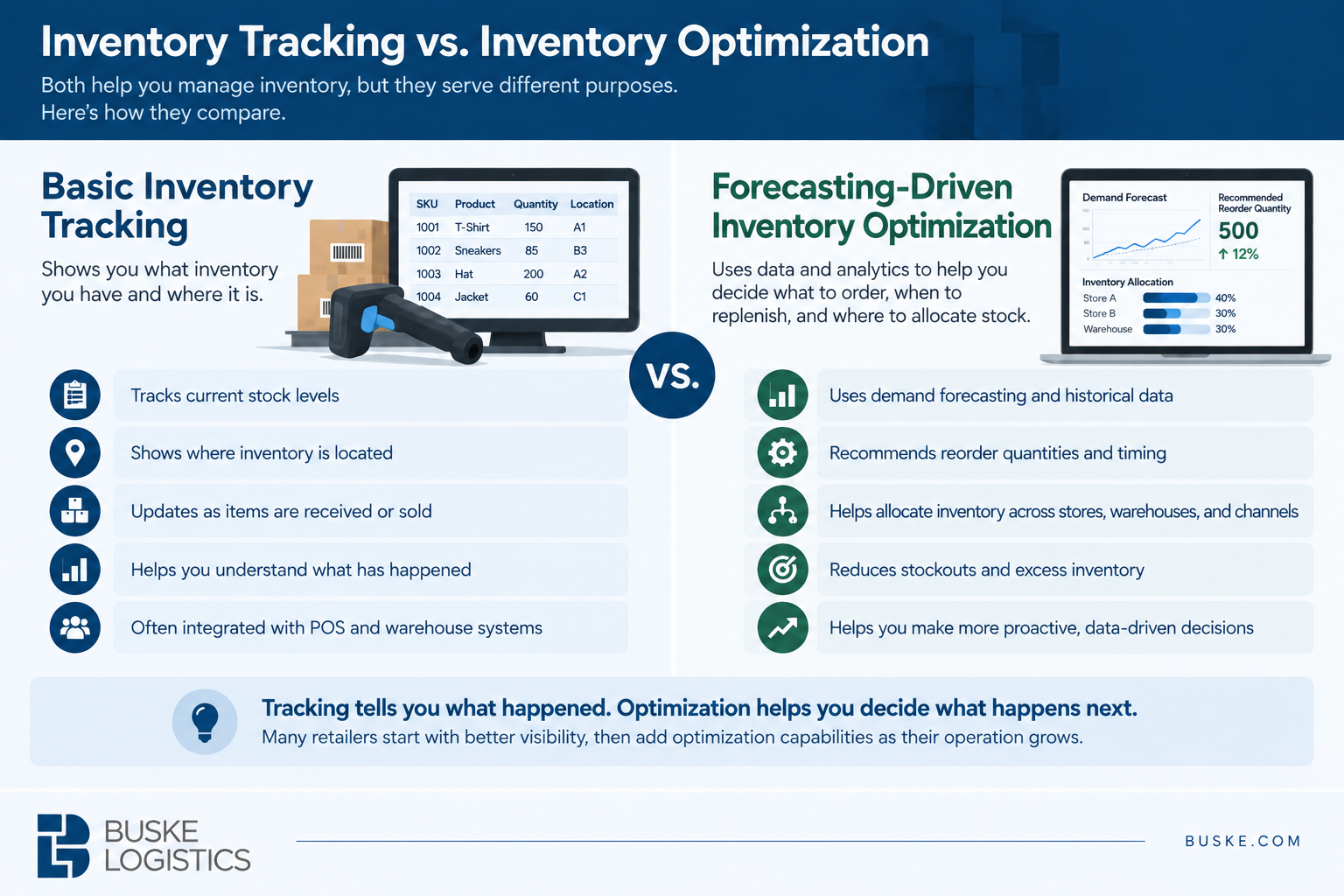
Retail inventory optimization solutions go beyond showing you what is currently in stock. They use demand forecasting, inventory data, and analytics to help you determine how much inventory to order, when to replenish it, and where stock should be allocated.
This distinction matters as your retail operation becomes more complex. Basic tracking tells you what happened to your inventory. Optimization tools help you use that information to make better decisions about what should happen next.
Automated replenishment uses current inventory levels and forecasted demand to determine when additional stock is needed. Depending on the system, it can generate replenishment recommendations or purchase orders when inventory reaches predetermined thresholds.
For your team, this can reduce the manual work involved in monitoring individual SKUs while helping you respond to changing demand before a product reaches a stockout.
Fixed safety stock levels don't always reflect how demand changes across products, locations, or seasons. Optimization tools can use demand variability and inventory data to adjust your buffer stock and reorder points more dynamically.
The goal is to maintain enough inventory to support demand without carrying more stock than your operation actually needs. This becomes particularly important when you're managing a large SKU assortment or inventory with significantly different demand patterns.
Having enough inventory across your network doesn't necessarily mean you have it in the right place. Allocation optimization helps determine how available stock should be distributed across stores, warehouses, and sales channels based on expected demand.
For example, if one location is consistently selling a product faster than another, your inventory data can help you identify that imbalance and make more informed allocation or replenishment decisions.
Ultimately, you don't need the most complex optimization system available, you need one that matches your operation. If you're managing a smaller assortment in one location, accurate tracking may solve your immediate inventory challenges. If you're coordinating thousands of SKUs across multiple stores, warehouses, or channels, forecasting, replenishment, and allocation capabilities can become much more valuable.
The most useful retail inventory solutions give you accurate visibility into stock, connect with your existing systems, provide actionable reporting, and scale as your operation grows. When comparing your options, focus on capabilities that solve your actual inventory challenges rather than choosing a system simply because it offers the longest feature list.
You should be able to see what inventory is available and where it is located across your stores, warehouses, and sales channels. This becomes especially important when the same inventory supports multiple channels.
Better visibility helps your team make replenishment, allocation, and fulfillment decisions using current information rather than relying on delayed reports or manually reconciled spreadsheets.
Your inventory solution shouldn't operate in isolation. Look for the ability to connect with the systems already supporting your business, including POS, e-commerce, and warehouse systems.
Before committing to a solution, determine what integrations are available and how information will move between systems. Poor integration can create the same disconnected inventory records you're trying to eliminate.
Your system should help you understand your inventory, not simply record it. Reporting and analytics can help you monitor inventory KPIs, identify stock trends, and recognize where inventory may be moving too quickly or sitting for too long.
The reports that matter most will depend on your operation, but the goal should be the same: turning inventory data into information your team can use to make better decisions.
Think beyond what your inventory operation looks like today. A solution that works for your current SKU count or number of locations may become restrictive as you add products, stores, warehouses, or order volume.
Scalability doesn't necessarily mean choosing the most sophisticated system available. It means selecting a solution that can support the level of growth and complexity you realistically expect without forcing you to rebuild your inventory processes every time the business expands.
Retail inventory solutions can help you reduce stockouts and excess inventory, cut manual inventory work, make better purchasing decisions, and use working capital more efficiently. The value comes from giving your team more accurate and timely inventory information instead of relying on fragmented records or manual reconciliation.
Better inventory visibility helps you identify when stock is running low and where excess inventory is accumulating. When your data is accurate and timely, you can make replenishment and allocation decisions before inventory imbalances become larger operational problems.
For your business, that means a better opportunity to keep products available without routinely carrying more inventory than demand requires.
Manual counts, spreadsheet updates, and reconciliation between disconnected systems can consume significant staff time. Retail inventory solutions can automate parts of this work and create a more consistent inventory record across your operation.
Your team will still need sound inventory processes, but they can spend less time finding and correcting discrepancies and more time managing exceptions and improving performance.
Having inventory data in one place makes it easier to identify patterns in sales and stock movement. Instead of making purchasing or replenishment decisions from incomplete information, you can use reporting and analytics to understand what is selling, where inventory is needed, and where stock may be moving slowly.
This visibility can also strengthen your broader inventory management strategy by giving you better information for replenishment, allocation, and stock-level decisions.
Inventory ties up capital until it is sold. If you consistently hold more stock than necessary, that investment can remain locked in products that are moving slowly or sitting in the wrong locations.
More accurate tracking and optimization can help you size inventory more closely to actual demand. The goal isn't simply to reduce inventory - it is to carry the right amount of stock to support your customers and operations without unnecessarily tying up cash.
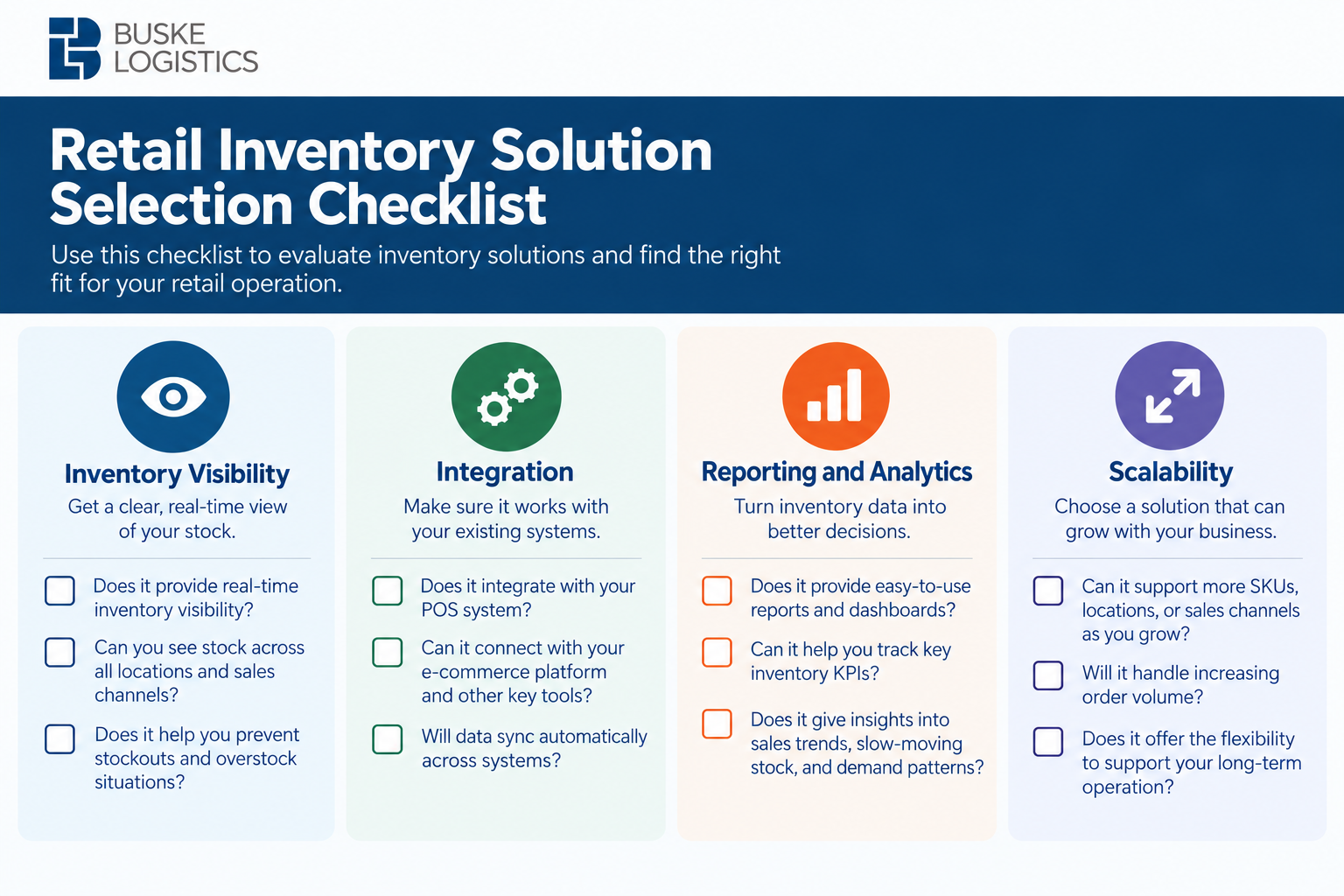
The right retail inventory solution should match the size and complexity of your operation, integrate with the systems you already use, and provide the level of tracking or optimization you actually need. A single-location retailer may have very different requirements from a business managing inventory across multiple stores, warehouses, and online channels.
Start with how your inventory actually moves through your business. Consider your number of SKUs, locations, sales channels, warehouses, and typical order volume.
If you operate one location with a relatively small assortment, straightforward inventory tracking may be enough. If you're managing multiple locations or an omnichannel network, you'll likely need centralized visibility and stronger tools for coordinating inventory across your operation.
A new system is only useful if it works with the rest of your technology. Before choosing a solution, confirm how it will connect with your POS, e-commerce platform, warehouse systems, and other tools that rely on inventory data.
Ask what information can move between systems, how frequently it updates, and whether integrations require additional development or ongoing manual work. These details can significantly affect how useful the solution becomes in day-to-day operations.
Not every retailer needs advanced forecasting and automated replenishment immediately. If your main challenge is knowing exactly what inventory you have and where it is, improving tracking and visibility may be the priority.
As your inventory becomes more complex, retail inventory optimization solutions can add forecasting, dynamic reorder points, automated replenishment, and allocation capabilities. The brief specifically recommends evaluating whether you need these capabilities now or whether basic tracking is sufficient at your current scale.
Your inventory challenge may not be a software problem alone. If you're also struggling with receiving, storage, inventory accuracy, fulfillment, or distribution, outsourcing part of the operation may make more sense than adding another standalone platform.
A 3PL can combine physical inventory handling with the systems and processes needed to maintain inventory visibility. Buske's inventory management solutions support businesses that need inventory management integrated with broader warehousing and logistics operations.
Ultimately, choose a solution based on the problems you need to solve—not the number of features available. The strongest fit is one that gives your team the visibility and control you need today while leaving room for your inventory operation to become more complex over time.
Retail inventory solutions are the software platforms, tools, and services you use to track, manage, and optimize stock across stores, warehouses, and online channels. They can range from basic inventory tracking systems to more advanced optimization and 3PL-managed solutions.
Retail inventory optimization solutions go beyond basic stock tracking. They use demand forecasting, analytics, and inventory data to help you determine how much inventory to order, when to replenish it, and where stock should be allocated.
Look for real-time inventory visibility, integration with your existing POS and e-commerce systems, reporting and analytics, and the ability to scale as your SKU count, locations, or order volume grows.
Retail inventory solutions can help you reduce stockouts and excess inventory, spend less time on manual counting and reconciliation, make better decisions using inventory trends, and manage the amount of capital invested in stock more effectively.
A 3PL-managed solution may make sense when your inventory challenges extend beyond tracking software. If you also need support with receiving, warehousing, inventory control, fulfillment, or distribution, managing these activities through one logistics provider can reduce operational handoffs.
Yes. Many retail inventory solutions are designed to centralize stock information across stores, warehouses, and online channels. If you operate across multiple locations, prioritize a solution that provides centralized visibility and integrates with the systems supporting each sales channel.
Retail inventory solutions turn inventory management from a manual, disconnected process into a more accurate and scalable system. The right approach depends on your operation: some retailers need better stock visibility, while others require forecasting, automated replenishment, allocation tools, or outsourced inventory support.
As your inventory requirements grow, focus on solutions that connect your data with the physical movement of stock. Explore Buske's Inventory Management guide or learn how our Inventory Management solutions can support your warehousing and logistics operation.
Ready to improve how you manage inventory? Contact Buske Logistics to discuss your inventory and warehousing requirements.

Buske Logistics is a Top 20 Private Warehousing 3PL. Let's build a solution for your supply chain.