.png)
-p-130x130q80.png)
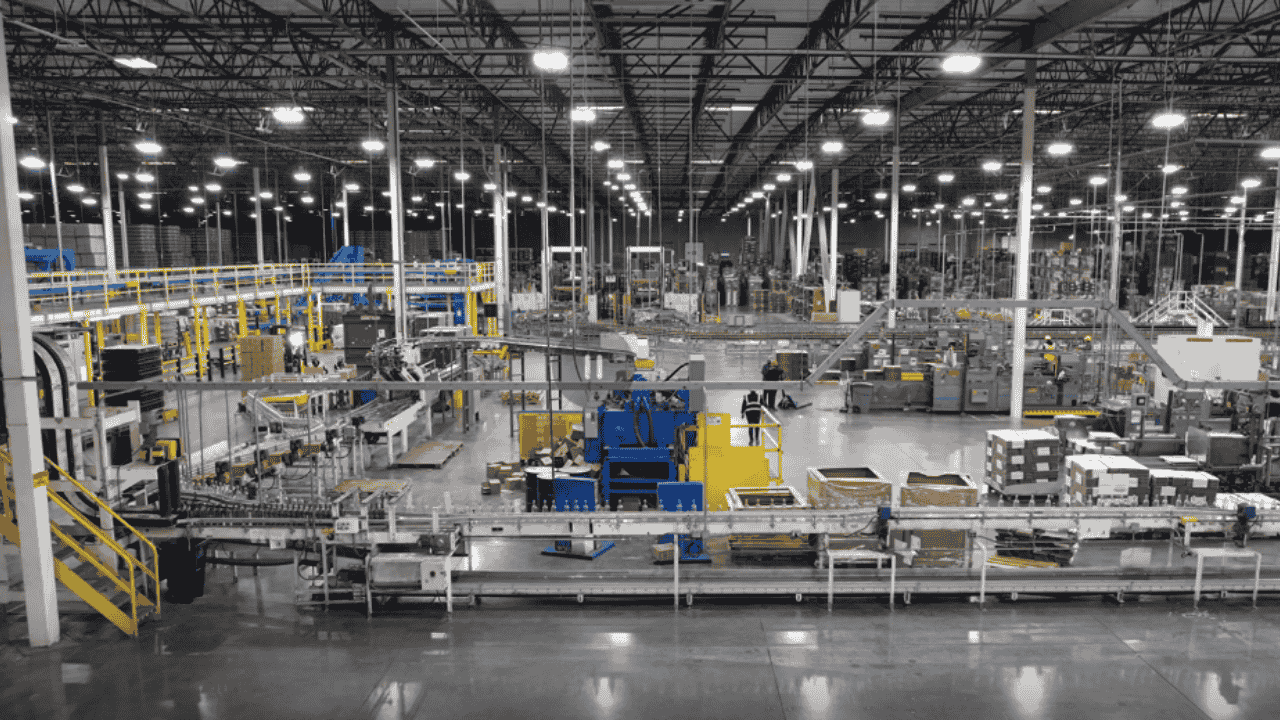
Co-packing addresses several challenges for businesses, particularly those in the food, beverage, and consumer goods industries. Outsourcing this service to third-party logistics (3PL) partners is a crucial strategy to scale up production for business. This guide delves into the intricacies of co-packing services and how to choose the right co-packer.
Co-packing, or contract packaging, is the process of outsourcing a company's packaging operations to 3PLs or logistics providers. In addition to packaging, co-packing services can include cooking, processing, blending ingredients, and packaging. It can also encompass various services, including filling, labeling, bundling, and distributing goods. Industries such as food and beverages, beauty products, and consumer goods can rely on co-packers to streamline their supply chain operations.
An example of co-packing for our beverage clients such as Coca-Cola, Pepsi, or Starbucks may include handling everything from mixing the ingredients to bottling and applying labels to packaging. Similarly, a co-packing agreement for a skincare brand could involve a co-packer blending the formulas, filling containers, and packaging the items. This would ensure consistent quality and presentation across the brand's product line.
The vital role of co-packing in optimizing supply chain operations is evidenced by its growing market size over the years. Data from Mordor Intelligence estimates that co-packing was worth over $73 billion in 2024 and is expected to increase to over $111 billion by 2029.
The difference between these two can be highlighted in a partnership for co-packing with food manufacturing.
A co-packer may cook or blend ingredients using a company’s original recipe or formula to produce consumer goods. These products will then be packed and distributed with the company’s branding.
In private labeling, a third-party manufacturer may offer a ready-made product that is then labeled and sold under the company’s own brand name.
Understanding the co-packing process can help assess a co-packer's capabilities and how they align with a company’s packaging needs. Here are the proper steps to take when partnering with co-packing companies:
The process begins with a detailed consultation to discuss packaging needs, product specifications, and goals.
For example, the client details specific requirements such as the type of packaging needed, volume expectations, special handling requirements (e.g., temperature control, allergen-free environments), and desired timelines. The co-packer assesses whether they can meet these needs and what adjustments or investments might be necessary.
A trial run or prototyping phase is essential before full-scale production. This stage ensures the packaging meets quality standards and allows for adjustments. For instance, the packaging must pass durability tests to withstand shipping conditions and maintain product integrity.
Additionally, it needs to comply with industry regulations, such as the ISTA (International Safe Transit Association) standards, ensuring it can handle real-world transport.
Once the trial is successful, full-scale production begins. Co-packers implement rigorous quality control measures to ensure consistency and compliance with industry standards.
An excellent example is a co-packer specializing in organic snack foods. The co-packer would begin by sourcing certified organic ingredients according to the client's specifications. During production, stringent quality checks are routinely conducted, including testing for contaminants and verifying compliance with organic standards.
The co-packer's facility likely operates under Good Manufacturing Practices (GMP), and each batch of products undergoes a final quality assessment before packaging. This system ensures that every product batch remains consistent with the client’s requirements and consumer expectations, maintaining high quality and safety standards throughout the production process.
Products are packaged and labeled according to the client’s specifications. This includes custom branding, barcoding, and compliance with industry regulations. Proper labeling ensures that all necessary information is clearly displayed to meet both legal requirements and customer expectations.
Finally, co-packers can handle the distribution and logistics, ensuring your products reach the market efficiently and on time. This involves coordinating with carriers, managing inventory levels, and optimizing delivery routes to reduce costs and transit times.
Co-packing can significantly enhance your business's production efficiency to meet market demands effectively. Here are some of its notable benefits:
1. Cost Efficiency
Co-packers often provide cost advantages due to economies of scale. By leveraging their existing infrastructure and expertise, they can offer packaging services at a lower cost than in-house operations.
For instance, small food and beverage businesses like Coppertail may partner with a co-packer like Buske to leverage their existing equipment and bulk purchasing power. This can reduce packaging costs, allowing companies to possibly allocate more funds to marketing and product development.
2. Expertise and Innovation
Co-packers bring specialized knowledge and innovation to the table. Their experience with various products and packaging materials can lead to improved packaging solutions, enhancing product appeal and shelf life.
Co-packers often offer innovative solutions, such as eco-friendly packaging. This would allow companies like food and beverage makers to use materials aligned with their sustainability goals without making huge, long-term investments.
3. Scalability
Co-packing allows businesses to scale operations quickly in response to market demands. Whether it's a seasonal spike or a new product launch, co-packers can adjust their capacity to meet their partners’ packaging needs.
Many companies experience a surge in demand during the holidays. For example, a cosmetics brand partnered with a co-packer can quickly scale up production by adding shifts and utilizing additional facilities. This flexibility enables companies to meet the increased demand without any delays.
4. Quality Assurance
Reputable co-packers adhere to strict quality standards and regulatory compliance, ensuring your products are packaged safely and consistently.
Expert 3PLs like Buske Logistics provide quality inspection services so that our partners meet product standards and comply with regulations. Buske inspects up to 300 million bottles for beverage companies every year with top-of-the-line equipment.
As co-packing evolves in 2026, brands are prioritizing agility, intelligence, and sustainability more than ever. To stay competitive, co-packers must embrace smart technologies, flexible formats, and data-driven solutions that align with modern supply chain demands.
The co-packing industry continues to evolve rapidly, driven by smart technology, sustainability demands, and shifting consumer expectations. Here’s what’s leading the way in 2026:
AI-powered robotics, predictive batching, and computer vision QC (quality control) are transforming packaging lines from reactive to intelligent systems. For example, inline AI checks now detect packaging defects in milliseconds, reducing waste and downtime.
Eco-friendly innovations like compostable films and reusable formats are being paired with AI-driven material optimization to balance cost and impact. Gen Z-led demand for minimalist, carbon-conscious packaging is reshaping design standards across industries.
Brands are turning to AI-based packaging configurators to design protective, compact, and brand-consistent parcels for direct-to-consumer shipments. Frustration-free, tamper-evident formats now use machine learning to adapt to varied SKU sizes and reduce shipping waste.
Dynamic co-packing lines with robotic kitting and real-time AI inventory management enable hyper-customized product drops. Limited-run influencer collabs and seasonal gift packs are now produced faster thanks to AI-guided order segmentation.
Leading co-packers are integrating with TMS/WMS platforms to offer real-time data sharing, predictive fulfillment, and adaptive routing. Buske Logistics now use AI-powered logistics dashboards to proactively adjust for delays, weather, or demand spikes.
Selecting the right co-packer isn’t just about outsourcing; it’s a strategic move that directly impacts your product quality, compliance, scalability, and brand reputation. These best practices will help you identify a co-packing partner that’s equipped for success in today’s fast-evolving landscape.
1. Choose a Co-Packer with Industry-Specific Expertise
Partner with a co-packer who understands the regulatory, technical, and production nuances of your niche.
Example: Organic snack brands should look for co-packers with certifications like USDA Organic and FDA compliance.
Buske Tip: Industry-aligned co-packers reduce compliance risk and streamline production from day one.
2. Prioritize Flexibility and Customization
In 2026, agility is everything. Your co-packer should support varied packaging formats, scale with seasonal spikes, and accommodate both short-run and large-scale production.
3. Assess Technology and Automation Capabilities
Advanced tech is now a baseline. Choose co-packers equipped with:
Example: A beverage brand launching a new energy drink needs high-speed bottling, temperature-controlled processing, and predictive batching powered by AI.
Buske Insight: We integrate enterprise-grade systems for real-time inventory and fulfillment visibility across the supply chain.
4. Evaluate Their Commitment to Sustainability
Today’s consumers expect greener packaging and retailers are demanding it. Choose a co-packer with:
Sustainability adds brand value while meeting regulatory and retailer expectations.
5. Optimize for Location and Logistics
Strategically located co-packing facilities reduce shipping time, lower transportation costs, and increase fulfillment speed.
The main difference between co-packing and packaging is scope: co-packing (short for contract packaging) is a full-service offering in which a third-party provider handles product manufacturing, assembly, filling, labeling, and packaging on behalf of a brand, often including raw material sourcing and quality control. Standard packaging, by contrast, refers only to the design and production of the containers, wrappers, cartons, or pouches used to enclose a finished product.
Co-packing is ideal for brands that want to scale production, enter new retail channels, or launch new product formats without investing in their own manufacturing infrastructure, while packaging materials are typically purchased from a converter or printer and used either in-house or by the co-packer.
Co-production in logistics refers to a strategic partnership between a brand and a third-party logistics or co-manufacturing provider in which both parties collaborate on planning, production scheduling, technology integration, and supply chain execution.
Rather than simply outsourcing isolated tasks, co-production involves shared forecasting, integrated systems (such as EDI and ERP connections), joint quality controls, and continuous communication to align production output with real demand. This model often combines logistics services such as warehousing, transportation, kitting, and packaging into a unified workflow that streamlines the supply chain from manufacturer to consumer.
Yes, many co-packers can handle product formulation changes, and some offer in-house formulation services as part of their broader contract manufacturing capabilities. The right co-packer can support adjustments to ingredients, ratios, allergens, shelf-life targets, regulatory labeling, and packaging formats, but the scope depends on the co-packer's certifications (such as GMP, SQF, BRC, or FDA registration), equipment capabilities, and minimum order quantities (MOQs).
Brands should discuss potential formulation changes during the initial consultation and document them in the master services agreement so the co-packer can plan equipment, sourcing, and quality control around future product evolutions.
AI is used in modern co-packing to improve quality control, predictive maintenance, yield optimization, and packaging accuracy across the production line. Computer vision systems inspect every unit for fill levels, seal integrity, label placement, and date coding in real time, catching defects that manual QC would miss, while machine learning models predict equipment failures before they happen to reduce unplanned downtime.
AI-driven scheduling tools also optimize run sequencing, raw material usage, and changeover times, resulting in fewer packaging errors, higher first-pass yield, lower material waste, and faster time to market for co-packed products.
Yes, most modern co-packers offer sustainable packaging options, including recyclable, compostable, biodegradable, and post-consumer recycled (PCR) materials, as well as lightweight and right-sized packaging that reduces material use and freight emissions.
Many co-packers also partner with green material suppliers, hold sustainability certifications such as FSC or How2Recycle, and implement zero-waste manufacturing protocols that recover scrap, water, and energy across the production line. Brands looking for sustainable co-packing should ask about material options, certifications, and supply chain transparency during the qualification process to make sure the co-packer can support both current and future sustainability commitments.
Selecting the right co-packing partner is crucial for any business aiming to streamline production and enhance market delivery. A suitable co-packer aligns with your product requirements and quality standards and contributes to operational efficiency and scalability.
By forging a strong partnership with a capable co-packing company, businesses can focus more on core competencies like product development and marketing while confidently leaving the complexities of production logistics in expert hands.
Call Buske today to learn how our reliable co-packing solutions can help your business.
For an in-depth evaluation process, check out our strategies for evaluating co-packing partners, which includes comparison tables, checklists, and vendor questions.

Buske Logistics is a Top 20 Private Warehousing 3PL. Let's build a solution for your supply chain.