.png)
-p-130x130q80.png)
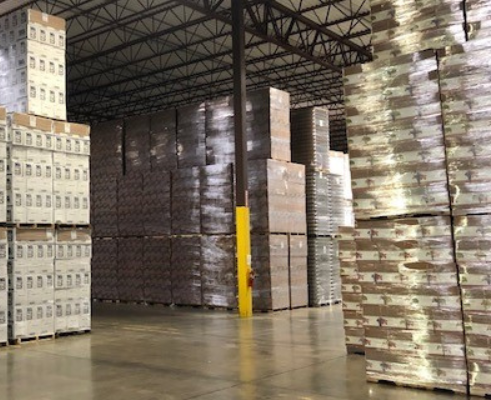
Your warehouse strategy affects almost every part of your business. The wrong warehouse setup can lead to higher transportation costs, delayed deliveries, inventory management issues, poor customer experience, and limited scalability, all of which can significantly impact overall supply chain performance and business growth.
The right warehouse solution helps businesses improve inventory control, speed up distribution, reduce operational costs, and create a stronger supply chain. That’s why understanding warehouse types is so important.
Whether you manage food products, automotive inventory, retail goods, industrial materials, or consumer packaged goods, choosing the right warehouse type can improve efficiency across your entire operation.
At Buske Logistics, we’ve spent more than 100 years helping companies optimize warehouse storage and distribution across North America. Today, brands like PepsiCo, Diageo, Ford, Stellantis, Starbucks, Lexus, and Morgan Foods trust Buske Logistics to support complex warehousing and logistics operations.
In this guide, you’ll learn:
Warehouses are facilities used to store, manage, and distribute inventory before products reach retailers, distributors, or customers. Modern warehouses do much more than store products. Today’s logistics warehouses support:
Many businesses today rely on warehouse storage and distribution providers to improve operational flexibility while reducing costs.
If you want a broader overview of warehousing operations, read our guide: What is Warehousing.
Not all warehouse types serve the same purpose, and choosing the wrong storage solution for your business can quickly lead to challenges like slow fulfillment, inventory shortages, overstocking, shipping delays, higher labor costs, and limited operational visibility.
When you choose the right warehouse type, you can improve your inventory accuracy, streamline your distribution processes, scale your operations more efficiently, reduce transportation expenses, and ultimately deliver a better experience to your customers.
As your supply chain becomes more complex, it’s important to select a warehousing solution that’s tailored to your industry, your inventory needs, and your long-term growth goals.
There are several different types of warehouse facilities used across supply chains today, and each one serves a different operational purpose.
When you understand the advantages and limitations of each warehouse type, you’re in a better position to choose the right storage strategy for your business and ensure your supply chain runs as efficiently as possible.
Public warehouses are third-party storage facilities that you can use on a short-term or long-term basis depending on your business needs. They provide a flexible and cost-effective solution without the need to invest in your own dedicated warehouse infrastructure.
These warehouses are ideal for businesses needing:
Public warehouses are a strong fit for retail businesses, ecommerce brands, importers, and small to growing companies that need flexible storage solutions. One of the biggest advantages of public warehousing is its scalability, allowing businesses to easily increase or reduce storage space based on changing inventory demand.
Private warehouses are owned and operated by a single company, giving you full control over day-to-day operations, inventory management, and storage processes. This model is typically best suited for businesses with more predictable and long-term logistics requirements.
Private warehouses are typically used by businesses with:
Private warehouses give you greater control over your operations, but they also require significant investment in warehouse space, equipment, labor, technology, and ongoing maintenance. This type of setup is typically used by large manufacturers and enterprise retailers that have the scale and resources to manage their own dedicated warehousing facilities.
Contract warehousing combines flexibility with dedicated logistics support. In this model, a warehouse provider manages operations exclusively for your business under a long-term agreement, giving you more control than shared warehousing while still maintaining operational efficiency and scalability.
Businesses choose contract warehousing because it offers:
At Buske Logistics, contract warehousing solutions help you improve inventory control and distribution performance while reducing operational complexity.
→ Learn more about our contract warehousing solutions: Contract Warehousing Solutions
→ You can also explore our guide on dedicated warehousing benefits: Dedicated Warehousing Benefits
Distribution centers are designed to handle fast-moving inventory and support rapid order fulfillment. Unlike traditional warehouses that primarily focus on storage, distribution centers are built to move products quickly and efficiently through the supply chain. They are optimized for:
Distribution centers typically use advanced warehouse management systems to help you improve inventory visibility, increase picking accuracy, and speed up delivery times. These facilities play a critical role in modern supply chain operations, especially when efficiency and fast order fulfilment are key to meeting customer expectations.
Food-grade warehouses are specifically designed to store food and beverage inventory while meeting strict safety, sanitation, and regulatory requirements. These facilities help ensure that products remain safe, compliant, and high-quality throughout storage and distribution. These warehouses support:
Food-grade warehouse operations help you reduce contamination risks while maintaining product integrity and consistency across the supply chain. According to the U.S. Food and Drug Administration (FDA), food storage facilities must follow strict compliance and sanitation standards to ensure food safety and protect consumers.
→ Explore our food-grade warehousing solutions: Food-Grade Warehousing
Ambient warehouses store products in a controlled environment without the need for refrigeration or freezing. These facilities are ideal for products that do not require temperature-sensitive handling but still need proper storage conditions to maintain quality and integrity. These warehouses are commonly used for:
Ambient storage helps you maintain product quality while avoiding the higher costs associated with cold storage operations. Learn more about our ambient warehousing solutions: Ambient Warehousing
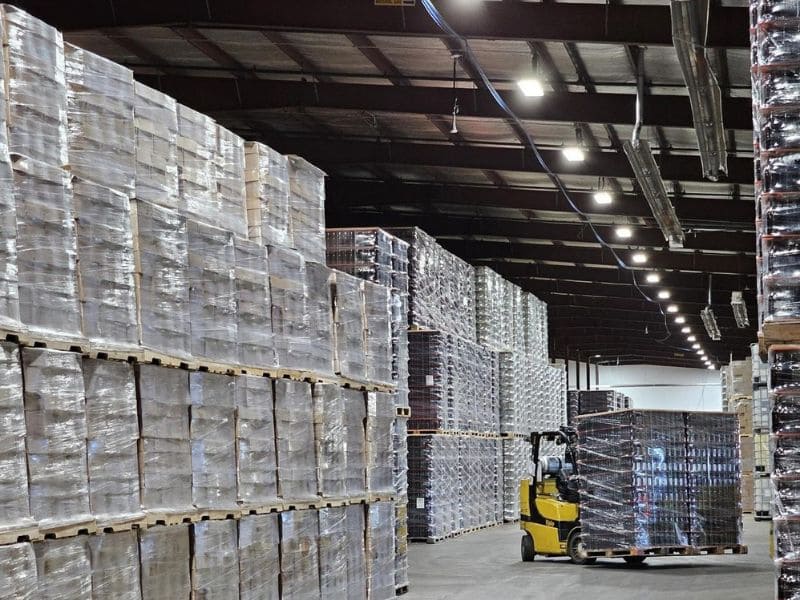
High-volume warehouses are designed to support businesses that manage large-scale inventory movement and require fast, efficient distribution. These facilities are built to handle complexity and speed, ensuring products are processed and shipped without delays even during peak demand.
These facilities are built for:
Industries that commonly rely on high-volume warehouses include retail, beverage distribution, automotive manufacturing, and consumer goods, where large-scale inventory movement and efficient distribution are essential to meeting demand and maintaining smooth supply chain operations.
→ Explore our high-volume warehousing solutions.
Manufacturing warehouses are designed to support production operations by storing raw materials, components, and finished goods. These facilities play a key role in keeping manufacturing processes running smoothly and ensuring materials are available when needed.
These warehouses help manufacturers:
Manufacturing warehouses are typically located near factories and within industrial hubs to better support production timelines and reduce transportation delays across the supply chain.
Bonded warehouses are secure storage facilities used for imported goods before customs duties and taxes are paid. These warehouses are especially valuable for businesses involved in international trade, as they help improve financial flexibility and streamline import processes.
These warehouses help importers:
Businesses engaged in global trade often rely on bonded warehouses to optimize their logistics operations and reduce upfront import costs. The U.S. Customs and Border Protection (CBP) provides official guidance on bonded warehouse regulations and import compliance requirements.
Smart warehouses use advanced technology to enhance efficiency, accuracy, and real-time visibility across warehouse operations. By integrating automation and data-driven systems, these facilities help you streamline processes and improve decision-making throughout the supply chain. Technology may include:
Smart warehouses help you improve inventory accuracy, increase labor productivity, speed up order fulfillment, and enhance overall supply chain visibility. As a result, modern logistics warehouses are increasingly relying on automation and smart technologies to stay competitive and meet the growing demands of today’s supply chains.
Different types of inventory require different storage methods to ensure efficiency, safety, and product integrity. Choosing the right warehouse storage solution helps you optimize space utilization, improve picking accuracy, and maintain better control over your inventory.
Bulk Storage
Bulk storage is designed to support high-volume inventory handling, including palletized goods, large product quantities, and industrial materials, making it an effective solution for businesses that need to manage and move large-scale inventory efficiently.
Rack Storage
Rack storage systems improve vertical storage capacity while also making inventory more accessible and easier to manage. Common rack systems include selective pallet racking, drive-in racking, push-back racking, and cantilever racking, each designed to support different inventory types and warehouse storage needs.
Bin Storage
Bin storage works best for managing small parts, eCommerce inventory, and automotive components, helping you keep products organized and easy to access. This storage method also improves picking efficiency and overall inventory control, making day-to-day warehouse operations smoother and more accurate.
Climate-Controlled Storage
Climate-controlled storage is designed to protect your products from temperature fluctuations, humidity, and other environmental conditions that could impact quality or safety.
You’ll typically see this type of warehousing used in industries such as food and beverage, cosmetics, pharmaceuticals, and electronics, where maintaining product integrity is critical throughout the storage and distribution process.
Warehousing plays a critical role in logistics and overall supply chain management. Different types of warehouses are designed to support specific functions, helping you move inventory more efficiently and meet customer demands faster.
Common types of warehouse in logistics operations include:
These facilities help you achieve faster transportation, better inventory positioning, reduced shipping costs, and improved customer service by streamlining how goods move through your supply chain.
As noted by the U.S. Bureau of Transportation Statistics, warehouse and freight infrastructure continue to play a key role in shaping overall supply chain performance across the United States.
Businesses often need flexible warehousing solutions that align with changing inventory levels, seasonal demand, and long-term operational goals. Choosing the right storage duration helps you manage costs effectively while maintaining supply chain efficiency.
Short-term warehousing is ideal when you need temporary storage solutions to handle fluctuating demand or short-term logistics needs. It gives you flexibility without committing to long-term contracts.
Short-term warehousing helps you manage seasonal inventory spikes, temporary overflow stock, promotional campaigns, and sudden retail surges, giving you the flexibility to respond quickly to changing demand without disrupting your core operations.
Long-term warehousing supports your business when you need ongoing storage, dedicated operations, stable inventory management, and reliable regional distribution support.
By partnering with a long-term warehousing provider, you can improve operational consistency, strengthen supply chain efficiency, and ensure your inventory is managed in a more predictable and scalable way.
Warehouse certifications play an important role in ensuring quality, safety, and regulatory compliance across your supply chain. Working with certified facilities helps you reduce risk, protect inventory, and maintain consistent operational standards.
Common types of warehouse certifications may include:
These standards help you improve safety, enhance inventory handling, protect your products more effectively, and strengthen overall supply chain reliability. The Occupational Safety and Health Administration (OSHA) outlines key warehouse safety standards that help businesses maintain safe and compliant warehouse operations.
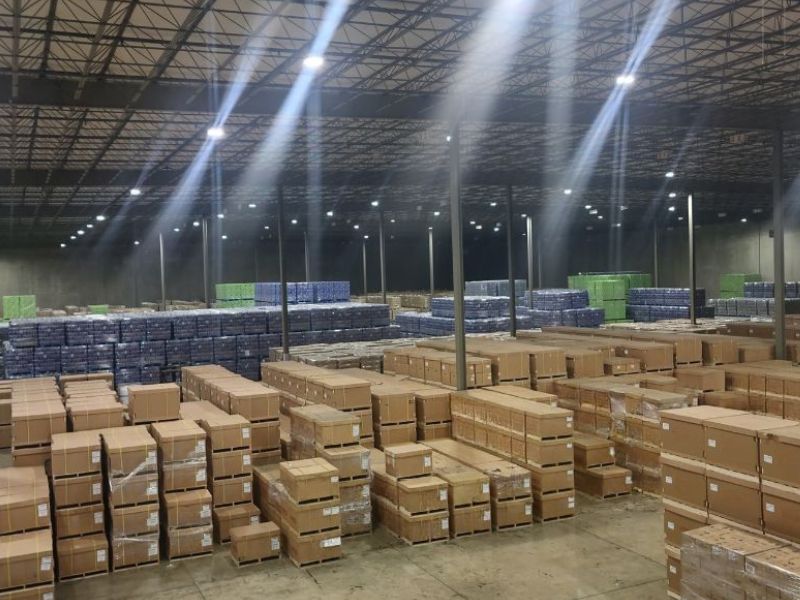
Warehouse lighting plays a critical role in your operations because it directly affects employee safety, productivity, energy efficiency, and inventory visibility. Common types of warehouse lighting include:
Modern warehouses increasingly rely on energy-efficient lighting solutions to reduce operational costs while maintaining optimal visibility and performance across all warehouse activities.
A strong warehouse strategy supports your entire supply chain by improving efficiency at every stage of operations. It helps you reduce freight costs, improve inventory visibility, speed up fulfillment, increase order accuracy, meet retail compliance requirements, and enhance overall customer satisfaction across multiple channels.
Today, modern supply chain warehouses are no longer just storage facilities. They function as strategic operational hubs that support smarter decision-making, streamline workflows, and improve responsiveness to demand fluctuations. By integrating technology, process optimization, and efficient layout planning, they actively contribute to business growth, scalability, and long-term operational efficiency.
Choosing the right warehouse solution depends on your business goals, inventory requirements, and overall distribution strategy. To make the best choice, here are the most important factors you should consider.
Different types of products require different storage conditions to ensure they remain safe, organized, and easy to manage throughout the supply chain. Understanding your inventory type helps determine the most suitable warehousing and storage approach for your business. For example:
Your distribution requirements play a key role in determining the most effective warehouse strategy. The location of your warehouse directly impacts delivery speed, transportation costs, and overall logistics performance, making it an important factor in supply chain planning.
When evaluating distribution needs, you should consider:
Your warehousing strategy should be designed to support both your current operations and your future growth. As your business evolves, your storage and distribution needs will change, so it’s important to work with a warehouse provider that can scale with you.
A scalable warehouse solution should be able to handle increased inventory volumes, seasonal fluctuations, new market expansion, and omnichannel distribution, ensuring your operations can adapt smoothly as your business grows and demand changes.
Modern warehouse management technology helps you improve inventory tracking, enhance order visibility, increase reporting accuracy, and boost overall operational efficiency, giving you better control over your supply chain performance.
5. Industry Experience
Industry-specific expertise matters because when your warehouse provider understands your sector, you benefit from improved compliance, more efficient inventory handling, higher fulfillment accuracy, and stronger overall operational performance.
At Buske Logistics, we help businesses optimize warehouse operations across North America with customized warehousing and distribution solutions. With over 100 years of experience, we support:
Our warehouse solutions are trusted by leading global brands including PepsiCo, Diageo, Ford, Stellantis, Starbucks, Lexus, and Kikkoman. These companies choose Buske Logistics because of our comprehensive and scalable warehousing capabilities, including contract warehousing, food-grade warehousing, ambient storage solutions, high-volume distribution, advanced warehouse management systems, scalable logistics support, and nationwide operational expertise.
Unlike many providers that focus solely on storage, Buske Logistics develops end-to-end warehousing strategies designed to optimize your entire supply chain and improve overall operational efficiency.
As your supply chain becomes more complex and customer expectations continue to rise, your warehouse operations need to evolve just as quickly. Today’s most competitive businesses are leaning into technology-driven solutions to stay ahead, and you should be thinking about the same.
Here are the key warehousing trends shaping the future of your operations:
By investing in modern logistics warehouses, you position your business to operate more efficiently, reduce costs, and consistently meet (or exceed) your customers’ expectations.
Choosing the right warehouse type can improve inventory management, reduce logistics costs, and strengthen your supply chain. At Buske Logistics, we provide customized warehousing solutions designed around your operational goals, inventory requirements, and long-term growth strategy.
Whether you need contract warehousing, food-grade storage, high-volume distribution, ambient warehousing, long-term storage, or short-term overflow warehousing, we have flexible solutions designed to meet your business requirements.
Our team can help you build a more efficient supply chain across North America. Contact Buske Logistics today.
The different types of warehouses include public warehouses, private warehouses, contract warehouses, distribution centers, food-grade warehouses, bonded warehouses, smart warehouses, and manufacturing warehouses. Each type serves a specific purpose depending on storage needs, industry requirements, and the level of control or flexibility a business requires in its supply chain.
Contract warehousing and public warehousing are often best suited for growing businesses because they offer flexibility, scalability, and lower upfront operational costs. These options allow companies to expand or reduce space based on demand without the long-term commitment of owning or fully operating a private facility, making them ideal for businesses in growth or transition phases.
A warehouse is primarily designed for storing inventory over a period of time, focusing on keeping goods secure and organized. In contrast, a distribution center is built for speed and efficiency, with a focus on rapid order processing, sorting, and fast movement of products to customers or retail locations.
Logistics warehouses are facilities that play a central role in the supply chain by combining storage with broader operational functions. They support activities such as inventory management, order fulfillment, packaging, and transportation coordination, helping businesses streamline the movement of goods from suppliers to end customers.
Businesses should look for a warehousing company with strong industry experience, advanced warehouse technology, and the ability to scale operations as their needs grow. Location is also important for efficient distribution and reduced transit times, along with strict compliance standards to ensure safety and regulatory adherence. In addition, businesses should prioritize inventory visibility and robust distribution capabilities to ensure smooth, efficient, and reliable supply chain operations.
Short-term warehousing is designed for temporary storage needs, such as seasonal demand, overflow inventory, or transitional logistics requirements. It offers flexibility for businesses that need space for a limited period without long-term commitments. Long-term warehousing, on the other hand, provides ongoing inventory storage and more integrated operational support, making it ideal for businesses that require consistent, year-round warehousing and supply chain management.
Buske Logistics is a trusted warehousing partner because it brings more than 100 years of combined experience in warehousing and logistics. It supports leading brands across North America with reliable, scalable warehouse storage and distribution solutions tailored to different industry needs. This long-standing expertise, combined with a focus on efficiency and flexibility, helps businesses streamline operations and maintain strong supply chain performance.

Buske Logistics is a Top 20 Private Warehousing 3PL. Let's build a solution for your supply chain.