.png)
-p-130x130q80.png)
Logistics is the process of planning, implementing, and controlling the efficient movement and storage of goods from origin to final destination. When done right, it reduces costs, speeds up delivery times, and gives your business a measurable competitive advantage.
I've seen firsthand how the difference between a struggling supply chain and a high-performing one often comes down to how well a company manages its logistics. Whether you're shipping pallets of auto parts or fulfilling direct-to-consumer beverage orders, the fundamentals are the same: get the right product, to the right place, at the right time, at the right cost.
This guide breaks down exactly how logistics works, what the key components are, which industries rely on it most, and how to find a partner that can handle it all for you.
Most people think of logistics as just "shipping." In reality, it spans the entire supply chain, covering procurement, warehousing, transportation, inventory management, order fulfillment, and reverse logistics. If any one of those pieces breaks down, your customers feel it.
According to the U.S. Bureau of Transportation Statistics, freight transportation and logistics account for over $1 trillion in annual economic activity in the United States alone. That number reflects just how central this function is to American commerce.
Here is why getting logistics right matters at every stage of your business:
If you want to understand the full scope of what falls under this umbrella, this resource on what are logistics services breaks it down clearly with real-world examples.
Understanding what logistics actually involves helps you identify where your operation may be losing time or money. Here are the six core pillars:
This is the most visible layer: moving goods by truck, rail, air, or sea. For most domestic U.S. shippers, over-the-road trucking handles the bulk of volume. Contract transportation arrangements lock in capacity and pricing with carriers, which protects you against spot market volatility.
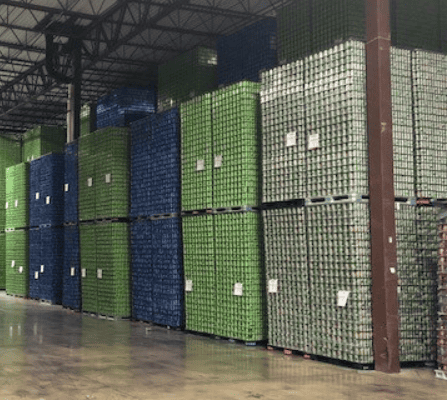
Storage is never just storage. Modern warehousing involves slotting optimization, pick-and-pack operations, cross-docking, and inventory accuracy management. A detailed look at logistics warehousing and distribution guide covers the nuances that most operators overlook, including how facility location affects your freight costs significantly.
Carrying too much inventory ties up cash. Carrying too little leads to stockouts. The goal is a lean, demand-driven inventory model supported by real-time data and forecasting tools.
Whether you're fulfilling B2B purchase orders or direct-to-consumer e-commerce orders, the fulfillment process needs to be accurate, fast, and trackable. Errors here are expensive, both in returns processing costs and in customer trust.
Inbound logistics refers to the receiving, storage, and internal movement of materials coming into your facility from suppliers. Managing this well reduces dock congestion, shortens receiving times, and keeps your production lines fed.
Many companies underinvest in inbound management relative to outbound, which creates upstream bottlenecks that ripple throughout the entire operation.
Returns are a cost of doing business, especially in e-commerce. A structured reverse logistics process sorts, inspects, restocks, or disposes of returned goods efficiently. Ignoring this step leads to write-offs that could otherwise be recovered.
A standard logistics cycle moves through the following stages:

Different industries have completely different requirements for temperature control, timing, compliance, and handling. Here is how logistics requirements vary by sector:
Food and Beverage
Perishable products require temperature-controlled transport and storage, strict traceability, and compliance with FDA food safety regulations. Whether you're handling a national beverage brand or a regional food distributor, beverage logistics and food logistics demand a level of precision that general providers often can't meet.
Automotive
Just-in-time delivery is not a preference in automotive manufacturing; it's a requirement. A missed delivery window can halt an entire assembly line. Automotive logistics involves sequencing parts deliveries in exact production order, which requires deep coordination between the 3PL and the OEM.
Retail
Retailers face chargebacks, compliance labels, routing guide requirements, and tight delivery windows from major buyers like Walmart and Target. Retail logistics specialists know how to navigate these requirements and protect your margins.
Industrial
Heavy machinery, raw materials, and industrial components require specialized handling equipment and often non-standard freight solutions. Industrial logistics providers must be equipped for oversized loads and complex freight arrangements.
International
Cross-border shipping adds customs compliance, duties, documentation, and currency considerations to an already complex process. International logistics requires a partner with established carrier relationships and expertise in both U.S. and Canadian regulatory frameworks, at a minimum.
You can also explore dedicated inbound logistics solutions designed specifically around supplier-to-DC or supplier-to-plant flows, which is a critical but often overlooked operational segment.

One of the biggest decisions any growing company faces is whether to manage logistics internally or outsource it to a third-party logistics provider. Here is an honest breakdown:
In-house logistics gives you direct control but requires capital investment in facilities, equipment, technology, and staff. For most companies outside the largest Fortune 100, maintaining a best-in-class in-house operation is cost-prohibitive.
Third-party logistics (3PL) providers give you access to existing infrastructure, trained staff, established carrier networks, and warehouse management technology without the capital cost. You pay for what you use and scale up or down based on demand.
For a deeper comparison of how 3PL arrangements actually work in practice, the 3pl third party logistics resource walks through the models, the pricing structures, and what to expect operationally.
The contract logistics complete guide specifically covers long-term outsourcing arrangements where a 3PL takes on dedicated facilities or dedicated staff for a single client, which is often the right model for high-volume shippers with predictable freight patterns.
Choosing a provider is one of the highest-stakes decisions in your supply chain. A poor fit costs you money, customer relationships, and time. Here is what I look at when evaluating a logistics service provider:
Experience in your industry: Generic providers often struggle with sector-specific requirements. Ask for case studies and reference clients in your vertical.
Geographic footprint: Where are their facilities relative to your suppliers and customers? Facility location drives freight cost more than almost any other variable.
Technology stack: Do they offer real-time inventory visibility, EDI integration, and WMS reporting that connects to your ERP? Data blind spots are expensive.
Scalability: Can they handle your peak season volume without degrading service levels? Ask specifically about peak season staffing and space capacity.
Financial stability: A financially unstable 3PL is a supply chain risk. Look for providers with long operating histories and strong client retention rates.
A structured way to evaluate potential providers is covered in detail in this resource on how to choose contract logistics provider, including the specific questions you should ask during the RFP process.
For a shortlist of the best operators in the industry, this breakdown of top logistics companies compares key players across service offerings, footprint, and specialization.
Beyond selecting the right provider, the value of outsourcing is well documented at the industry level. According to the CSCMP State of Logistics Report, U.S. businesses that strategically outsource logistics functions often see measurable gains in cost efficiency and service performance compared to managing every function in-house.
Buske Logistics has been in this industry for over 100 years. That is not a marketing line; it is operational depth that most providers simply cannot match. With 40+ facilities and 7.5+ million square feet of warehousing, packaging, and distribution space across the U.S. and Canada (plus operations in Mexico), Buske serves Fortune 500 and Fortune 1,000 companies alongside growing mid-market and DTC brands.
What that means in practice:
Buske ranks among the 2026 top 100 3PL companies, a position earned through client retention, operational execution, and continuous investment in people and technology.
Start by auditing your current logistics costs across transportation, warehousing, and fulfillment. Then request a consultation with a Buske Logistics specialist to identify where the biggest inefficiencies are and what a tailored 3PL solution could save you.
With over 100 years of experience and one of the largest 3PL footprints in North America, Buske is equipped to handle your volume today and scale alongside you tomorrow.
Logistics is a subset of supply chain management focused specifically on the movement and storage of goods.
Supply chain management is broader and includes supplier relationships, procurement strategy, and demand planning. Logistics is the execution layer that moves goods from point A to point B efficiently and cost-effectively. In practice, strong logistics execution is what makes a supply chain strategy actually work.
A 3PL (third-party logistics) company manages warehousing, transportation, fulfillment, and related supply chain functions on behalf of another business.
Instead of maintaining your own warehouses and carrier contracts, you outsource those functions to a 3PL that already has the infrastructure, staff, and technology in place. The 3PL handles day-to-day execution while you focus on your core business. Most 3PLs also offer value-added services like kitting, labeling, and quality inspection.
3PL pricing varies widely based on services used, volume, and contract structure, but most arrangements include storage fees, handling fees, and transportation management costs.
Some providers charge per pallet stored per month, others bundle services into a flat management fee. Contract logistics arrangements typically offer better per-unit pricing than transactional or spot-based relationships. Requesting a detailed RFP response from multiple providers is the best way to get accurate, comparable pricing.
Food and beverage, automotive, retail, industrial, and international freight each have distinct compliance, handling, and timing requirements that general providers often cannot meet.
For example, automotive just-in-time sequencing requires precise delivery windows tied to production schedules. Food logistics requires temperature control, traceability, and FDA compliance. Choosing a provider without proven experience in your industry is a significant operational risk.
Common warning signs include rising freight costs, frequent stockouts, high return rates, missed delivery windows, and poor inventory accuracy.
If your logistics costs are consistently above 10-12% of revenue, or if your on-time delivery rate is below 95%, those are strong signals that your current setup needs review. Benchmarking your performance against industry standards and getting a third-party assessment from a qualified 3PL is a practical first step.
Contract logistics involves a long-term, dedicated arrangement where a 3PL manages specific facilities or operations exclusively for one client.
Standard 3PL arrangements are often shared-space or transactional. Contract logistics gives you dedicated capacity, customized processes, and greater operational integration with your business. It is typically the right model for companies with high, predictable volume who need consistent service levels and tighter cost control.
Yes, many 3PLs offer cross-border and international freight management, though the level of expertise varies significantly between providers.
A capable international logistics partner handles customs documentation, duties, carrier coordination across modes, and regulatory compliance in both origin and destination countries. For companies shipping between the U.S., Canada, and Mexico, a provider with established North American infrastructure is a clear advantage over one that relies on brokers for cross-border moves.
Logistics is not a background function; it is a direct driver of your revenue, margins, and customer experience. Companies that invest in the right infrastructure and the right partners consistently outperform those that treat it as a cost to minimize rather than a capability to build.
Whether you're evaluating your first outsourcing arrangement or looking to consolidate multiple providers under a single, accountable partner, Buske Logistics has the experience, footprint, and industry-specific expertise to deliver.
Over 100 years in the business means we have seen every supply chain challenge there is, and we have built the systems to solve them. Reach out Buske Logistics today to start a conversation about what the right logistics solution looks like for your operation.

Buske Logistics is a Top 20 Private Warehousing 3PL. Let's build a solution for your supply chain.