.png)
-p-130x130q80.png)
Work in process inventory (WIP) is one of the most important, yet often overlooked components of an efficient supply chain. If your business involves manufacturing, assembly, kitting, or production staging, you already rely on WIP inventory to keep operations moving.
The key is ensuring it is managed effectively. When WIP inventory is not properly controlled, it can lead to higher inventory carrying costs, production delays, limited visibility into operations, and slower order fulfillment.
However, when optimized, WIP inventory becomes a competitive advantage, helping you improve cash flow, increase production efficiency, enhance order accuracy, and deliver a better customer experience.
At Buske Logistics, we bring over 100 years of supply chain expertise, helping companies across the U.S. and Canada optimize inventory, production flow, and fulfillment operations. We support leading brands like PepsiCo, Diageo, and Stellantis and we apply the same proven strategies to every client we serve.
In this guide, you’ll learn:
Work in process inventory (WIP) refers to partially completed goods that are still in production but not yet ready for sale. Unlike raw materials or finished goods, WIP includes products that have already entered the production process but are not fully completed.
Work in Process Inventory Includes:
Simple Definition: Work in process inventory = goods currently being manufactured but not completed.
Work in process (WIP) inventory has a direct impact on both your financial performance and operational efficiency. Because WIP represents products that are still moving through production, it ties up capital, consumes warehouse space, and influences how quickly customer orders can be completed. Without proper visibility and control, WIP inventory can create bottlenecks that slow production, make inventory tracking more difficult, delay fulfillment, and increase storage and labor costs.
Finding the right balance is essential. Too much WIP inventory can lead to inefficiencies, excess carrying costs, and capital being tied up in unfinished goods. Too little WIP inventory, on the other hand, can disrupt production schedules, create downtime, and prevent you from meeting customer demand.
The goal is to maintain the optimal level of WIP inventory so your operation can run smoothly, control costs, and keep products moving efficiently from production to fulfillment.
The work in process (WIP) inventory formula helps manufacturers calculate the value of products that are currently in production but not yet completed.
WIP Inventory = Beginning WIP + Manufacturing Costs - Cost of Goods Manufactured (COGM)
Where:
This formula provides visibility into production efficiency and helps businesses monitor inventory levels, control costs, and improve manufacturing performance.
If you're wondering how to calculate work in process (WIP) inventory, follow these steps:
Step 1: Determine Beginning WIP
Identify the value of unfinished goods that were in production at the start of the accounting period.
Step 2: Add Manufacturing Costs
Calculate the total manufacturing costs incurred during the period, including:
Step 3: Subtract Cost of Goods Manufactured (COGM)
Subtract the value of goods that were completed and transferred to finished goods inventory during the period.
Final Calculation
Use the following formula to determine ending work in process inventory:
This calculation helps businesses track partially completed inventory, monitor production performance, and maintain accurate inventory records.
Let’s walk through a simple work in process inventory example.
Calculation
Using the WIP inventory formula: WIP = 50,000 + 200,000 – 180,000 = $70,000
Result
The company has $70,000 in ending work in process inventory.
This means that $70,000 worth of products remain in production at the end of the accounting period and have not yet been completed or transferred to finished goods inventory.
The ending work in process inventory formula is used to calculate the value of goods that remain in production at the end of an accounting period.
Ending WIP = Beginning WIP + Manufacturing Costs - COGM
Where:
The resulting ending WIP inventory value appears on the balance sheet as a current asset and reflects the value of products that are still in the manufacturing process and have not yet been completed.
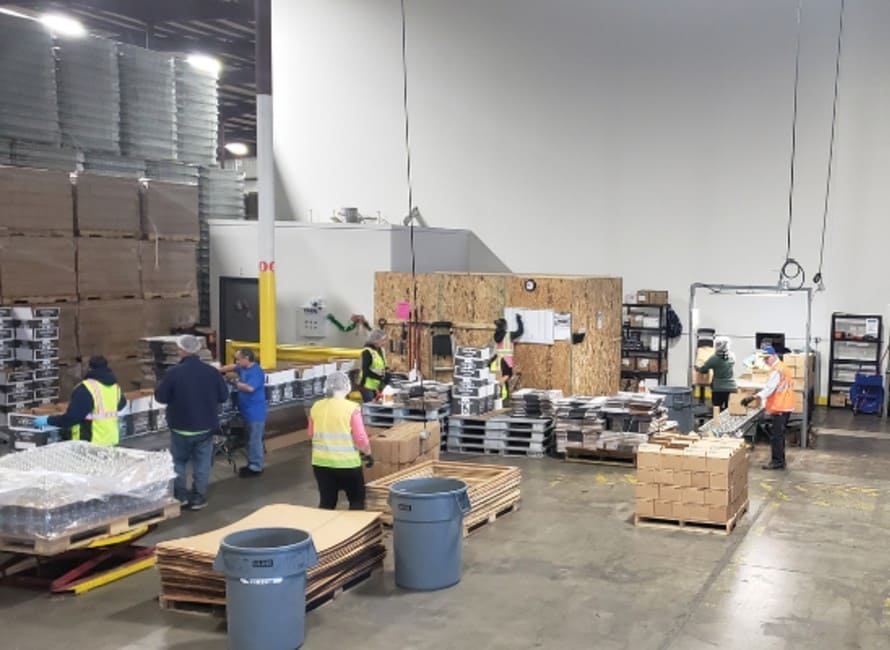
To identify work in process inventory in your warehouse or production facility, focus on areas where products are actively being worked on but have not yet been completed. Common locations include:
These areas typically contain materials, components, or partially completed products that are still moving through the production process and have not yet been transferred to finished goods inventory.
Using a warehouse management system (WMS) can significantly improve WIP visibility by providing real-time inventory tracking, production status updates, and more accurate inventory reporting.
Learn more about WMS technology: Warehouse Management System (WMS): Benefits and Best Practices
Managing work in process (WIP) inventory can become challenging as your production operations grow. Without the right systems, technology, and processes in place, it can be difficult to maintain accurate visibility into materials and products as they move through different stages of production.
Common WIP inventory challenges include:
By addressing these challenges, you can improve inventory visibility, streamline production workflows, control costs, and maintain more accurate inventory data across your supply chain.
To keep production running efficiently and maintain accurate inventory control, it's important to follow proven work in process (WIP) inventory management strategies. Leading companies use the following best practices to optimize WIP inventory, improve visibility, and reduce operational costs.
One of the most effective ways to improve work in process (WIP) inventory management is to implement real-time inventory tracking. Modern inventory management systems provide visibility into inventory at every stage of production, allowing you to monitor material movement, track production progress, and identify potential bottlenecks before they impact operations.
With real-time data, you can make faster decisions, improve inventory accuracy, and reduce the risk of stock discrepancies that can disrupt production and fulfillment. By gaining a clear view of your WIP inventory throughout the production cycle, you can better control costs, optimize resource allocation, and maintain a more efficient workflow.
To learn more about best practices for inventory visibility and control, explore our guide on inventory management: inventory management.
An efficient warehouse layout and workflow can significantly improve how work in process inventory moves through your operation. By reducing unnecessary travel, minimizing handling touches, and eliminating delays between production stages, you can keep materials and products moving smoothly from one process to the next.
A well-designed facility ensures that inventory is stored in the right locations, production areas are properly organized, and workflows support efficient movement throughout the warehouse.
To learn more about maximizing warehouse efficiency and space utilization, read our guide on warehouse capacity planning: warehouse capacity planning to maximize space.
If you're managing work in process inventory manually or with limited visibility, a warehouse management system (WMS) can help you gain greater control over your operations. A WMS provides the tools you need to track inventory more accurately, monitor production activity, and make better operational decisions.
Key benefits include:
With a WMS, you can improve inventory accuracy, reduce manual errors, and gain better visibility into products as they move through different stages of production.
Learn more about warehouse management systems.
Integrating your order management and inventory systems is essential for maintaining accurate visibility across your supply chain. When these systems work together, inventory levels, production status, and customer orders are updated in real time, helping you make more informed decisions and respond quickly to changing demand.
For businesses managing work in process inventory, system integration also helps streamline workflows, improve production planning, and ensure inventory is available when and where it's needed.
Learn more about the benefits of connected systems in our guide to order management systems: order management systems.
Production bottlenecks are one of the most common causes of excessive work in process inventory. When materials or products become stuck at a particular stage of production, WIP begins to accumulate, slowing throughput and reducing overall efficiency.
Identifying where these delays occur allows you to address the root causes, whether they involve labor constraints, equipment limitations, inefficient workflows, or inventory shortages.
As your operations grow, managing activities such as kitting, assembly, and packaging in-house can become time-consuming and resource-intensive. Outsourcing these functions to a logistics partner can help improve efficiency, reduce labor demands, and allow your team to focus on core business activities.
Consider outsourcing:
Value-added logistics services can help streamline production workflows, improve inventory management, and support faster order fulfillment while maintaining quality and consistency across your operations.
Learn more about how Buske Logistics supports businesses with kitting and assembly services and comprehensive value-added logistics solutions to help optimize operations and improve supply chain performance.
Accurate demand forecasting can help you maintain the right inventory levels and reduce excess work in process (WIP) inventory. When you have better visibility into customer demand and production requirements, you can align manufacturing schedules more effectively and avoid overproduction.
Learn how Buske Logistics helps businesses improve forecasting accuracy and operational efficiency through its supply chain optimization solutions.
Understanding the differences between inventory types can help you improve inventory management, optimize production processes, and maintain better visibility across your supply chain.
By accurately tracking each inventory type, you can better manage production schedules, control inventory costs, and improve overall operational efficiency.
If you want a quick way to calculate your work in process inventory, use the following formula:
Ending WIP Inventory = Beginning WIP + Manufacturing Costs – Cost of Goods Manufactured (COGM)
To calculate your WIP inventory, simply:
This simple calculation acts as a work in process inventory calculator, helping you determine the value of partially completed goods that remain in production at the end of an accounting period.
Work in process (WIP) inventory has a significant impact on your company’s financial health because it directly affects profit margins, balance sheet accuracy, cost accounting, and cash flow.
Every unfinished product represents capital that is tied up in materials, labor, and overhead costs until production is complete and the product can be sold. When WIP inventory levels become too high, cash becomes locked into unfinished goods, reducing financial flexibility and increasing carrying costs.
According to the U.S. Small Business Administration, maintaining strong financial controls and proper inventory management is essential for business stability and long-term growth. Effective inventory management helps businesses maintain healthier cash flow, improve financial visibility, and support more informed operational decisions.
As your business grows, managing work in process (WIP) inventory internally can become increasingly complex. More products, production stages, and inventory movements often create challenges with visibility, accuracy, and operational efficiency.
Partnering with a 3PL (third-party logistics provider) can help simplify WIP inventory management by providing the systems, expertise, and resources needed to support your operations. A 3PL can help you improve inventory visibility, streamline workflows, reduce operational bottlenecks, and maintain more accurate inventory records throughout the production process.
By leveraging advanced technology and experienced logistics support, you can focus on growing your business while improving control over your work in process inventory.
Learn more in our guide to third-party logistics: 3PL (Third-Party Logistics) guide.
Partnering with a third-party logistics (3PL) provider can help you improve work in process inventory management while increasing operational efficiency across your supply chain. A 3PL provides the resources, technology, and expertise needed to support growth and streamline production-related activities.
By leveraging a 3PL's capabilities, you can reduce operational complexity, improve inventory control, and maintain greater flexibility as your business grows.
Work in process (WIP) inventory management plays a critical role across a wide range of industries. While the specific challenges may vary, maintaining visibility, controlling inventory levels, and supporting efficient production processes are common priorities.
Food and beverage companies often manage high-volume production environments with strict quality and inventory control requirements. Effective WIP inventory management helps maintain product flow, reduce waste, and support on-time distribution.
Learn more: Food Logistics Solutions
Automotive manufacturers and suppliers rely on accurate WIP inventory tracking to support complex production schedules, parts management, and just-in-time operations. Improved visibility helps reduce delays and maintain production efficiency.
Learn more: Automotive Logistics Services
Retail and omnichannel businesses must balance inventory across multiple sales channels while maintaining efficient fulfillment operations. Effective WIP inventory management supports faster order processing and improved inventory accuracy.
Learn more: Omnichannel Distribution
Effective work in process (WIP) inventory optimization requires the right combination of experience, technology, and operational expertise. Buske Logistics helps businesses improve inventory visibility, streamline workflows, and support efficient production operations through:
By combining technology-driven solutions with extensive logistics experience, Buske Logistics helps businesses manage WIP inventory more effectively while supporting growth, efficiency, and supply chain performance.
As production volumes grow and supply chains become more complex, managing work in process (WIP) inventory can become increasingly challenging. Outsourcing WIP inventory management may be a good option if you are experiencing any of the following:
Partnering with an experienced logistics provider can help improve inventory visibility, streamline production workflows, reduce operational costs, and support sustainable growth as your business expands.
Work in process (WIP) inventory refers to partially completed products that are still moving through the manufacturing process. These goods have incurred costs for raw materials, labor, and overhead but are not yet finished and ready for sale. WIP inventory represents an important stage between raw materials and finished goods. Managing it effectively helps manufacturers maintain production flow and control costs.
Work in process inventory is commonly calculated using the following formula: WIP=Beginning WIP+Manufacturing Costs-COGM
This formula helps manufacturers determine the value of partially completed goods at a specific point in time. Tracking WIP accurately provides better visibility into production performance and inventory levels. It also supports financial reporting and operational planning.
The ending WIP inventory formula calculates the value of unfinished goods remaining at the end of an accounting period: Ending WIP=Beginning WIP+Costs-COGM
This calculation helps businesses measure production efficiency and understand how much inventory remains in progress. Accurate WIP reporting supports budgeting, forecasting, and inventory management decisions. It also helps identify production trends over time.
High WIP inventory is often caused by production bottlenecks, inefficient workflows, equipment downtime, or inaccurate demand forecasting. When products move slowly through production stages, unfinished inventory begins to accumulate. Excessive WIP can tie up capital and reduce operational efficiency. Identifying and resolving process constraints is essential for maintaining healthy inventory levels.
A good WIP level varies depending on the industry, production process, and business objectives. In general, manufacturers aim to keep WIP inventory as low as possible while maintaining smooth production flow and meeting customer demand. Too much WIP can increase costs, while too little may create production interruptions. The ideal balance supports efficiency without sacrificing responsiveness.
A 3PL can improve WIP inventory management by providing better inventory visibility, streamlined workflows, and scalable warehousing solutions. Advanced technology and reporting tools help manufacturers track inventory movement throughout the production process. This can reduce inefficiencies, improve accuracy, and support faster decision-making. A well-managed logistics partner can also help optimize overall supply chain performance.
Work in process inventory is typically found on production floors, assembly lines, manufacturing workstations, and staging areas. These are locations where products are actively being transformed from raw materials into finished goods. The amount and location of WIP inventory often reflect how efficiently a production operation is running. Monitoring these areas helps manufacturers maintain control over production flow and inventory costs.
Work in process (WIP) inventory is more than just an accounting metric, it plays a critical role in your operational efficiency, production flow, and overall profitability. When managed effectively, WIP inventory helps you reduce carrying costs, improve production efficiency, and create a more scalable operation that can support long-term growth.
If you're looking to lower inventory costs, increase throughput, and gain greater visibility into your supply chain, a stronger WIP inventory strategy is essential. The right processes, technology, and logistics expertise can help you minimize bottlenecks, improve inventory accuracy, and keep products moving efficiently through every stage of production.
With more than 100 years of experience, Buske Logistics helps businesses across North America optimize inventory management, streamline warehouse operations, and enhance fulfillment performance. From warehousing and distribution to value-added services and supply chain solutions, our team provides the expertise and infrastructure needed to support your growth.
Ready to improve your work in process inventory management?
Contact Buske Logistics today to learn how our customized logistics solutions can help you build a more efficient, cost-effective, and scalable supply chain.

Buske Logistics is a Top 20 Private Warehousing 3PL. Let's build a solution for your supply chain.