.png)
-p-130x130q80.png)
Contract packaging (also called co-packing or co-packaging) is the outsourcing of packaging operations to a third-party specialist who packages a brand's products on its behalf. A contract packager receives raw materials, components, or finished goods and performs services including kitting, assembly, shrink wrapping, display building, repackaging, relabeling, and promotional pack assembly before storing and shipping the finished product. Contract packaging is used by brands across food & beverage, CPG, pharma, automotive, and consumer goods to reduce capital investment, accelerate speed-to-market, and scale packaging capacity without fixed overhead.
In simple terms: you make or source the product; the contract packager turns it into a retail ready, shelf ready, or distribution ready package at scale, faster, more cheaply, and with more flexibility than you could achieve building that capability internally.
Contract packaging sits at the intersection of manufacturing services and logistics. It is not about making the product, that is contract manufacturing. It is not simply about storing and shipping, that is warehousing and fulfillment. Contract packaging is the operational layer in between: the labor, equipment, and expertise required to take a product from its base form and assemble, bundle, kit, label, wrap, or display-configure it according to retail, club store, e-commerce, or promotional requirements.
Who uses contract packaging? Any brand with packaging needs that are too variable, seasonal, complex, or capital-intensive to manage in-house. That includes many CPG, food & beverage, personal care, pharmaceutical, and consumer goods brands. Buske Logistics supports clients such as Diageo with seasonal limited-edition whisky gift sets, DUDE Wipes with club store variety packs for Costco, and Fortune 100 automotive brands like Stellantis and Ford with aftermarket parts kits for dealer distribution.
These three terms are frequently confused and using the wrong one in an RFP can send your inquiry to the wrong type of vendor. Here is the precise distinction:
Are Contract Packaging and Co-Packing the Same?
Yes, in practice, the terms are used interchangeably. "Co-packing" and "co-packaging" are industry shorthand for the same service as "contract packaging." Some practitioners use "co-packing" specifically for food & beverage contexts and "contract packaging" for broader CPG and industrial applications, but no authoritative distinction exists. In an RFP, using either term will reach the same type of provider.
Understanding the operational flow of a contract packaging program helps brand managers set realistic expectations, draft more accurate RFPs, and evaluate provider capabilities accurately.
The brand provides finished product specifications, packaging materials specs, quality standards, and output requirements. The co-packer configures the packaging line, sources any required equipment, and runs qualification batches to validate line speed, fill accuracy, seal integrity, and label placement against spec.
Raw materials, finished goods, packaging components, inserts, labels, and display materials all arrive at the co packer’s facility. Each inbound shipment is inspected against quality specifications before release to production. Lot numbers and expiry dates are captured for traceability. For food clients, this includes allergen segregation protocols.
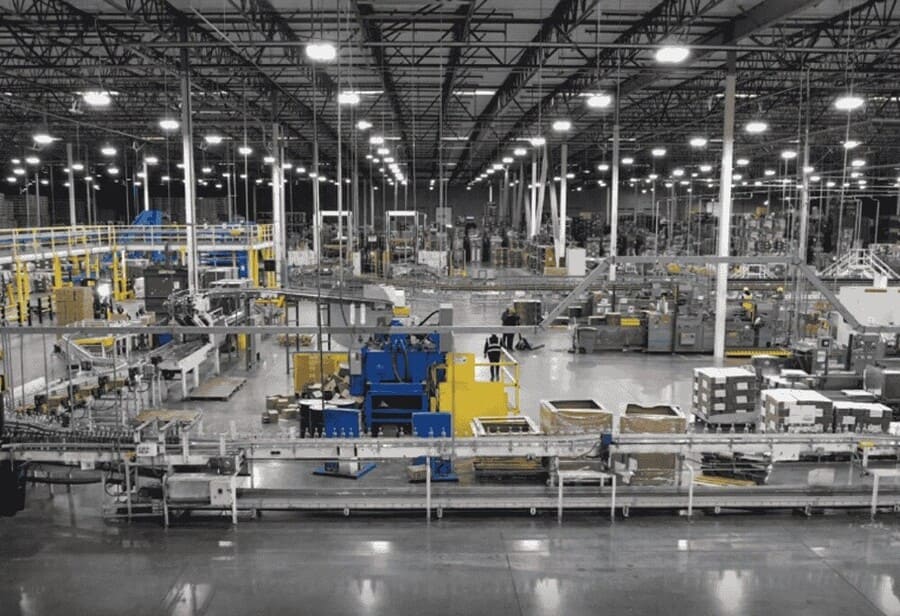
The packaging line executes the program, including kitting, assembling, wrapping, filling, sealing, labeling, or displaying the product per specification. Inline quality checks monitor fill weights, seal integrity, label placement, and count accuracy throughout the run. Finished units are staged for outbound.
Final quality inspection confirms finished goods meet all specifications before shipment. Documentation, including Certificate of Conformance, production records, and label verification, is generated for the brand’s records. Any nonconforming units are quarantined and disposition documented.
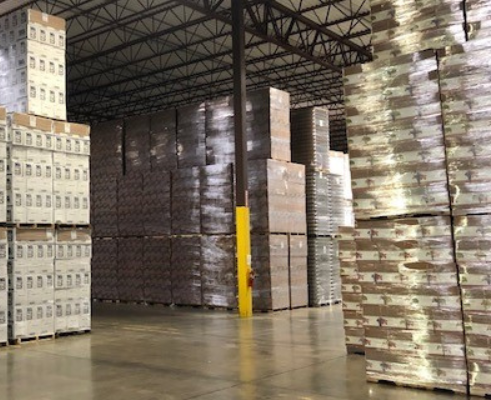
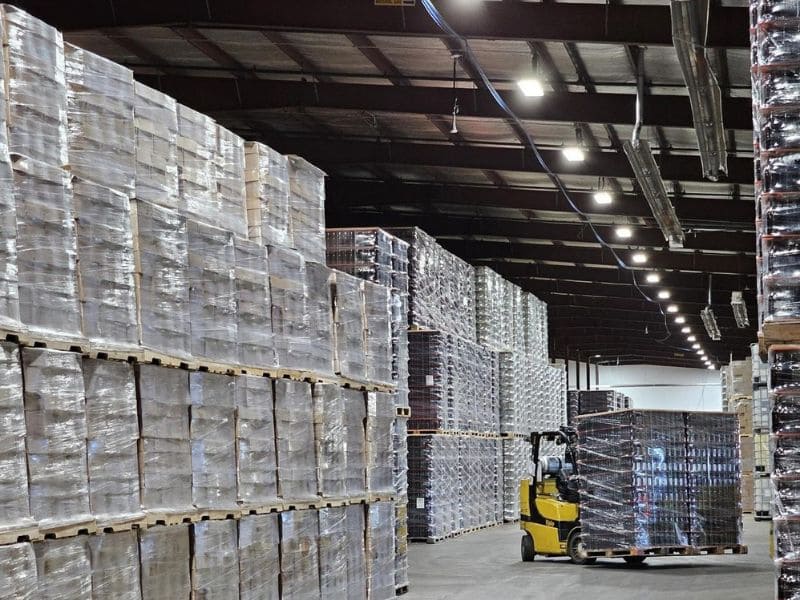
At Buske Logistics, finished packaged goods flow directly into our adjacent warehousing system, with no additional transport leg, no rehandling cost, and no additional dwell time. Inventory is immediately available-to-ship in our WMS client portal. This is the integrated pack + store advantage that standalone co-packers cannot offer.
Finished goods ship to retail distribution centers, e-commerce fulfillment centers, or direct to stores per the brand's routing guide. For retail distribution such as Walmart, Target, Costco, and Kroger, Buske’s retail compliance team manages EDI, routing guide adherence, and OTIF performance to prevent chargebacks.
Buske Logistics operates contract packaging programs across a full spectrum of service types, from high-volume automated lines to hand-assembly programs requiring manual dexterity and quality precision. Our packaging programs serve global brands including Diageo, PepsiCo, Ardagh, Stellantis, and more, as well as fast-growing D2C brands like DUDE Wipes who need a packaging partner that can scale with them.
Multi-component kit builds, including product, inserts, and accessories assembled into a retail or subscription ready package. Used for variety packs, gift sets, promotional kits, and parts kits (automotive, industrial).
Heat-applied shrink film wrapping of individual items, multi-packs, and bundled trays. Common for beverage multi-packs, produce trays, media products, and club store bundles. Available in POF, PVC, and polyolefin film formats.
Retail floor display construction, including PDQ trays, shipper displays, end-cap units, pallet displays, and header card assembly. Buske builds displays for Walmart, Target, Costco, and club store formats to full retailer spec.
Costco, Sam's Club, and BJ's require unique club-size configurations. Buske designs and runs club pack assembly for variety packs, club bundles, multi-packs, and seasonal gift sets, all to club store routing and labeling specifications.
Limited-time promotional packs, including BOGO bands, bonus pack stickering, on-pack promotional items, gift with purchase kits, and holiday configurations. Fast-turnaround programs for seasonal campaigns and retail promotional windows.
Product rework, repackaging for new markets or format changes, relabeling for regulatory compliance or rebranding, and returns repackaging. Critical for SKU transitions, market localization, and retail compliance corrections.
Assemble multiple SKUs into variety configurations for retail and e-commerce, including flavor variety packs, size variety packs, mixed-assortment packs, and trial size multi-packs. Both hand-assembly and semi-automated line programs available.
D2C-ready packaging programs, including branded unboxing experiences, subscription box curation and assembly, individual unit prep for Amazon FBA compliance, and DTC parcel ready custom packaging for online brands.
What truly sets Buske Logistics apart: packaging and warehousing under one roof. Finished goods flow directly from the packaging line into inventory storage, eliminating the double handling, extra freight, and coordination overhead of using separate packaging and warehousing vendors.
Buske's Integrated Pack + Store Advantage: Most contract packagers ship finished goods to a separate warehouse after packaging, which adds cost, increases transit time, and introduces additional damage risk from another handling event. Buske packages and stores under the same roof, with finished goods moving directly from packaging line to WMS inventory. For brands like PepsiCo and Ardagh managing high-velocity club store and retail programs, this eliminates an entire logistics leg and keeps total supply chain cost lower than any standalone co-packer can achieve.
Buske Logistics serves contract packaging clients across the major industries where outsourced packaging creates the most strategic value. Our certifications, facility capabilities, and operational expertise are matched to the quality, compliance, and speed requirements of each sector.
Our food and beverage clients benefit from Buske’s SQF (Safe Quality Food) and AIB certifications, allergen control protocols, and FSMA compliant facility operations. Our automotive clients, including programs for Stellantis and Ford, require precision kitting, barcode traceability, and dealer routing compliance that our WMS directed operations deliver consistently at scale.
The decision to outsource packaging operations is ultimately a capital allocation and operational focus decision. Here are the seven reasons brands consistently cite when evaluating contract packaging:
Packaging equipment, including shrink tunnels, case erectors, labelers, and display build lines, costs $250K to $5M+ per line. Contract packaging converts that capital expenditure to a variable per-unit cost, freeing capital for core business investment.
Seasonal programs, retail promotional windows, and club store launches create demand spikes of 3–10x baseline. A contract packager absorbs those spikes, you do not hire, train, or lay off. For brands like PepsiCo with major seasonal programs, this flexibility is non-negotiable.
A qualified co-packer can onboard a new SKU in 2–6 weeks, versus 6–18 months to build and qualify in-house packaging capability. For retail launches, promotional windows, and new market entries, speed-to-shelf is a direct revenue driver.
Display building for Walmart or club store configurations for Costco require specialized knowledge of retailer requirements, compliance specs, and execution standards. Buske’s retail compliance team manages these requirements for brands who lack internal expertise, eliminating costly chargebacks from day one.
An integrated co-packer + 3PL like Buske eliminates the inbound freight, rehandling cost, and coordination overhead of a separate packaging vendor. Brands typically save 15–35% on total packaging + warehousing costs versus separate vendors through the integrated model.
SQF certification, FDA registration, FSMA compliance, OTIF standards, and retailer routing guide adherence are operationally complex. A qualified co packer maintains these certifications and manages compliance so you do not have to, with financial accountability for failures.
Running a packaging operation requires specialized management, labor programs, equipment maintenance, and capital oversight. Outsourcing recaptures that management bandwidth for sales, marketing, product development, and distribution strategy, the activities that actually grow revenue.
Contract packaging pricing is highly variable depending on service type, volume, materials complexity, and program duration. Here are the primary cost drivers and typical 2026 ranges across service categories:
Key Cost Drivers to Know
Three variables move contract packaging cost more than any others: (1) volume — high volume enables automation and spreads setup cost; (2) complexity — number of components, handling steps, and quality inspection points; and (3) location — labor market wages vary 30–50% across U.S. markets. The lowest quoted unit rate is not always the lowest total cost, factoring in freight from a distant facility, the cost of separate warehousing, and the chargeback risk from retail compliance failures when comparing providers.
This is what sets Buske Logistics apart from many other 3PL providers and the reason that Fortune 500 brands from Diageo to Ford choose us over standalone contract packagers. The integrated model fundamentally changes the supply chain math.
When you use a contract packager who doesn't warehouse, the typical flow looks like this: inbound freight from your manufacturer to the co-packer's facility → packaging → outbound freight from the co-packer to your warehouse → storage → outbound distribution. That middle leg from co-packer to warehouse adds pure cost without creating additional value. You're paying for freight, handling, and time on a step that exists only because packaging and warehousing are in different buildings.
At Buske Logistics, contract packaging and warehousing operate under the same roof, managed by the same team, on the same WMS platform. Packaged product flows directly from the packaging line to the warehouse storage system, with no outbound truck, no additional receiving event, and no additional transit time. Inventory is available to ship in real time through our client portal the moment it leaves the packaging line. The result is a supply chain with one fewer logistics leg and typically 15 to 30 percent lower total packaging and storage cost versus using separate vendors for each function.
Retail distribution, particularly to Walmart, Target, Costco, and club store networks, requires packaging, labeling, EDI, and routing guide compliance that spans both the packaging and fulfillment operations. When packaging and warehousing are in different hands, compliance responsibilities are split and compliance failures fall in the gap between vendors. Buske owns the entire flow: we package to retailer spec, store per retailer requirements, and ship on retailer routing. One accountability point, one team, one SLA.
PepsiCo and Ardagh leverage this model for their high-velocity club store programs where the cost of a Costco compliance failure or late OTIF delivery to Sam's Club far exceeds any per-unit savings from a cheaper standalone co-packer.
Collaborative robots (cobots) working alongside human assemblers are becoming viable for mid volume kitting programs, picking, placing, and orienting components with 99.9%+ placement accuracy, with ROI at 500+ units per hour. Buske deploys cobotic assistance on qualifying high-velocity kitting lines.
Retailer and brand ESG commitments are driving demand for recyclable and reduced-plastic packaging formats. Co-packers are investing in paper-based alternative film lines, right-size cartonization, and elimination of secondary packaging. Buske manages sustainable packaging transitions for clients moving away from PVC and styrofoam formats.
Club store formats (Costco, Sam's Club, BJ's) are outpacing traditional grocery in volume growth driving demand for specialized club pack assembly capability. Buske's dedicated club store programs serve brands launching Costco and Sam's Club SKUs with zero prior club experience.
DTC and Amazon e-commerce require packaging that protects product in parcel transit, enables automated warehouse processing (scan-ready), delivers branded unboxing experiences, and reduces dimensional weight charges. Co-packers are adding e-commerce-specific packaging programs to serve this rapidly growing demand.
AI production scheduling optimizes line changeovers, labor allocation, and material flow across a packaging facility, reducing setup time, minimizing waste, and increasing effective line capacity by 10 to 20 percent without capital investment. Early adopters like Buske use AI scheduling to deliver faster program onboarding and more predictable lead times.
Post pandemic supply chain risk management is driving brands to nearshore packaging programs previously run offshore, prioritizing domestic co packers with integrated warehousing capability close to major distribution centers. Buske's Midwest footprint places us within 1–2 days of 60%+ of U.S. consumer population.
The right contract packaging partner can accelerate your business. The wrong one can trigger retail chargebacks, quality failures, and supply chain disruptions that cost far more than the co-packing fees. Here is a condensed evaluation framework — for the complete 12-step guide with RFP template, see Buske's How to Choose a Contract Packaging Company guide.
Contract packaging means hiring a specialist company, called a contract packager or co-packer, to package your products for you. You provide the finished goods and packaging materials; the co-packer provides the labor, equipment, and facility to assemble, wrap, label, kit, or display-configure your product at scale. It's outsourcing your packaging line rather than owning one yourself.
Contract packaging companies perform the physical packaging operations that brands don't want to run in-house: kitting, assembly, shrink wrapping, display building, club store pack assembly, promotional packaging, repackaging, relabeling, and variety pack creation. They receive your products and materials, execute packaging operations to your specifications, perform quality inspection, and ship finished goods to your distribution network. The best contract packagers like Buske Logistics also provide integrated warehousing, storing finished goods on the same site immediately after packaging.
Yes, contract packaging and co-packing are the same service described by different terms. "Co-packing" is the industry shorthand most used in food and beverage; "contract packaging" is more common in CPG, industrial, and pharmaceutical contexts. Both terms describe the outsourcing of packaging operations to a third-party provider who packages products to the brand's specifications. Using either term in an RFP will reach the same type of provider.
Contract packaging costs vary significantly by service type: kitting and assembly runs $0.50–$4.00+ per kit depending on complexity; shrink wrapping $0.15–$0.60 per unit; display building $2.00–$8.00 per display; club pack assembly $0.75–$3.00 per pack; repackaging and relabeling $0.20–$1.50 per unit. Setup and line qualification typically adds $1,500–$15,000 as a one-time cost. Volume, program complexity, and geographic market are the three biggest cost drivers — higher volume, lower complexity, and Midwest/Southeast markets all reduce per-unit cost.
Companies outsource packaging for seven primary reasons: (1) eliminate packaging equipment capital investment ($250K–$5M+ per line); (2) scale volume flexibly for seasonal programs without fixed labor overhead; (3) get to market faster — a qualified co-packer onboards a new SKU in 2–6 weeks versus 6–18 months in-house; (4) access retail compliance expertise for Walmart, Target, and club store programs; (5) reduce total supply chain cost through integrated co-pack + warehousing; (6) meet regulatory certifications (SQF, FDA, AIB) without internal investment; and (7) redirect management bandwidth from running a packaging operation to growing the core business.
Contract packaging is used across food and beverage (including spirits, snacks, RTD beverages, and meal components), CPG and personal care (household goods, beauty, health), pharmaceutical and nutraceutical, automotive aftermarket (parts kits, accessory packs), industrial and B2B, pet products, and e-commerce/DTC. Essentially any industry where packaging requirements are variable, seasonal, or specialized enough to justify outsourcing to a specialist rather than building in-house capability.
Examples of contract packaging include: a spirits brand like Diageo outsourcing seasonal holiday gift set assembly — bottles, tins, accessories, and tissue paper kitted into premium gift packaging; a snack brand having a co-packer assemble PepsiCo variety packs for Costco; an automotive company like Ford having a co-packer kit dealer parts packages with instruction booklets and accessories; a DTC brand like DUDE Wipes using Buske to create club store variety packs for Sam's Club launch; and a CPG company having damaged product reworked, relabeled, and repackaged by a co-packer to salvage inventory value.
Evaluate contract packaging companies on five non-negotiable criteria: (1) relevant certifications for your industry and retail channel (SQF, AIB, FDA, cGMP); (2) demonstrated experience running your specific program type at comparable volume; (3) retail compliance track record with your specific retailers — ask for chargeback rates; (4) integrated warehousing capability or a strong 3PL partnership to eliminate the separate pack-and-store logistics leg; and (5) contractual SLA commitments for quality, OTIF, and compliance with financial remedies for failures.

Buske Logistics is a Top 20 Private Warehousing 3PL. Let's build a solution for your supply chain.