.png)
-p-130x130q80.png)
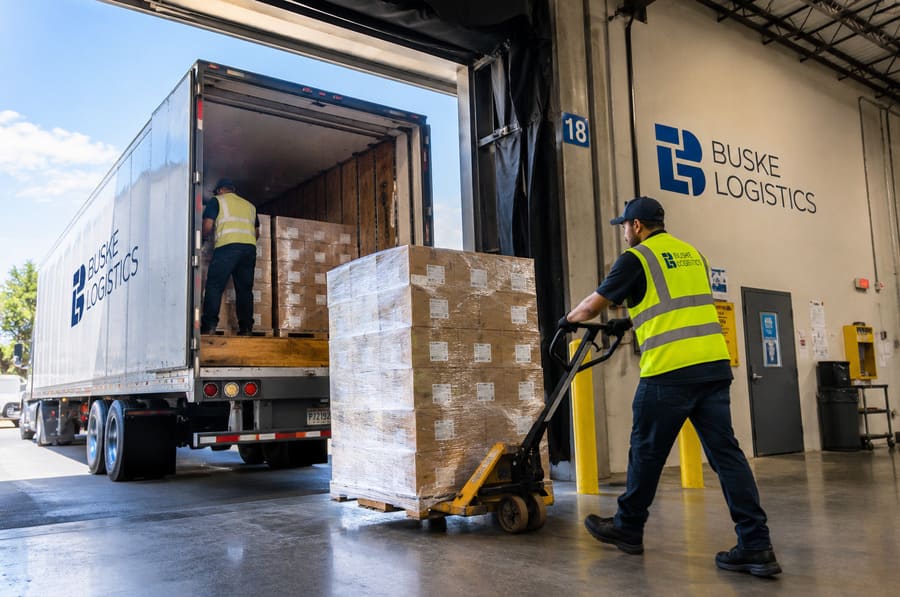
Inbound logistics covers everything that brings materials and inventory into your operation, while outbound logistics covers everything that moves finished products out to customers or retailers. Understanding both sides is essential if you want a supply chain that runs efficiently, controls costs, and scales without breaking down.
Inbound logistics is the upstream side of your supply chain. It covers the planning, movement, and storage of raw materials, components, and inventory as they travel from suppliers to your warehouses or production facilities. If anything in this stage goes wrong (late supplier shipments, poor receiving processes, disorganized storage), it creates downstream problems that are hard to fix.
The main activities inside inbound logistics operations include:
For a company like PepsiCo, inbound logistics means coordinating raw ingredient shipments from dozens of suppliers across multiple states, making sure production lines never go idle. For a manufacturer like Stellantis, it means automotive sequencing so the right parts arrive at the assembly line in exactly the right order at exactly the right time. The stakes are high on both ends.
If you want a deeper breakdown of how this function works in practice, Buske Logistics provides detailed resources that walk through the process in detail.
Outbound logistics is the downstream side. It covers everything that happens after inventory is stored and ready to ship: order processing, picking, packing, labeling, carrier coordination, last-mile delivery, and customer communication. This is the function your end customer actually feels, even if they never think about it.
The main activities inside outbound logistics include:
Brands like Molson Coors and Diageo depend on outbound logistics precision to make sure their products hit retail shelves, distribution centers, and on-premise accounts on time, every time. A missed delivery window at a major retailer can result in lost shelf space, chargebacks, and damaged relationships that take months to repair.
The U.S. Bureau of Transportation Statistics tracks freight transportation's role in the broader economy, including its contribution to U.S. GDP, which gives you a sense of how much rides on getting these processes right at scale.
Here is a clear comparison of the two functions so you can see exactly how they differ and where they overlap.
The biggest takeaway from this table is that neither function works in isolation. A disruption in inbound logistics, like a supplier going down or a port delay, immediately pressures outbound because you run out of stock to ship. And a surge in outbound demand, say a holiday spike, puts immediate strain on inbound because you need to replenish inventory faster. The two are deeply connected.
Picture a food and beverage company like Golden State Foods supplying major quick-service restaurant chains. Their inbound logistics operation means coordinating daily shipments of perishable ingredients from farms, processing plants, and co-manufacturers.
Every load needs to arrive within a tight temperature range, be received accurately, and be stored in the right zone immediately. A failure at any point in that chain affects restaurant operations within hours.
Another example is automotive manufacturing. Stellantis relies on just-in-time inbound logistics where parts arrive at the assembly plant in the exact sequence they will be installed. There is no room for buffer stock sitting in a warehouse. Everything has to be perfectly timed.
Now think about a DTC brand shipping direct to consumers across the country. Their outbound logistics operation handles thousands of individual orders daily, each one needing accurate picking, proper packaging, correct labeling, and reliable carrier pickup. Miss a single step and the customer gets the wrong item, or no item at all, and they go straight to social media.
For a company like Starbucks, outbound logistics means getting branded merchandise, packaged coffee, and retail products into hundreds of grocery stores and retail locations on a consistent schedule. That requires precise load planning, carrier management, and delivery appointment coordination.
You can learn more about how Buske structures its capabilities on our 3PL solutions page, which outlines how the company handles these operations for major enterprise clients.
Most supply chain failures do not come from one catastrophic event. They come from small inefficiencies in inbound or outbound that compound over time until they become expensive, visible problems. Here are the business consequences of getting either function wrong.
When inbound breaks down:
When outbound breaks down:
According to supply chain resilience research covered by MIT Sloan, disruptions cost companies an average of 45% of one year's profits over the course of a decade. That is the financial reality behind what looks like an operational problem.
Managing inbound and outbound logistics well requires real infrastructure, experienced people, and the right technology. Most businesses find that trying to manage both in-house leads to cost overruns, staffing headaches, and service failures that could have been avoided.
Buske Logistics has been in this business for over 100 years. It means the team has managed supply chain disruptions, economic cycles, demand explosions, and technology shifts that most providers have never seen. With 40+ facilities and 8.5+ million square feet of warehousing, packaging, and distribution space across the U.S. and Canada, Buske operates at a scale that gives clients real advantages in both inbound and outbound performance.
For enterprise clients and Fortune 500 companies like those mentioned above, Buske handles everything from automotive sequencing on the inbound side to high-volume DTC fulfillment on the outbound side, often within the same facility footprint.
To explore the full range of services Buske provides across both logistics functions, contact us and see how the company's solutions align with your specific operation.
If you are evaluating 3PL partners for inbound, outbound, or both, start by mapping out your current pain points. Where are your costs highest? Where do delays occur most often? Where are your customers feeling the impact?
Once you have that picture, you can have a productive conversation with a provider who has the scale and experience to actually solve those problems.
Reach out to Buske Logistics team to talk through your specific needs. The team works with everything from growing mid-market brands to Fortune 500 enterprises and can structure a solution around your volume, geography, and service requirements.
Inbound logistics moves goods from suppliers into your facility, while outbound logistics moves finished goods from your facility to customers.
Inbound covers receiving, storage, and inventory management. Outbound covers order fulfillment, shipping, and delivery. Both are critical to a healthy supply chain, but they involve different processes, metrics, and cost drivers.
Yes, and using a single 3PL for both functions is often more efficient than splitting them between separate providers.
When one provider manages both sides, there is better coordination between receiving and fulfillment, fewer hand-off errors, and a unified technology platform for visibility. Buske Logistics manages both functions for clients across multiple industries.
Inbound costs are dominated by freight from suppliers, receiving labor, and inventory carrying costs, while outbound costs are driven by pick-and-pack labor, carrier rates, and last-mile delivery fees.
Both sides also carry technology costs for systems like WMS and TMS platforms. Understanding your cost breakdown on each side is the first step to identifying where a 3PL partnership can generate savings.
Inbound accuracy and timeliness directly determines whether you have the right inventory available to fulfill outbound orders on time.
If inbound receiving has errors, those errors show up in your outbound order accuracy. If inbound shipments are late, you run out of stock and cannot fulfill customer orders. The two functions are tightly linked, which is why managing them together is so valuable.
Food and beverage, automotive, consumer packaged goods, and e-commerce are among the industries where logistics optimization delivers the highest financial return.
These industries deal with high order volumes, strict delivery windows, and complex inventory management requirements. Buske Logistics serves clients in all of these sectors, including major brands in beverage, automotive, and consumer goods.
Warehouse management systems (WMS), transportation management systems (TMS), and order management systems (OMS) are the core technology stack that connects inbound and outbound operations.
Real-time data from these systems allows logistics teams to anticipate shortages, optimize carrier selection, and respond faster to demand changes. A capable 3PL brings this technology as part of the service, so you do not have to build it yourself.
Both sides of your logistics operation matter equally, and letting either one fall behind will cost you more than you expect. Inbound sets the foundation by making sure you have the right inventory in the right place. Outbound delivers on the promise you made to your customers. When both run well together, your supply chain becomes a competitive advantage instead of a liability.
If you are ready to work with a 3PL that has over 100 years of experience managing both functions for some of the biggest brands in North America, visit Buske Logistics to learn more and connect with our team today.

Buske Logistics is a Top 20 Private Warehousing 3PL. Let's build a solution for your supply chain.