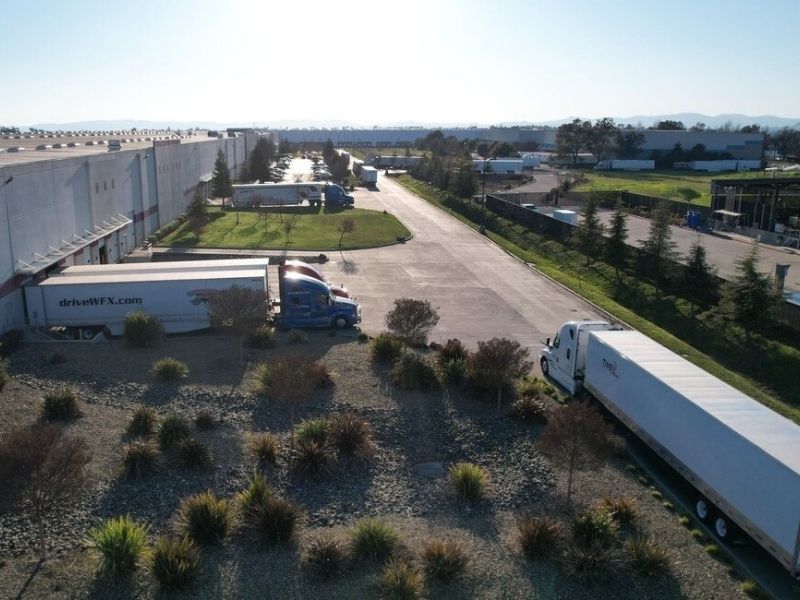
Shipping to Kroger means following Kroger's routing instructions, booking a delivery appointment at the right distribution center (DC), labeling every case and pallet correctly, sending accurate EDI documents, and arriving on time and in full. Miss any of these and you risk refused loads, chargebacks, and a weaker vendor scorecard.
Those rules have always been strict. In 2026 they matter more, because Kroger is reshaping its network and pressing suppliers on cost. This guide explains how Kroger's supply chain works today, what each requirement means in practice, and how to decide whether to run Kroger logistics in-house or with a specialist partner.
In this guide:
In 2026 Kroger pulled back from automated e-commerce warehouses, invested in traditional distribution, and pushed suppliers harder on cost. Each shift affects how you plan Kroger freight and inventory.
Fewer automated fulfillment centers. Kroger closed its customer fulfillment centers (CFCs) in Pleasant Prairie, Wisconsin; Frederick, Maryland; and Groveland, Florida in January 2026, and dropped a planned Charlotte CFC. Several smaller spoke facilities tied to those sites closed as well (Grocery Dive). More online orders are now picked in stores or handed to delivery partners such as Instacart, DoorDash, and Uber.
New investment in full-line distribution. Kroger announced a $391 million full-line distribution center in Simpson County, Kentucky, built for scalable, automated operations (Chain Store Age).
More pressure on supplier costs. On its June 2026 earnings call, Kroger said it is leaning on supplier negotiations and direct sourcing to narrow price gaps and protect margins (Supply Chain Dive).
What this means for suppliers:
Kroger sells under many regional store names, and each region is served by its own group of distribution centers. A single PO can send you to a different DC, with different receiving habits, depending on the banner.
Major Kroger banners include Ralphs, Food 4 Less, King Soopers, City Market, Fred Meyer, QFC, Fry's, Smith's, Dillons, Harris Teeter, Mariano's, Pick 'n Save, Metro Market, and Kroger-branded stores. Kroger also runs its own manufacturing plants and online businesses such as Vitacost, which has its own inbound routing guide.
Three practical points for suppliers:
The Kroger routing guide tells vendors how to ship each order: which mode, which carrier, and on what freight terms. Kroger's Vendor Standard Routing Instructions cover parcel, LTL, and truckload shipments. Always pull the current copy from the Kroger Supplier Hub before you ship.
Two terms drive most routing decisions:
The most common routing problem is not a single mistake but a gap between teams. Sales accepts a PO, the warehouse ships on its usual carrier, and nobody checks the routing guide. Assign one owner to check every Kroger PO against the guide before it leaves the dock.
Kroger DCs receive freight by appointment, and arriving outside your slot counts against you. Book the appointment as soon as the PO and ship date are confirmed, and share the confirmation number with your carrier.
If you miss a slot, rescheduling can take 24 to 48 hours or longer, depending on DC capacity. During promotions, that delay can mean empty shelves when the ad breaks.
OTIF (on-time, in-full) measures whether a shipment arrives within its appointment window with the full quantity ordered. It combines two checks:
Kroger uses performance metrics like these, along with policy compliance, to rate vendors. Targets and penalties can change and may differ by program, so confirm the current thresholds in your vendor agreement and on the Supplier Hub.
To protect OTIF:
Kroger receiving teams scan labels to match freight to your ASN, so a missing or wrong label can stop a whole pallet at the dock. Shipments must meet Kroger's barcode and labeling rules to be received properly.
Shelf-ready packaging (SRP) is a case designed to go straight onto the shelf with little handling, usually by tearing off a perforated top. Kroger favors SRP because it cuts store labor.
Use this pre-ship checklist for every Kroger order:
If packaging problems repeat on the same item, Kroger may require you to change the packaging (SPS Commerce). Catch it in the warehouse, where a fix costs minutes, not at the DC.
Kroger runs its vendor business on EDI (electronic data interchange), so POs, shipping notices, and invoices move as structured data rather than emails or PDFs. Requirements vary by banner and program; check the Kroger EDI portal for yours.
The ASN causes the most trouble. It must be sent before the truck arrives and must match the physical freight case for case. When the ASN, the labels, and the receipt all agree, receiving is fast and invoices pay cleanly. When they don't, you get receiving delays, short-pays, and deductions.
If your warehouse and your EDI provider run on separate systems, someone is retyping data between them. That is where most errors start. A warehouse with EDI integration builds the ASN from the scans that loaded the truck.
A Kroger chargeback is a fee or deduction taken from your payment when a shipment breaks a rule in the routing guide, vendor agreement, or compliance policy. Most chargebacks come from a handful of preventable errors.
For Direct Ship vendors, Kroger's guidelines have allowed charges of $100 per non-compliant order for packaging or routing violations. Fee schedules change, so confirm current amounts in your program's documents.
How to dispute a deduction:
Track every deduction by cause. If one cause keeps returning, fix the process upstream instead of disputing the same charge every month.
Most suppliers ship to Kroger DCs, but the right channel depends on your product, volume, and agreement with Kroger. Many brands use more than one.
DC delivery usually depends on solid B2B fulfillment and distribution: full and mixed pallets, scheduled appointments, and steady replenishment. Direct Ship and online channels look more like e-commerce: smaller orders, tighter cutoffs, and parcel carriers.
With Kroger leaning more on store picking and delivery partners in 2026, in-store availability now drives online sales too. Whatever channel you use, keep DC replenishment reliable.
Chilled and frozen products face every rule above plus temperature and shelf-life checks at receiving. A load that arrives warm or too close to its expiry date can be refused outright.
Key practices for perishable Kroger shipments:
Running Kroger logistics in-house makes sense when Kroger is a small share of your volume and your team already knows its rules. Outsourcing to a Kroger 3PL makes sense when Kroger volume is growing, chargebacks are rising, or you need warehouse space near Kroger DCs.
The real comparison is total cost, not warehouse rate alone. Add chargebacks, missed-sale costs from out-of-stocks, overtime, and staff time spent on disputes. For a detailed breakdown of how outsourced pricing works, see our 3PL pricing guide.
The right Kroger 3PL can show proof of Kroger compliance, not just general warehousing. Ask every candidate these questions:
Vague answers to questions 2, 4, and 8 are a warning sign. Those three areas drive most Kroger chargebacks. If you run a formal selection, our 3PL RFP template can help structure it.
Buske Logistics is a privately held 3PL with more than 100 years in business, serving food, beverage, and CPG brands that ship to Kroger. Our Kroger fulfillment services cover routing guide compliance, appointment scheduling, EDI and ASN automation, shelf-ready packaging, and food and beverage logistics including temperature-controlled storage.
Results from Buske clients shipping to Kroger:
If Kroger is a growing part of your business, talk to our team about a Kroger logistics review. We will look at your chargebacks, routing, and network, and show where the gaps are.
Kroger publishes its Vendor Standard Routing Instructions in the Supplier Hub document library on its vendor website. The guide covers parcel, LTL, and truckload shipments. Kroger updates it periodically, so download the current version before each new season or program rather than relying on a saved copy.
Book the appointment through the scheduling process your Kroger DC or program specifies, as soon as the PO and ship date are confirmed. Share the confirmation number with your carrier. If you miss the slot, rescheduling can take 24 to 48 hours or longer.
OTIF stands for on-time, in-full. It measures whether a shipment arrives within its appointment window with the full quantity ordered. Kroger uses delivery performance and compliance metrics to rate vendors, so check your vendor agreement for current targets.
The most common causes are late or missed appointments, short or over shipments, missing or inaccurate ASNs, label errors, routing violations, and packaging problems. Most are preventable with scan-verified picking, automated ASNs, and a pre-ship compliance check.
Kroger allows 180 days from the original invoice date for billing inquiries. Gather the PO, bill of lading, proof of delivery, ASN, and appointment confirmation, then file the claim through Kroger's supplier channels. Faster disputes have better odds.
Yes, Kroger relies on EDI for most vendor transactions, including purchase orders (850), advance ship notices (856), and invoices (810). Some programs also require PO acknowledgments (855). Requirements vary by banner, so check the Kroger EDI portal for your program.
Some suppliers ship direct-to-store, usually for fresh, high-turn products such as bread, snacks, and beverages. Most CPG items go through Kroger distribution centers. Your channel is set by your agreement with Kroger, and parcel shipments cannot be sent collect to retail stores.
No, but many suppliers use one. A Kroger 3PL helps when Kroger volume is growing, chargebacks are rising, or you need warehouses closer to Kroger DCs. The 3PL brings compliance processes, EDI integration, and flexible capacity without the cost of building your own network.

Buske Logistics is a Top 20 Private Warehousing 3PL. Let's build a solution for your supply chain.