.png)
-p-130x130q80.png)

Warehousing and distribution is the process of storing goods in a facility and then moving them efficiently to their next destination, whether that's a retail shelf, a fulfillment center, or a customer's front door. When done right, it keeps your supply chain moving without costly delays, damaged freight, or inventory chaos.
If you're running a growing business or managing a complex supply chain, you already know that finding the right logistics partner isn't just about finding empty shelf space. It's about finding a team that can store your product, manage your inventory, and ship it out fast, accurately, and at a cost that makes sense for your operation.
We've seen what separates high-performing supply chains from struggling ones, and it almost always comes down to the quality of the warehousing and distribution setup behind them.
This article breaks down exactly how the process works, what to look for when evaluating a third-party logistics (3PL) provider, and how companies like Buske Logistics deliver this at scale across the U.S. and Canada.
Most people assume warehousing is just storing boxes in a building. In reality, it's a coordinated system involving receiving, putaway, inventory management, order picking, packing, and outbound shipping, all happening simultaneously across thousands of SKUs.
Here's what a full-cycle warehousing and distribution operation typically covers:
Each of these steps adds complexity. A miss at any stage, whether it's a mislabeled pallet or a missed pick, creates downstream problems that cost real money. That's why the facility layout, the technology stack, and the people running the operation matter so much.
According to CSCMP and Kearney's State of Logistics Report, U.S. business logistics costs run roughly 7.8% to 8.8% of GDP depending on the year. Recent editions put 2025 at $2.6 trillion, or 8.7% of GDP, while a newer estimate comes in at $2.4 trillion, or 7.8% of GDP. Getting your warehousing operation dialed in is one of the highest-leverage ways to protect margin.
With over 100 years of experience, Buske Logistics understands the critical role that efficient warehousing and distribution services play in supply chain success. We know firsthand that companies often face challenges related to storage, inventory management, and the timely distribution of products, making reliable logistics solutions essential for maintaining operational efficiency and meeting customer expectations.
This is where logistics warehousing and distribution step in, providing a strategic advantage by ensuring your products are stored safely, managed efficiently, and delivered on schedule.
Research shows that 79% of companies with high-performing supply chains see higher revenue growth than the industry average. Companies that optimize their supply chains have 15% lower costs, a 15% reduction in supply chain expenses, a 50% reduction in inventory holdings, and a threefold acceleration of cash-to-cash cycles (Invesp).

There's a big difference between renting warehouse space and building a real distribution strategy. Storage is passive while distribution is active.
A strategic distribution setup means your inventory is positioned close to your customers, your orders ship faster, and your freight costs drop because you're not always shipping long distances from a single point. For companies serving both B2B and B2C channels, this layered approach is critical.
Here's how the two compare:
When we look at what separates high-growth brands from those stuck fighting logistics fires, it's almost always that the best performers treat distribution as a competitive advantage, not an afterthought.
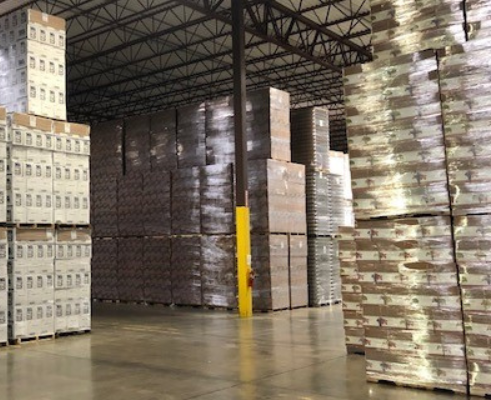
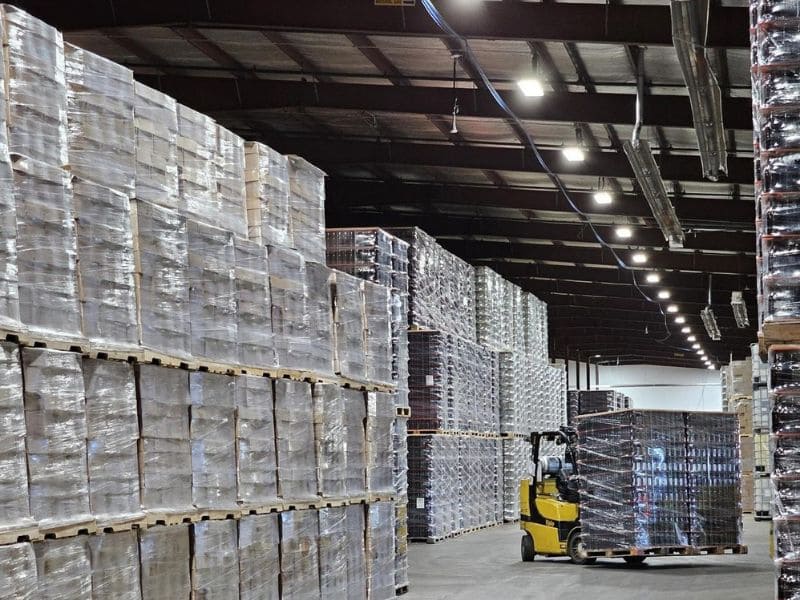
Buske Logistics operates over 40 facilities and 8.5 million square feet of warehousing, packaging, and distribution space across the U.S. and Canada, with additional operations in Mexico. That kind of footprint means product can be positioned closer to end customers, which cuts transit times and shipping costs in real, measurable ways.
There's a reason enterprise shippers and Fortune 500 companies don't trust their supply chains to just any logistics provider. Experience in this industry isn't a nice-to-have, it's the difference between a partner who anticipates problems and one who creates them.
Buske Logistics has been in this business for over 100 years. A century of experience means we've built processes, relationships, and operational muscle that newer providers simply haven't had the time to develop.
We've navigated recessions, pandemic-level supply chain disruptions, automotive industry cycles, and the rapid shift to e-commerce fulfillment, and still come out on the other side with a stronger network each time. That depth of experience shows up in real ways:
Not every 3PL is built the same. When we walk through the evaluation process with potential clients, we focus on a handful of criteria that separate average providers from excellent ones.
Technology and Visibility
Your 3PL should give you real-time access to your inventory data. That means a WMS with client portal access, order-level tracking, and the ability to generate reports on receiving accuracy, order fill rates, and cycle counts. If a provider can't show you your own inventory in real time, that's a red flag.
Facility Network and Location
Where are their facilities? Are they positioned near your major customer bases, your suppliers, or key transportation corridors? A single facility in the middle of nowhere won't help you serve a national customer base efficiently.
Scalability
Can they grow with you? If you run a seasonal business or you're scaling fast, your 3PL needs to flex its labor, equipment, and space without disrupting your service levels. Ask about peak-season capacity and how they handle volume spikes.
Compliance and Certifications
Depending on your industry, your provider may need food-grade certifications, ITAR compliance for defense-related products, or ISO quality standards. Buske, for example, serves aerospace and defense clients alongside automotive and food and beverage companies, and each vertical has its own compliance layer.
Track Record With Similar Clients
Ask for references from clients in your industry and at your volume level. A provider that's excellent for a small DTC brand may not have the infrastructure to support a Fortune 500 enterprise, and vice versa.
If you're evaluating 3PL providers for warehousing and distribution, start by requesting a facility tour and a detailed service scope from any provider on your shortlist. Ask specifically about their WMS capabilities, their location footprint relative to your customers, and references from clients in your industry.
You can also contact Buske Logistics directly to talk through your specific volume, industry requirements, and location needs. With over 100 years of experience and one of the largest 3PL facility networks in North America, Buske is built to handle complex supply chains at scale.
Warehousing refers to storing goods in a facility, while distribution refers to the active process of moving those goods to customers, retailers, or other destinations.
Warehousing is the physical location and infrastructure where inventory sits. Distribution is the operational process of getting that inventory where it needs to go, on time and in the right condition. Most modern 3PL providers handle both functions under one roof, which reduces handoff delays and improves overall supply chain efficiency.
If your business is outgrowing its own storage capacity, struggling with order accuracy, or spending too much on freight, a 3PL is worth evaluating.
Signs you need a 3PL include: fulfillment errors rising, warehouse labor becoming hard to manage, shipping costs eating into margin, or your internal team spending too much time on logistics instead of core business. A good 3PL absorbs that complexity and turns it into a scalable system.
Buske Logistics serves industries including automotive, food and beverage, aerospace and defense, healthcare, retail, and industrial manufacturing.
Each of these verticals has different handling requirements, compliance standards, and fulfillment timelines. Buske's 100+ years of experience across all of these sectors means they've built industry-specific processes rather than using a one-size-fits-all approach.
Buske operates 40+ facilities covering 8.5 million square feet of warehousing and distribution space across the U.S., Canada, and Mexico.
That footprint makes Buske one of the top 20 3PL providers in North America. The scale of the network allows clients to position inventory in multiple regions, reducing transit times and regional freight costs simultaneously.
A top-tier 3PL uses a warehouse management system (WMS) that provides real-time inventory tracking, order-level reporting, and client portal access.
Beyond the WMS, leading providers also use barcode scanning, voice-directed picking, and carrier integration tools to automate fulfillment steps and reduce error rates. Technology is one of the clearest differentiators between average and excellent 3PL performance.
Value-added services are additional operations performed on goods inside the warehouse, such as kitting, labeling, repackaging, sequencing, or quality inspection.
These services eliminate steps that would otherwise happen at a factory, retail location, or fulfillment center downstream. For automotive clients, for example, Buske provides sequencing services that deliver parts to the assembly line in the exact order they're needed, reducing downtime and improving line efficiency.
Using a single 3PL with a broad facility network is usually more efficient than splitting across multiple providers, because it simplifies inventory management and reduces coordination costs.
That said, there are scenarios where redundancy across two providers makes sense, especially for businesses with very large volumes or those operating across very different product categories. The key is making sure your primary provider has the scale, locations, and capabilities to handle the bulk of your needs without gaps in coverage.
Getting this right is not a back-office problem. It's a front-line competitive advantage. The companies that invest in a capable, experienced distribution partner consistently outperform those trying to manage it in-house or through under-resourced 3PLs.
Buske Logistics has spent over 100 years building exactly the kind of infrastructure, expertise, and network that modern supply chains demand. Whether you're a Fortune 500 manufacturer or a fast-growing mid-market brand, the right 3PL partner turns warehousing and distribution from a cost center into a growth enabler.
Reach out to Buske today to see how their network can work for your business.

Buske Logistics is a Top 20 Private Warehousing 3PL. Let's build a solution for your supply chain.