.png)
-p-130x130q80.png)
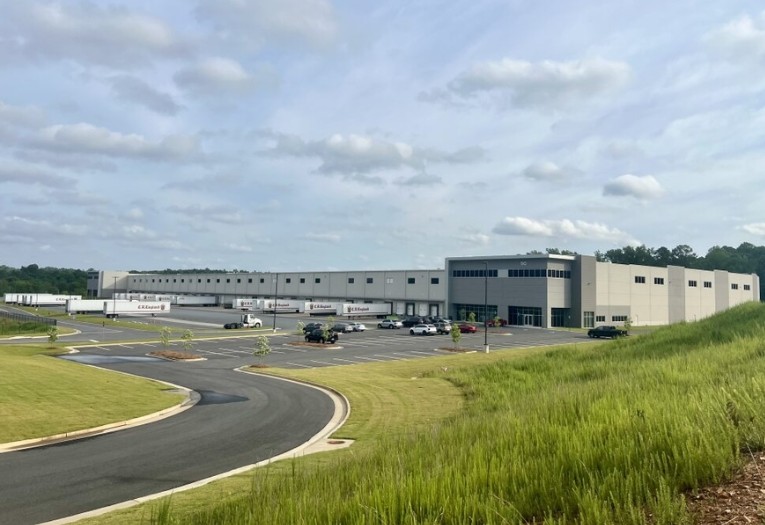
Scaling warehouse distribution operations without losing control requires systematically addressing the four constraints that limit distribution growth: physical capacity, labor capacity, technology scalability, and management bandwidth. Fast-growing businesses typically hit each constraint in sequence as volume doubles, triggering a cycle of reactive fixes that degrade service, inflate costs, and distract leadership from the core business. The solution is proactive infrastructure — building distribution capabilities ahead of demand rather than in response to crisis, ideally through 3PL partnerships that provide elastic capacity and scalable expertise without the capital commitment of private infrastructure.
Fast growth is the moment most businesses celebrate and the moment most distribution operations start breaking. The same order volume that your warehouse handles smoothly at 500 orders per day becomes operationally chaotic at 2,000 orders per day if the infrastructure, processes, and technology didn't scale proportionally. Distribution operations that weren't designed for scale fail in predictable, painful ways: accuracy drops, shipments miss cut-offs, customers receive wrong or damaged orders, and management spends all day firefighting logistics rather than running the business.
The painful irony of distribution scaling failures is that they typically coincide with a company's best revenue performance. The sales team is winning, the product is resonating, and the brand is growing, while the operations team is in crisis mode, generating chargebacks, customer service contacts, and reputation damage that erodes the customer relationships the sales team worked so hard to build.
Distribution operations break at predictable volume thresholds. Understanding which constraint activates at each growth stage enables proactive infrastructure planning rather than reactive crisis management:
Paper pick lists or basic spreadsheet-driven fulfillment works. A small team can manage operations without WMS. Key risk: no data foundation for the next growth stage, as implementing a WMS retroactively is harder and more disruptive than starting with it. Invest in WMS early even if the current volume doesn't require it.
Without a WMS, inventory accuracy degrades, pick errors multiply, and labor management becomes impossibly complex. This is the most common "distribution crisis" threshold for fast-growing brands — they scale from $10M to $50M in revenue while still running on the manual processes that worked at $5M. Implementing WMS, standardizing receiving and fulfillment processes, and establishing formal KPIs are the priority investments at this stage.
At this volume, AMR robotics and conveyor systems start generating returns that justify their capital cost. Labor is now the binding constraint because the facility can't hire or train fast enough to keep pace with volume. Simultaneously, the single-DC cost model starts becoming economically suboptimal as more orders incur 4–7 day parcel transit zones from a single central location. Begin evaluating second DC location and automation investment.
At this scale, adding a strategically positioned second or third DC typically saves more in outbound shipping than it costs in additional facility overhead, and the network design math starts clearly favoring expansion. Peak season capacity becomes a major concern: can the network absorb 3–5x normal volume during Q4 or other demand peaks without service failures? Flexible labor models and 3PL surge capacity are essential.
At enterprise scale, the distribution network is a genuine competitive asset or liability, differentiating your brand's delivery experience or constraining your ability to compete on service. Private DC economics start to favor internal development for stable, high-volume nodes. But flexibility and resilience, including the ability to surge, reroute, and recover, still favor 3PL partnerships at the margins of your network.
The businesses that successfully scale distribution proactively are those that recognize the warning signals 6–12 months before the crisis hits, not after. Watch for these early indicators:
The 6-Month Rule
Any significant distribution infrastructure change, such as implementing a WMS, migrating to a new 3PL, opening a new DC location, or deploying robotics, requires a minimum of 6 months from decision to stable operation. If you wait until you're in crisis to make the decision, you will spend those 6 months in crisis. The most successful scaling businesses make distribution infrastructure decisions when they have 12–18 months of runway before they're needed, not 3 months.
WMS implementation during high-volume periods is disruptive and risky. Implement when you have a 6-month runway and volume capacity to absorb the learning curve. The data foundation a WMS provides, including accurate inventory records, productivity metrics, and order accuracy rates, enables every other scaling decision to be data driven rather than based on gut feel.
Automating a broken process produces broken results faster. Before investing in robotics, conveyors, or automation, document and standardize every operation, including receiving, putaway, picking, packing, and shipping. Measure accuracy and throughput at each step. Then automate the standardized process, not the improvised one.
Rigid full-time-only staffing models cannot handle the volume variability of growing businesses. Build a flex labor tier, consisting of trained temporary workers available through staffing partners, that can increase labor capacity by 20–40% within 1–2 weeks during peak periods. 3PL partners provide this elasticity structurally, drawing on multi-client labor pools that individual businesses cannot access independently.
You cannot scale what you cannot measure. Establish baseline performance metrics such as order accuracy, OTIF, cost per order, and units per labor hour before scaling. Scaling without measurement means service degradation goes undetected until customers report it. With measurement, you can see capacity walls approaching and service degradation beginning before either becomes a crisis.
Adding a second DC location takes 3–12 months with a 3PL partner and 18–36 months with a private facility. Begin network design analysis when you're at 50% capacity need for a second location, not 100%. A demand mapping analysis showing where your orders are shipping will identify the optimal second DC market with enough lead time to activate it before shipping costs and transit times degrade.
Outbound shipping costs scale with volume, but not automatically at better rates unless you have contract pricing in place. Negotiate annual carrier contracts when you cross major volume thresholds (100K, 500K, 1M+ packages per year) to lock in the volume-based rates your scale justifies. 3PL partners provide immediate access to high-volume contract rates on Day 1, without needing to build carrier volume independently over years.
As brands scale into major retail channels (Walmart, Target, Costco, Amazon), the compliance requirements of those channels introduce distribution complexity that in-house operations often can't absorb without dedicated expertise. Build retail compliance capability, including EDI integration, routing guide management, labeling compliance, and chargeback dispute resolution, before you're receiving chargeback invoices, not after.
Q4 holiday season, back-to-school, and other predictable volume peaks should be planned 6 months in advance — staffing ramp-up, inventory positioning, temporary space arrangements, carrier capacity reservations, and operational process adjustments all require lead time that most businesses don't provide until 6 weeks before peak, when it's too late to execute optimally.
For most fast-growing businesses, outsourcing distribution to a 3PL partner is not a compromise — it is the strategically superior scaling mechanism. Here's why:
A 3PL's multi-client facility model provides capacity elasticity that private DCs fundamentally cannot replicate. When your volume doubles in six months, a common reality for successful D2C brands, a 3PL partner absorbs the increase by allocating space and labor from the shared facility pool, with no capital expenditure, no facility expansion, and no hiring spike. The same volume surge in a private DC requires emergency staffing, overflow space arrangements, and operational chaos that damages the service quality your growth was supposed to deliver.
Buske Logistics has spent decades building the retail compliance capabilities, carrier relationships, WMS technology, and operational playbooks that take individual businesses years to develop internally. When you partner with Buske, you inherit that institutional knowledge immediately, activating capabilities in weeks that would take years and millions of dollars to build from scratch.
Scaling into a 3–4 DC national network through private facilities requires $15M–$150M in capital and 3–5 years of execution. Through Buske's existing North American DC network, the same geographic coverage activates in weeks with no capital commitment and can be reconfigured as your demand geography evolves without stranding committed assets.
The most common concern from operations leaders considering 3PL outsourcing is “Will we lose control of our distribution operations?” The answer, for well-structured 3PL partnerships, is no, but it requires deliberate governance design. Here is how world-class brands maintain control of outsourced distribution:
Modern 3PLs provide clients with real-time WMS portal access, including live inventory levels, order status, inbound receiving activity, and exception alerts, without requiring a call to the operations team. This visibility is often superior to what in-house operations provide, because the 3PL has invested in enterprise-grade WMS technology that private operations typically can't justify.
3PL contracts define specific performance commitments, including order accuracy, OTIF, receiving turnaround, and system uptime, with financial remedies for shortfalls. This accountability mechanism is more explicit and enforceable than the informal performance expectations most businesses impose on internal operations teams. A well-negotiated 3PL contract creates stronger performance incentives than almost any internal management structure.
Establish monthly or quarterly business reviews (QBRs) with your 3PL partner to review KPI performance against SLA commitments, identify improvement opportunities, and align on upcoming volume changes. The best 3PL partnerships are collaborative operational relationships, not vendor-customer transactions — Buske's client relationships are characterized by proactive operational improvement initiatives driven by both parties, not reactive problem-solving after failures occur.
Outsourcing distribution execution to a 3PL does not mean outsourcing distribution strategy. The most effective brands retain internal responsibility for: inventory positioning decisions (what to stock where and in what quantity), service level policy (what delivery windows to promise to which customers), channel allocation (how to prioritize inventory across retail and D2C channels in constraint situations), and 3PL partner selection and management. These strategic decisions remain within the brand’s control, and the 3PL executes them with operational excellence.
Scale warehouse distribution by systematically addressing the four capacity constraints in sequence: physical space (expand facility or add locations), labor (build flex staffing models and automate high-volume picking), technology (implement WMS, add automation as ROI justifies), and management bandwidth (build operational teams or outsource execution to a 3PL). The key to scaling without service disruption is proactive infrastructure investment — implementing WMS before you need it, adding DC capacity 6–12 months before you're at capacity limits, and planning peak season 6 months in advance rather than 6 weeks.
Key signals include: facility utilization consistently above 80%, order accuracy declining, shipping cut-off times moving earlier to absorb volume, growing lag between labor needed and labor available, management spending majority of time on logistics firefighting rather than growth initiatives, increasing carrier service failures from late tenders, and retail chargeback rates rising from compliance failures. Any single signal warrants attention; multiple signals simultaneously indicate a distribution infrastructure crisis is 3–6 months away.
Maintain quality control during distribution scaling by: implementing WMS with scan-confirm pick verification (eliminates human error in picking), establishing formal KPIs (order accuracy, OTIF, cost per order) measured daily rather than monthly, building QC checkpoints into receiving and packing workflows, cross-training staff so quality standards aren't dependent on specific individuals, and conducting regular cycle counts to maintain inventory accuracy. With 3PL partners, contractual SLAs with financial remedies for quality shortfalls create stronger accountability than most in-house management structures.
Consider 3PL outsourcing when: your distribution operation is consistently consuming more than 20% of leadership attention; you're approaching a capacity threshold that requires significant capital investment to overcome; your peak-to-valley volume ratio exceeds 3:1 (making fixed-cost private infrastructure inefficient); you need to add geographic distribution locations; or your retail compliance chargeback rates are rising from execution failures. Many brands outsource too late, after a service crisis rather than proactively. The optimal time to evaluate a 3PL is when you have 12 months of runway, not 3.
Evaluate 3PL partners on: geographic network coverage in your key demand markets, WMS technology and client visibility portal capabilities, demonstrated experience with your specific channel mix (D2C e-commerce, retail replenishment, B2B distribution), scalability track record with clients at your current and projected volume, contractual SLA structure with financial accountability for performance shortfalls, transparent pricing with all cost components disclosed, and references from clients of similar scale and complexity. Prioritize 3PLs where distribution is a core capability, not a secondary service, and where the technology, operational systems, and team reflect serious investment in logistics excellence. Buske Logistics meets all these criteria for fast-growing and enterprise-scale businesses across North America.

Buske Logistics is a Top 20 Private Warehousing 3PL. Let's build a solution for your supply chain.