.png)
-p-130x130q80.png)
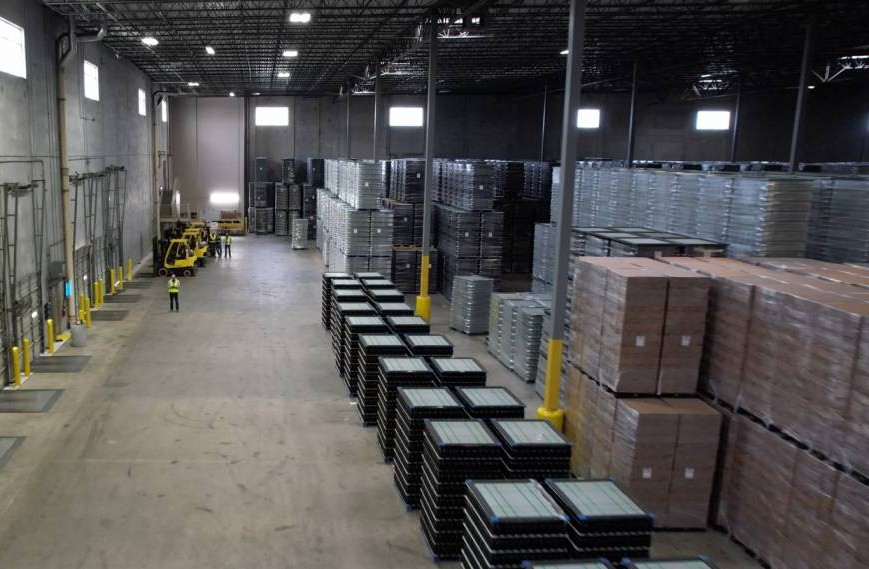
If you manage inventory, fulfillment, or supply chain operations, warehouse receiving is one of the most important processes in your facility. Every product that arrives at your warehouse, distribution center, or fulfillment center must be inspected, verified, documented, and stored correctly before it can move through inventory and reach your customers.
When receiving is not handled properly, small mistakes can quickly turn into bigger operational challenges, including inventory discrepancies, shipping delays, fulfillment errors, and higher labor costs. By implementing an efficient warehouse receiving process, you can improve inventory accuracy, streamline warehouse operations, and create a stronger foundation for the rest of your supply chain.
At Buske Logistics, we've spent more than 100 years helping businesses optimize warehousing, transportation, fulfillment, and supply chain operations across North America. Our team supports some of the world's most recognized brands, including PepsiCo, Diageo, Golden State Foods, Starbucks, and Stellantis, by implementing proven warehouse receiving best practices that improve inventory visibility and operational performance.
In this guide, you'll learn:
Warehouse receiving is the process of accepting incoming inventory, materials, products, or goods delivered to a warehouse or distribution center. The receiving process includes verifying shipments against purchase orders, inspecting products for damage, documenting quantities, updating inventory records, and moving products to their designated storage locations.
Simply put, warehouse receiving serves as the gateway between suppliers and inventory storage. Every product that enters a warehouse should pass through a standardized receiving warehouse process to ensure:
Without proper receiving procedures in a warehouse, inventory problems often spread throughout the entire supply chain.
The warehouse receiving process is the first step in maintaining accurate inventory and efficient warehouse operations. When products arrive at your facility, they must be verified, inspected, recorded, and properly stored before they can be used for fulfillment or distribution.
A typical warehouse receiving process includes:
By following these steps, you can ensure inventory is received accurately, discrepancies are identified quickly, and products are available for fulfillment as efficiently as possible.
It's easy to focus on shipping, fulfillment, and transportation, but every stage of your warehouse operation depends on accurate receiving. The products you receive today become the inventory you rely on tomorrow, making receiving the foundation for inventory accuracy, order fulfillment, and overall warehouse performance.
When receiving errors occur, the impact can spread throughout your supply chain. Incorrect inventory counts can lead to stockouts, overstocking, fulfillment delays, and additional labor spent investigating and correcting mistakes. By prioritizing an efficient receiving process, you can improve inventory visibility, reduce operational costs, and help ensure orders move through your warehouse smoothly and accurately.
A strong receiving warehouse process creates a solid foundation for:
Businesses looking to improve inventory visibility and receiving accuracy should also understand the importance of strong inventory control practices. Effective inventory management helps you maintain accurate stock levels, reduce discrepancies, improve replenishment planning, and support more efficient warehouse operations.
Learn more here: Inventory Management Guide
Understanding the receiving process in a warehouse can help you establish standardized procedures that improve inventory accuracy, streamline operations, and reduce costly errors. Because receiving is the first step in the warehouse workflow, even small mistakes can create inventory discrepancies, fulfillment delays, and operational inefficiencies throughout your supply chain.
A well-defined warehouse receiving process helps you:
Your receiving process actually starts before your truck even arrives at the warehouse. We schedule your deliveries in advance, review your purchase orders, allocate dedicated dock space, assign the right labor resources, and prepare all necessary receiving equipment ahead of time.
This proactive approach helps you avoid dock congestion and keeps your inbound flow running smoothly. Many leading 3PL providers also use appointment scheduling systems to coordinate shipments more efficiently, reducing bottlenecks and ensuring your goods are processed without unnecessary delays.
Once a shipment arrives at your facility, your receiving team begins the unloading process. This stage is critical because it provides the first opportunity to identify potential issues before inventory enters your warehouse.
During unloading, warehouse receiving activities typically include:
At this stage, our warehouse team uses the right equipment to handle your inbound shipments efficiently, including forklifts, pallet jacks, conveyor systems, and automated unloading equipment where applicable. By matching the right tools to each load, we ensure your goods are moved safely and quickly through the dock.
After the shipment has been unloaded, the next step is to verify that the products received match the information provided by your suppliers and carriers. This verification process helps ensure inventory accuracy and allows your team to identify discrepancies before inventory is entered into stock.
Your receiving team should compare shipment details against:
Our warehouse receiving team carefully verifies every shipment to ensure accuracy and compliance with your purchase order. We confirm SKU numbers, product descriptions, quantities, lot numbers, and expiration dates as part of the inspection process. If we identify any discrepancies, they are documented immediately so they can be addressed quickly and transparently.
One of the most important steps in the warehouse receiving process is inspecting products for quality and damage. Identifying issues before inventory is stored helps prevent fulfillment errors, inventory discrepancies, and customer complaints later in the supply chain.
Your receiving team should inspect products for:
For regulated industries such as food and beverage, quality inspections are especially important to ensure products meet safety, handling, and compliance requirements before entering inventory.
Businesses utilizing food-grade warehousing services often implement strict receiving procedures to maintain product quality and integrity throughout the supply chain.
Learn more here: Food-Grade Warehousing Solutions
After products have been inspected, the next step is to verify inventory quantities and confirm that the shipment matches the accompanying documentation. Accurate inventory verification is essential for maintaining stock accuracy and preventing fulfillment issues later in the warehouse process.
Inventory counts should match the quantities listed on purchase orders, packing slips, and other shipping documents. Common inventory verification methods include:
After verification is complete, the next step is to record all inventory data in your warehouse system. This ensures your records reflect what was actually received and makes the inventory immediately available for fulfillment and planning.
Modern warehouse receiving software automatically updates:
Many companies rely on advanced Warehouse Management Systems (WMS) to automate receiving workflows, improve accuracy, and maintain real-time visibility across warehouse operations.
Learn more about warehouse technology in our guide: Warehouse Management System Guide
Once inventory is recorded in the system, the next step is to label and properly identify each product before it is stored in the warehouse. This ensures items can be tracked accurately and located quickly throughout the fulfillment process.
Labels may include:
Proper product identification improves inventory tracking, reduces picking errors, and makes it easier to locate and retrieve items efficiently when orders are processed.
The final step in the warehouse receiving process is putaway, where inventory is moved from the receiving area into its designated storage locations within the warehouse. At this stage, inventory is organized based on:
Efficient putaway is essential for improving warehouse productivity, reducing travel time for pickers, and maximizing available storage space.
To further optimize storage efficiency and space utilization, you can review best practices for warehouse capacity planning: Effective Warehouse Capacity Planning Guide
A warehouse receiving checklist helps you maintain consistency, reduce errors, and ensure every shipment is processed accurately from arrival to storage. Here’s a standard warehouse receiving checklist your team can follow:
Warehouse Receiving Checklist
✓ Confirm scheduled delivery
✓ Review purchase orders
✓ Verify shipping documents
✓ Inspect shipment condition
✓ Count received inventory
✓ Check product quality
✓ Document discrepancies
✓ Scan inventory into WMS
✓ Label products
✓ Assign storage locations
✓ Complete putaway
✓ Update inventory records
Warehouse receiving duties can vary depending on the size and type of operation, but they generally focus on ensuring that all incoming goods are accurately received, verified, and prepared for storage or fulfillment.
Typical warehouse receiver duties include:
Effective warehouse receivers play a critical role in maintaining inventory accuracy, improving receiving efficiency, and ensuring smooth warehouse operations from inbound delivery through storage.
Improving inventory accuracy starts with precise and consistent receiving, as this ensures your inventory records remain reliable from the very beginning. When receiving is done correctly, it significantly reduces stock discrepancies, minimizes inventory shrinkage, and helps prevent fulfillment errors.
This level of accuracy gives you better visibility and control over your stock, helping your operations run more smoothly and efficiently.
When your receiving process is streamlined, your products become available in inventory much faster, allowing orders to move through your system without delays. This directly improves your order processing speed, shortens shipping timelines, and ultimately leads to higher customer satisfaction.
For businesses focused on improving fulfillment performance, it’s also important to understand how the entire workflow connects from inbound receiving to final delivery.
When your receiving process is efficient, it directly helps reduce your overall supply chain costs. You spend less on labor because goods are processed faster and more accurately, and you also avoid costly rework caused by mistakes at intake.
Fewer receiving errors mean fewer returns, fewer inventory adjustments, and less time spent correcting stock discrepancies. Ultimately, a streamlined receiving process helps you maintain tighter control over operational costs while keeping your supply chain running more efficiently.
When your receiving process is properly documented, it becomes much easier to hold suppliers accountable for the accuracy and condition of what they deliver. We can quickly identify issues such as short shipments, damaged goods, or incorrect inventory as soon as they arrive.
This not only helps resolve problems faster, but also provides clear records that support more accurate communication with your suppliers and improve overall supply chain reliability.
When your inventory data is updated in real time, it gives you much better visibility across your entire supply chain. You can see exactly what’s coming in, what’s available, and what’s already allocated, which supports more accurate forecasting and smarter planning.
When your inbound processes are standardized, your warehouse teams can work more efficiently and consistently. Clear workflows reduce confusion, minimize delays, and help staff process shipments faster from the moment they arrive at the dock. This leads to smoother operations, improved coordination, and overall increased warehouse productivity.
When your inventory is accurate, it directly leads to more reliable order fulfillment, which your customers notice immediately. Orders are picked, packed, and shipped correctly and on time, reducing errors, delays, and frustration. This consistency builds trust in your service and results in stronger customer satisfaction and long-term loyalty.
Organizations looking to improve warehouse receiving process performance should implement standardized procedures that enhance accuracy, efficiency, and visibility across inbound operations.
Here are some of the most effective best practices:
Develop a clear Standard Operating Procedure (SOP) for warehouse receiving that all employees must follow. This ensures every inbound shipment is processed the same way, reducing inconsistencies and minimizing errors.
A standardized process also makes training new staff faster and improves overall efficiency, since everyone understands exactly what steps to take from arrival to put-away.
Modern warehouse receiving software helps you improve accuracy, speed, and visibility across your inbound operations by automating key receiving tasks and reducing manual errors.
Warehouse receiving software typically provides:
Set up quality control inspections before products are added to inventory. This ensures that items are checked for damage, defects, or inaccuracies as soon as they arrive.
By catching issues early, you prevent defective or incorrect products from entering the warehouse system and moving further downstream. This reduces returns, protects customer satisfaction, and maintains overall inventory accuracy.
A Warehouse Management System (WMS) plays a critical role in improving the efficiency and accuracy of warehouse receiving and overall inventory operations. By centralizing data and automating key workflows, a WMS helps your team work faster and with greater precision.
A WMS improves:
Tracking key performance indicators (KPIs) is essential for evaluating the efficiency, accuracy, and overall performance of your warehouse receiving process. By monitoring the right metrics, you can identify bottlenecks, reduce errors, and continuously improve operational performance.
Key receiving KPIs to monitor include:
Provide ongoing training to ensure employees stay updated on warehouse processes, safety standards, and system use. Regular training improves compliance with standard procedures and enhances overall job performance. It also helps reduce errors, boosts efficiency, and ensures all team members consistently follow best practices.
Design the warehouse receiving area in a way that minimizes unnecessary movement and congestion. A well-organized layout ensures goods flow smoothly from receiving to inspection and storage.
By reducing travel time between key zones, employees can process inbound shipments faster, improving overall throughput and efficiency.
Even well-managed warehouse operations can face challenges during the receiving process. These issues can impact inventory accuracy, slow down workflows, and create downstream fulfillment problems if not properly addressed.
Common issues include:
Partnering with an experienced 3PL provider can help you reduce many of these receiving challenges by improving process consistency, visibility, and operational support across your warehouse network.
Learn more about third-party logistics: What Is 3PL (Third-Party Logistics)?
Technology is transforming warehouse shipping and receiving operations by improving accuracy, speed, and real-time visibility across inbound workflows. Modern tools help reduce manual errors, streamline documentation, and ensure inventory is recorded correctly as soon as it arrives.
Today’s most common warehouse receiving technologies include:
These solutions help your team process inbound shipments more efficiently while maintaining better control over inventory data and warehouse performance.
Several organizations also emphasize the importance of technology in supply chain efficiency. The National Institute of Standards and Technology (NIST) highlights that improving supply chain visibility through mapping and data-driven approaches helps organizations better understand risks, optimize operations, and support more effective inventory management.
The U.S. Department of Transportation (USDOT) also supports initiatives that improve supply chain efficiency across transportation and logistics networks, including programs that enhance freight movement, increase multimodal connectivity, and improve supply chain visibility through data sharing and infrastructure investment.
Many businesses find it challenging to maintain efficient, accurate, and scalable warehouse receiving operations in-house, especially as order volumes grow and supply chains become more complex. Working with a third-party logistics (3PL) provider offers several key advantages:
By outsourcing warehouse receiving, your business can improve operational efficiency, reduce strain on internal teams, and gain access to more advanced logistics capabilities without heavy infrastructure investment.
Businesses evaluating logistics strategies can compare options here: 3PL vs In-House Logistics
Warehouse receiving is more than unloading trucks. It is the foundation of inventory accuracy, fulfillment success, and supply chain performance.
For more than 100 years, Buske Logistics has helped companies across North America optimize receiving, warehousing, fulfillment, and distribution operations.
Our contract warehousing solutions provide:
We proudly support leading brands such as PepsiCo, Diageo, Starbucks, Golden State Foods, and Stellantis with reliable and scalable warehouse operations.
Ready to improve your warehouse receiving process? Contact our team today.
Warehouse receiving is the process of accepting, inspecting, verifying, documenting, and storing incoming inventory before it becomes available for fulfillment or production. It is the first critical step in warehouse operations because it ensures that what was ordered matches what was delivered. Proper receiving helps maintain inventory accuracy and prevents downstream fulfillment issues. It also sets the foundation for efficient warehouse management.
The warehouse receiving process typically includes several structured steps to ensure accuracy and control. These steps include scheduling deliveries, unloading shipments, verifying documentation, inspecting products for damage, and counting inventory. After verification, inventory is recorded in the system, labeled as needed, and moved into designated storage locations. Each step helps ensure products are accurately accounted for and ready for use.
Warehouse receiving is essential because it directly impacts inventory accuracy and overall supply chain performance. Proper receiving reduces errors in order fulfillment and helps prevent stock discrepancies. It also improves visibility across inventory systems and supports smoother warehouse operations. Without it, businesses risk delays, lost inventory, and customer dissatisfaction.
Warehouse receivers are responsible for managing incoming shipments and ensuring accurate inventory intake. Their duties include unloading deliveries, verifying shipment contents, inspecting for damage, and documenting any discrepancies. They also update warehouse management systems and coordinate proper storage locations. These responsibilities help maintain accuracy and efficiency within the warehouse.
Improving warehouse receiving starts with standardized procedures and consistent training for staff. Many businesses also use warehouse management systems (WMS) to automate tracking and reduce manual errors. Monitoring key performance indicators (KPIs) helps identify bottlenecks and inefficiencies. Continuous process improvement leads to greater accuracy and faster throughput.
A warehouse receiving checklist is a structured tool used to ensure all receiving steps are completed correctly. It typically includes verifying shipment details, inspecting goods, documenting discrepancies, and confirming proper storage. This helps standardize operations and reduce the risk of missed steps or errors. It is especially useful for maintaining consistency across multiple staff members or shifts.
Outsourcing warehouse receiving to a 3PL can provide access to experienced staff, advanced technology, and scalable operations. It often improves accuracy while reducing labor and infrastructure costs. A 3PL can also enhance visibility and efficiency through established processes and systems. For many businesses, outsourcing helps streamline operations and support growth without increasing internal complexity.
Warehouse receiving is one of the most important processes in any supply chain operation. When receiving is done correctly, inventory stays accurate, fulfillment runs smoothly, and customers receive orders on time.
By implementing standardized receiving procedures, leveraging technology, and partnering with an experienced logistics provider, businesses can reduce errors, improve visibility, and create a stronger foundation for long-term growth.
With more than 100 years of logistics expertise, Buske Logistics helps companies across North America build efficient, scalable warehouse receiving operations that support inventory accuracy, operational excellence, and top-notch customer experience.

Buske Logistics is a Top 20 Private Warehousing 3PL. Let's build a solution for your supply chain.