

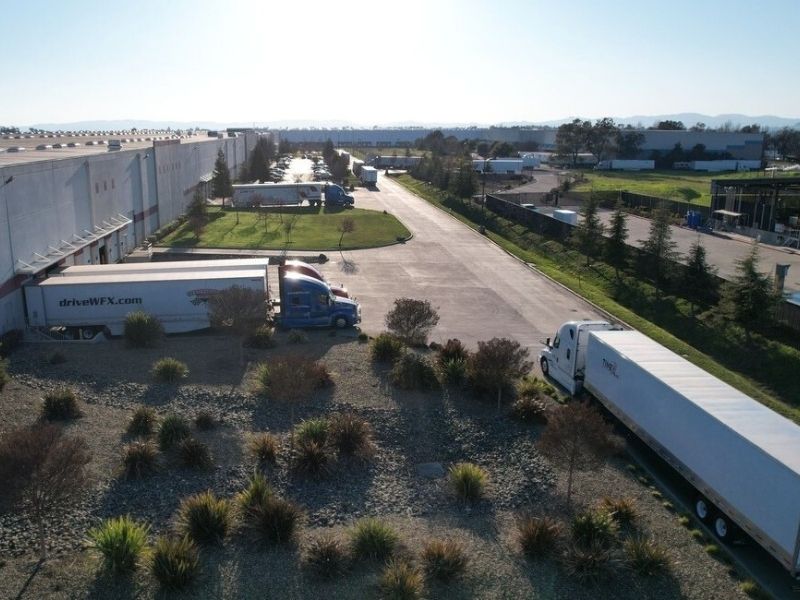
CPG omnichannel fulfillment is the practice of routing consumer goods orders across retail, direct-to-consumer, ecommerce, and marketplace channels from a single, unified logistics network. Rather than running separate warehouses and carrier accounts for each channel, a well-structured fulfillment operation shares inventory, labor, and systems across all of them simultaneously.
This matters because CPG brands now serve multiple channels simultaneously, from full-pallet retail orders to individual ecommerce and marketplace shipments. Managing these through disconnected operations leads to inventory imbalances, stockouts, chargebacks, and fulfillment delays.
If your CPG brand sells through retail, ecommerce, marketplaces, or direct-to-consumer channels, managing inventory and fulfillment across all of them can quickly become complex. The following sections explore how an integrated 3PL for CPG companies can help you streamline fulfillment, maintain retail compliance, and meet customer expectations across every sales channel.
Consumer goods brands traditionally built their supply chains around retail. Full truckloads moved to Walmart distribution centers, Target RDCs, or regional grocery chains on predictable schedules. That model is not broken, but it no longer covers the full picture.
DTC sales continue to grow, while Amazon and other marketplaces push brands toward FBM and hybrid fulfillment models. Each channel brings different shipping, labeling, packaging, and compliance requirements. Without a unified operation, brands often end up with multiple fulfillment vendors, fragmented inventory, and limited visibility across channels.
That fragmentation is expensive. Duplicate safety stock ties up working capital. Carrier redundancy prevents volume consolidation. And when a retail buyer calls about a missed OTIF window, the operations team is often looking at three different WMS dashboards trying to figure out what happened.
The case for consolidating into a single CPG fulfillment network is not just operational efficiency. It is financial. Fewer buildings, fewer labor pools, and one set of carrier contracts almost always produce a lower cost per unit than a scattered multi-vendor approach.
The term "omnichannel" gets used loosely. For CPG brands specifically, it typically means four distinct order types running simultaneously from the same inventory pool.
Retail replenishment (B2B): Full-pallet and mixed-pallet shipments to retailer DCs, often governed by tight routing guides, appointment scheduling, and OTIF requirements. For more detail on managing chargebacks and routing compliance, the cpg retail compliance resource covers that process specifically.
DTC (direct-to-consumer): Single-unit or small multi-unit orders shipped directly to end consumers, usually through the brand's own website. Packing expectations are higher here. Consumers expect branded unboxing experiences and fast returns, not a plain brown box with a pick ticket inside.
Marketplace fulfillment: Orders placed on Amazon, Walmart.com, or similar platforms. These can run as FBM (brand ships from its own warehouse) or through a hybrid model where the 3PL ships on the brand's behalf. SLA compliance on marketplaces is non-negotiable. Late shipments result in suppressed listings or account penalties.
Wholesale and distributor orders: Smaller case-quantity orders going to regional distributors or foodservice accounts. These sit between retail and DTC in terms of size and complexity but often require lot tracking and specific documentation.
Trying to run all four of these through separate fulfillment operations is where brands run into trouble. The inventory picture falls apart, and cpg inventory management becomes a reactive exercise rather than a proactive one.
One of the biggest advantages of consolidating your CPG fulfillment under one roof or within a coordinated network of facilities is better inventory visibility. When your retail and ecommerce stock are stored separately and managed through disconnected systems, it becomes harder to track available inventory and prevent unnecessary stock buildup.
Making this approach work requires accurate demand planning and clear allocation rules. If a large retail replenishment order coincides with a sudden DTC sales spike, you need an established strategy for prioritizing available inventory before fulfillment disruptions occur.
Ultimately, a unified inventory strategy helps you reduce excess stock, improve inventory utilization, and fulfill retail and ecommerce orders more efficiently.
If you want to better understand how unified inventory and order routing work across multiple sales channels, our omnichannel logistics guide walks you through the process and how it can improve your fulfillment operations.
Retail compliance is a critical part of managing your CPG fulfillment, especially when working with major retailers like Walmart, Kroger, and Target. Each retailer has strict requirements for carrier selection, labeling, pallet configuration, ASN timing, and case-pack specifications.
Failing to meet these requirements can result in costly chargebacks, ranging from $200 to several thousand dollars per violation.
Buske's retail compliance capabilities are integrated into its CPG fulfillment operations rather than treated as an add-on. This allows your retail and DTC workflows to operate within the same facility while maintaining the distinct processes and requirements each channel demands.
CPG brands live with predictable but intense seasonal swings. Q4 holiday volume, back-to-school, summer grilling season, and retailer promotional events like Super Bowl week all create demand surges that can double or triple normal throughput within a few weeks.
A 3PL with a fixed-footprint single warehouse cannot absorb that swing without either turning away volume or sacrificing accuracy. What CPG brands actually need is a network of coordinated facilities with flexible labor arrangements and the ability to shift capacity geographically as demand moves.
With 40+ facilities across the U.S. and Canada, Buske can position your inventory closer to retailer distribution centers and key consumer markets, helping reduce transit times and shipping costs. Its omnichannel logistics solutions also allow your fulfillment network to scale with changing demand without relying on a single facility.
According to the USDA Economic Research Service, U.S. food sales typically peak in December before declining in January, highlighting the need for flexible warehouse capacity to accommodate seasonal CPG demand fluctuations.
Buske Logistics brings over 100 years of experience in the third-party logistics industry. That experience translates into established carrier relationships, deep knowledge of retailer routing requirements, and an understanding of demand patterns across different market conditions.
If you're expanding into DTC while maintaining retail partnerships, working with an experienced 3PL can help you avoid costly compliance mistakes. A provider familiar with Walmart and Target replenishment requirements can anticipate common chargebacks, while experience in foodservice distribution helps ensure your products meet documentation and receiving requirements.
Newer fulfillment providers may offer modern software and competitive rates, but limited experience with retailer requirements can create costly learning curves for your business. Regulatory compliance is another important consideration.
The FDA's food labeling guidance outlines requirements that food and beverage brands must follow. An experienced 3PL can help you identify potential labeling and handling issues before products ship.
The right 3PL for CPG omnichannel fulfillment is not the cheapest one or the one with the most technology buzzwords in its pitch deck. It is the one that can handle a retail replenishment order and a consumer DTC order on the same day, from the same inventory pool, without either one suffering.
A few things to look for specifically:
These capabilities become especially important when managing complex supply chains across multiple product categories and distribution channels. Buske Logistics brings experience supporting established brands across the food, beverage, and consumer goods industries, including companies such as PepsiCo, Diageo, Molson Coors, and Mother Parkers. This experience reflects the operational demands of handling diverse products, inventory requirements, and distribution needs at scale.
For additional benchmarks, APQC's logistics benchmarking resources provide performance metrics for fulfillment accuracy, order fill rates, and warehousing costs. CPG leaders can use these measurements to evaluate 3PL proposals against their existing operations and identify opportunities for improvement.
As a top 20 private 3PL in the U.S., Buske supports both Fortune 500 companies and growing CPG brands. Whether you're managing retail replenishment today or expanding into DTC and marketplace fulfillment tomorrow, Buske offers the logistics experience, infrastructure, and scalable capabilities to support that growth, reducing the need to switch providers as your operations become more complex.
If your brand is managing retail replenishment, DTC orders, and marketplace fulfillment through separate vendors or siloed warehouses, you are paying more than you need to and carrying more risk than you realize.
Buske Logistics has spent over 100 years building the kind of CPG fulfillment infrastructure that handles all three channels from one coordinated network, with retail compliance, flexible capacity, and real inventory visibility built in from day one.
Talk to a CPG fulfillment specialist at Buske to find out how quickly your operation can consolidate. Fill out the contact form today and a Buske logistics expert will respond within one business day to discuss your channels, volumes, and fulfillment goals.
Standard ecommerce fulfillment handles consumer orders from a single channel; CPG omnichannel fulfillment manages retail replenishment, DTC, marketplace, and wholesale orders simultaneously from a shared inventory pool.
The key difference is compliance complexity. Beyond pick accuracy and shipping speed, CPG omnichannel fulfillment requires retailer routing guides, EDI, ASN timing, lot tracking, and channel-specific labeling. A 3PL unfamiliar with retail compliance can quickly generate costly chargebacks as retail order volumes grow.
Yes, but only if the 3PL has dedicated workflows and sufficient facility capacity to keep the two order types from competing for the same labor and dock time.
The main risk in CPG omnichannel fulfillment is dock congestion. Retail pallets and DTC orders require different staging, carrier pickups, and processing timelines. Without separate CPG fulfillment workflows and clear SOPs, DTC order surges can delay retail replenishment shipments, resulting in OTIF penalties from major retailers.
Unified inventory assigns all stock to a single pool and uses allocation rules to distribute available units across channels based on demand signals, service level priorities, and safety stock thresholds set by the brand.
These inventory allocation rules require active management. If retail replenishment and a DTC promotion spike simultaneously, your CPG fulfillment operation needs predefined priorities to determine which channel gets available stock. Establishing these rules during onboarding, supported by an integrated WMS and EDI connections, helps your 3PL manage inventory across retail and ecommerce channels with greater visibility and fewer manual adjustments.
The most common chargeback triggers are late ASN submission, incorrect labeling, pallet configuration errors, and missed delivery appointments, all of which a 3PL with dedicated retail compliance processes can reduce significantly.
Retailers like Walmart and Target have strict routing guides covering shipment preparation, labeling, and delivery requirements. Missing even one requirement can result in costly chargebacks. An experienced CPG 3PL understands common retail compliance issues and builds pre-shipment audits into its fulfillment workflows to catch errors before carrier pickup.
There is no single correct number, but most national CPG brands benefit from at least three to five strategically located nodes that place inventory within two-day ground reach of the majority of the U.S. consumer population while maintaining proximity to key retailer distribution centers.
A single-facility 3PL exposes your CPG fulfillment operation to labor shortages, weather disruptions, and capacity constraints. A distributed network reduces these risks while enabling faster ground shipping to consumers. With 40+ facilities across the U.S. and Canada, Buske helps CPG brands serve retail distribution centers, DTC customers, and marketplace channels through a broader fulfillment network rather than relying on a single location.
Running retail replenishment, DTC, and marketplace orders from one logistics network is not just operationally cleaner than managing multiple vendors. It is measurably less expensive, faster to scale, and far more resilient when demand spikes, retailer compliance windows tighten, or new channels come online.
The brands that consolidate early build a cost and service advantage that compounds over time. Those that wait tend to retrofit integration onto a fragmented operation, which costs more and takes longer than starting with the right infrastructure.
Buske Logistics brings over 100 years of CPG supply chain experience, 40+ facilities across North America, and the retail compliance depth to handle every channel without compromising any of them. If your brand is ready to move from siloed fulfillment to a unified network, contact Buske Logistics and request a consultation today.

Buske Logistics is a Top 20 Private Warehousing 3PL. Let's build a solution for your supply chain.


