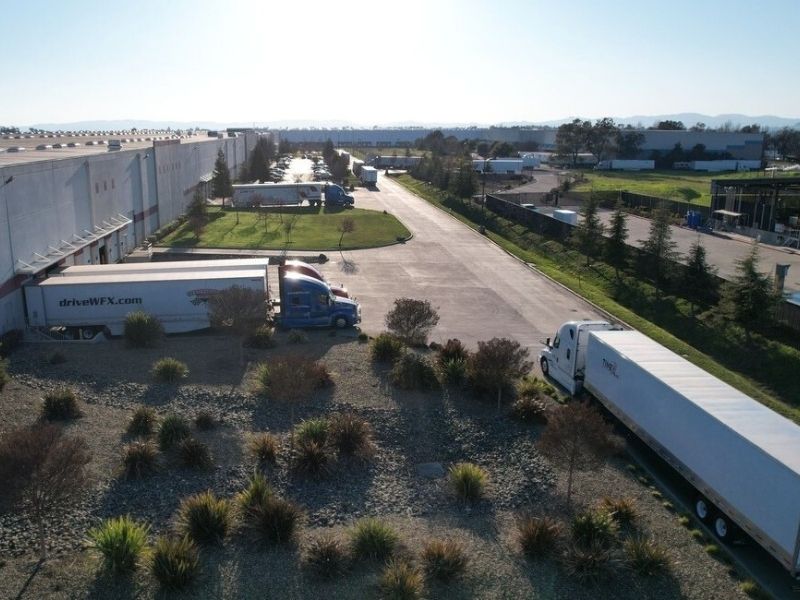
Freight cost optimization is the process of systematically identifying and removing waste from your transportation spend through carrier selection, load planning, mode matching, and network design. Done well, it compounds: each lever you pull reduces the base cost that every other lever works against.
Most companies leave money on the table not because they lack the data, but because they treat freight spend as fixed overhead rather than a managed cost center. That changes with the right playbook.
For your business, optimizing freight costs starts with identifying where transportation spending can be reduced without compromising delivery performance or service quality. The twelve strategies below will help you evaluate opportunities to control freight expenses, improve efficiency, and get more value from your transportation budget.
Freight consolidation means combining smaller, partial loads into a single shipment moving to the same destination or region. The cost per unit drops because fixed carrier charges, fuel surcharges, and accessorial fees are spread across a larger load.
The trade-off is lead time: consolidation requires holding inventory long enough to build a full load, which may not work for time-sensitive orders. Start by auditing your outbound manifests for the past 90 days and flagging lanes where you consistently ship partial loads within a two-day window.
Sending a 5,000-lb shipment as a full truckload because "that's what we always do" is one of the most common and costly freight habits. LTL shipping is the right choice for loads under about 10,000 lbs moving to a single destination.
FTL shipping makes sense when volume fills or nearly fills a 48-foot or 53-foot trailer, or when freight is time-critical and you cannot afford the extra handling of an LTL move. Intermodal is worth evaluating on lanes over 500 miles where a two-day transit buffer is acceptable. The catch: each mode switch requires carrier relationships you may not have yet.
Liftgate fees, detention charges, and residential delivery surcharges can quickly increase freight costs. A U.S. Department of Transportation report highlights how driver detention impacts carrier profitability, reinforcing the value of better scheduling and coordinated delivery appointments to reduce avoidable charges.
Tightening dock scheduling to reduce carrier wait time below one hour cuts detention exposure significantly. Address liftgate charges by confirming receiver equipment before booking. These are operational fixes, not contract fixes, and they can be implemented immediately.
Cube utilization matters. A trailer that is weight-maxed at 44,000 lbs but only 60% cubed out is wasted space. Working with packaging engineers to reduce pallet overhang, right-size cartons, and stack product safely can increase effective payload per truck.
The trade-off is upfront engineering cost and potential changes to SKU-level packaging specifications that require retailer approval. For high-volume shippers, the return on that investment is typically realized within two to three shipment cycles.
In practice, most shippers renew carrier contracts without auditing what they actually paid versus what they were quoted. Billing errors, weight discrepancy charges, and duplicate invoices are common. A structured audit of three to six months of freight invoices typically surfaces recoverable overcharges.
The GSA's transportation invoice audit guidance highlights the importance of reviewing carrier invoices against agreed rates, identifying billing errors, and recovering overcharges to improve freight cost control.
For shippers with predictable, high-volume lanes running five or more loads per week, dedicated fleet services offer a fixed cost structure that removes spot market exposure. You pay for capacity you control, which means no surge pricing during peak seasons and consistent driver relationships that reduce damage claims.
The trade-off is commitment: a dedicated arrangement requires volume guarantees, and if your lanes shrink, you are paying for capacity you do not fully use. This model fits manufacturers, retailers with distribution center replenishment runs, and 3PL-managed networks.
Spot rates can swing 20% to 40% between quarters depending on market conditions. Contract transportation locks in rates for a defined period, usually 12 months, and gives carriers the volume predictability they need to price competitively.
The trade-off is flexibility: you commit to minimum volumes, and if rates drop significantly mid-contract, you will not capture the savings until renewal. For shippers with stable, foreseeable freight volumes, the rate stability and service reliability typically outweigh the flexibility cost.
Every zone a shipment crosses adds cost and transit time. Positioning inventory closer to your customers through regional distribution centers reduces average zone count per shipment. The freight-cost benefit is straightforward: a Zone 4 shipment costs less than a Zone 7 shipment across every major carrier's rate table.
For the full strategic picture on regional distribution design, the regional warehouse and logistics discussion covers network placement and zone reduction in detail. The main trade-off here is higher warehousing overhead; the math only works if freight savings exceed the added facility cost.
A transportation management system consolidates carrier selection, rate shopping, load tendering, and freight audit into a single platform. The operational gain is real: manual rate shopping across four or five carrier portals takes hours; a TMS does it in seconds and applies rules you set in advance.
The catch is implementation cost and data quality. A TMS is only as good as the carrier rates, lane data, and shipment history loaded into it. Plan for a three-to-six-month integration window before the system is fully optimized.
An outbound truck that returns empty is a carrier cost you share in the form of higher rates. Backhaul matching, either through a 3PL network or a freight exchange platform, pairs your outbound load with a return load on the same lane.
The U.S. Environmental Protection Agency identifies load matching and improved freight logistics as ways to cut empty truck miles, fuel use, and operating costs, noting that deadhead miles can make up 10 percent or more of a fleet's annual mileage. Backhaul programs work best when outbound and inbound corridors overlap and loads are compatible.
LTL pricing is built on National Motor Freight Classification (NMFC) codes. Incorrect classification, usually because a SKU was coded years ago and never reviewed, results in systematic overcharges on every LTL shipment that SKU appears in. Commodity density, stowability, handling, and liability all affect the correct class.
A classification audit run by a qualified freight analyst often finds reclassification opportunities that reduce class-based rates immediately. The trade-off is time: a thorough audit across a large SKU catalog takes weeks, and carriers may push back on reclassification requests.
Individual shippers negotiate on their own, while a top-tier 3PL pools volume across clients to secure better carrier rates and capacity. With over 40 facilities across the U.S. and Canada, Buske Logistics brings more than 100 years of carrier relationships, network data, and experience serving Fortune 500 and Fortune 1,000 clients since 1923.
The trade-off is control: outsourcing freight management means giving up some direct carrier visibility, which is why the right 3PL partnership should come with transparent reporting and shared KPIs, not a black box.
Freight cost optimization at scale is not about finding a single silver bullet. It is about stacking these 12 levers in the right sequence for your volume, network, and operational constraints.
Shippers that make meaningful, lasting progress tend to follow a similar approach: they start with quick, low-commitment wins (consolidation, mode matching, and invoice audits), then use those savings to fund longer-term structural improvements (dedicated fleets, regional distribution, and TMS deployment).
The key is to treat freight cost optimization as an ongoing process, not a one-time project. Freight rates, carrier availability, and shipping demands change over time, so the strategies that work today may not be as effective a year from now. Regularly reviewing your transportation operations helps identify new savings opportunities and keep costs under control.
Buske Logistics has been solving transportation cost problems for clients across North America since 1923. With 40+ facilities, Fortune 500 relationships, and a full suite of contract transportation and dedicated fleet services, we can identify the specific cost levers that apply to your network.
If you are ready to move from reactive freight spending to a managed cost strategy, request a freight cost consultation and one of our transportation specialists will review your current lanes, carrier mix, and volume profile. Fill out the contact form now and tell us your top freight challenge so we can come prepared.
Freight cost optimization is the process of reducing per-unit transportation spend through load planning, carrier selection, mode matching, and network design. Most companies start with freight invoice audits to recover overcharges without changing contracts, then move to mode matching to ensure each lane uses the right carrier for its load size and urgency. Together, these steps reveal cost-saving opportunities and provide quick wins to fund longer-term improvements.
A dedicated fleet locks in a fixed cost per mile or per day, removing your exposure to spot market rate swings that can run 20% to 40% higher during peak periods. Dedicated fleets work best on lanes with five or more loads per week to the same destination. Consistent volume allows carriers to plan capacity and offer better rates. However, shippers must commit to that volume, even if demand drops. This makes dedicated fleets ideal for stable, predictable freight networks rather than highly seasonal or variable operations.
LTL (less-than-truckload) pools your freight with other shippers' loads, so you pay only for the space your shipment occupies. FTL (full truckload) gives you exclusive use of the trailer, which costs more per move but less per pound on large, dense loads.
The crossover point is roughly 10,000 lbs, though density, transit time, and damage risk also matter. Smaller shipments (e.g., 2,000 lbs) typically suit LTL, while heavier or damage-sensitive freight may be better suited to FTL, even without a full trailer. Choosing the right mode for each lane is a quick way to reduce shipping costs without renegotiating carrier contracts.
A TMS reduces freight spend primarily through automated rate shopping, load consolidation rules, and carrier compliance tracking, though the actual savings depend heavily on your starting point and data quality. Companies that select carriers based on habit often see the biggest gains, as a TMS identifies cheaper or faster options they may overlook.
Those with established processes still benefit from fewer billing errors and better load planning. However, results depend on clean lane data, accurate carrier rates, and consistent adoption. Allow three to six months before evaluating savings.
A 3PL typically makes financial sense when your internal freight spend has grown to the point where carrier negotiation, load planning, and invoice auditing require dedicated headcount you do not have. Another key factor is carrier network scale. A 3PL managing freight across multiple clients can leverage greater shipping volume to negotiate better rates.
The trade-off is less direct control, making clear SLAs, shared KPIs, and escalation processes essential. With over 100 years of transportation experience and 40+ facilities across the U.S. and Canada, Buske Logistics emphasizes shared performance data to maintain accountability.
The 12 levers covered in this article work at different speeds and require different levels of commitment, but none of them are theoretical. Shipment consolidation and invoice auditing can produce results within 30 days.
Mode matching and carrier contract renegotiation typically take 60 to 90 days to implement fully. Regional distribution and dedicated fleet arrangements are six-to-twelve-month plays that produce the largest sustained savings over time.
The practical approach is to rank the levers by your current challenges, start with the ones that require the least infrastructure change, and reinvest the early savings into the structural improvements.
If you want a transportation partner with the carrier network, facility footprint, and 100-plus years of operational experience to help you work through that sequence, reach out to Buske Logistics and start the conversation today.

Buske Logistics is a Top 20 Private Warehousing 3PL. Let's build a solution for your supply chain.