.png)
-p-130x130q80.png)
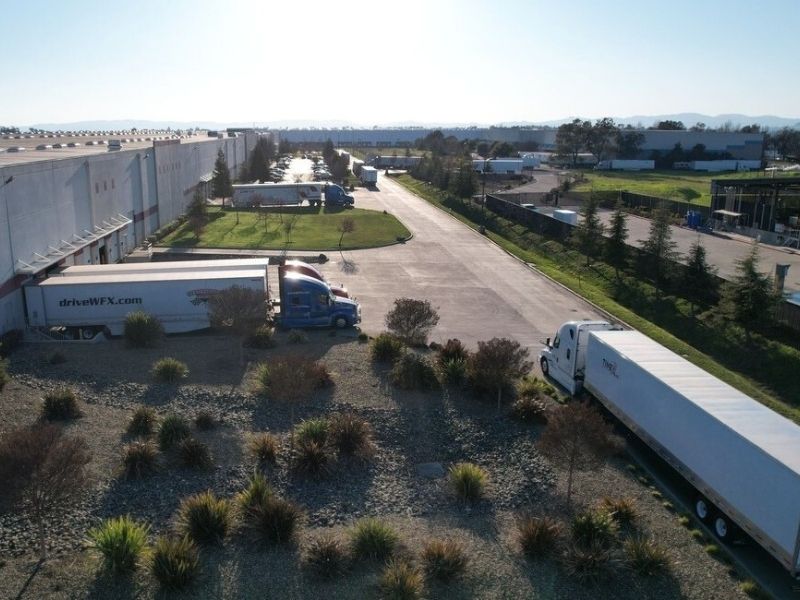
Regional warehouse and logistics is a supply chain strategy where you position inventory closer to your end customers within specific geographic zones, reducing transit times and shipping costs. Instead of relying on one or two massive national facilities, you distribute stock across multiple regional hubs so your freight never has to travel farther than it needs to.
If you sell products to customers across the U.S., where you store your inventory matters as much as how you ship it. A well-designed regional warehousing strategy can cut your ground shipping zones, speed up delivery windows, and give you a real competitive edge, especially as customer expectations for two-day and next-day delivery continue to rise.
Most businesses start out shipping from one central location. It feels simple and manageable. But as your customer base grows and spreads across the country, that single-origin model starts working against you.
Every shipping zone your package crosses increases both cost and transit time. For example, a shipment from Columbus, Ohio to Phoenix, Arizona may cross three or four zones. But shipping from a regional warehouse in Dallas or Albuquerque could reduce it to a Zone 2 or Zone 3 shipment. Those lower shipping rates can add up to significant savings as order volume grows.
According to U.S. Bureau of Transportation Statistics data on freight activity, freight costs represent a significant portion of total supply chain spend for most industries. Reducing average zone distance is one of the most reliable ways to bring that number down without sacrificing service levels.
Regional warehousing support also gives you flexibility during peak seasons. When Q4 demand spikes, a regional network means you can absorb volume surges across multiple sites rather than pushing everything through one bottlenecked hub.
Here’s a breakdown of the benefits that make the biggest difference for growing businesses.
Faster delivery to end customers
Positioning inventory within 500 miles of your top customer clusters gets most ground shipments delivered in one to two business days. That is table stakes now, not a luxury.
Lower transportation costs
Shorter hauls, fewer zones, and better carrier rate negotiations at regional volume tiers all reduce your per-unit shipping cost.
Reduced risk exposure
A single-facility model is vulnerable. A flood, a labor disruption, or a regional carrier service failure can shut down your entire distribution operation. Regional logistics networks spread that risk.
Inventory visibility and control
Modern warehouse management systems (WMS) used by top 3PL providers give you real-time stock visibility across all regional nodes, so you always know what you have and where it is.
Better returns management
Reverse logistics becomes significantly easier when you have regional drop points. Customers return products to a nearby hub rather than shipping cross-country.
To understand the foundational side of this model, it helps to review what is warehousing and how modern contract warehousing has evolved well beyond simple storage into a fully integrated supply chain function.
This is the question most growing brands wrestle with. The answer depends on your order volume, customer geography, product type, and service level commitments.
For a deeper comparison of the two approaches, I recommend reading about regional vs national distribution centers to understand the structural and cost differences before committing to either model.
Large brands like PepsiCo and Diageo do not run their distribution out of a single warehouse. They operate regional networks specifically because the economics and service levels demand it. If you are scaling toward that level of volume, or you are already there, a regional footprint is not a nice-to-have. It is a necessity.
Getting the structure right from the start saves you from expensive corrections later. Here is how to build a regional logistics model that actually performs.
Before you choose a single facility location, pull your order data and map where your customers actually are. You are looking for clusters, the areas where order volume is highest and most consistent. Those clusters tell you where your regional nodes should be.
Common high-density zones in the U.S. include the Northeast corridor, the Midwest industrial belt, the Southeast, Texas and the South-Central region, and the West Coast.
If your customers are spread across all five, a five-node network likely makes sense. If 70% of your orders ship to the Northeast and Southeast, two well-placed facilities might cover you.
Building regional warehousing from scratch is capital-intensive and slow. Leasing space, hiring staff, implementing systems, and managing compliance in multiple states takes years and millions of dollars. The faster, leaner path is partnering with a 3PL that already has regional infrastructure in place.
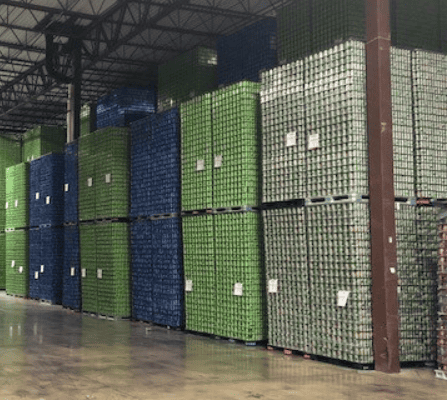
Buske Logistics operates 40+ facilities and over 8.5 million square feet of warehousing, packaging, and distribution space across the U.S. and Canada. That footprint exists right now. You can plug your inventory into an established network rather than building one from scratch.
With over 100 years of experience in the logistics and warehousing industry, Buske has helped Fortune 500 and Fortune 1,000 companies, including brands like Molson Coors, Golden State Foods, and Stellantis, design and operate regional distribution strategies that reduce costs and improve delivery performance.
One of the biggest pitfalls in regional logistics is running each facility on its own system. When your WMS is siloed, you lose visibility. You end up with stock imbalances, missed reorder triggers, and fulfillment errors that are hard to trace.
A unified WMS across your regional network gives you a single source of truth for inventory, orders, and shipping data. The best 3PL partners will already have enterprise-grade WMS technology that integrates with your ERP and order management systems.
Regional warehousing does not exist in isolation. Your inbound freight, how product moves from suppliers or manufacturing to your regional nodes, needs to be planned alongside your outbound distribution strategy.
The U.S. Department of Transportation's freight planning resources offer useful context on how freight corridors and intermodal options can inform your network design, especially if you are moving large volumes from port to regional hub.
Cross-docking, flow-through logistics, and milk-run inbound programs are all tools that can reduce dwell time and keep regional facilities lean rather than over-stocked.
Your regional network needs to flex. During peak periods, whether that is Q4 holiday fulfillment or summer beverage demand (relevant for brands like Starbucks or Ball Corporation), regional nodes must be able to absorb additional volume without breaking down.
This means building overflow capacity agreements into your 3PL contract, using shared-space warehousing arrangements when appropriate, and aligning your inbound replenishment cadence with demand forecasts at the regional level.
Regional logistics networks generate a lot of data. The metrics that matter most include:
Track these at the facility level and roll them up to the network level. Variance between nodes often points to process gaps or staffing issues that can be corrected before they become significant cost drivers.
If you are evaluating 3PL partners or trying to decide whether a regional warehouse and logistics model is the right move for your business, the best next step is a direct conversation with a team that has built these networks before.
Buske Logistics has over a century of experience, 40+ active facilities, and proven results with some of the largest brands in North America.
Contact Buske team today and share your current distribution setup. We will help you identify where a regional footprint could cut costs and improve delivery performance for your specific situation.
Regional warehouse and logistics refers to a supply chain model where inventory is stored in multiple facilities positioned close to specific customer populations across different geographic regions.
Rather than operating from a single central warehouse, businesses use regional hubs to reduce shipping distances and transit times. This approach is common among high-volume consumer goods, beverage, and automotive companies.
Shorter distances between warehouse and customer mean fewer shipping zones, and carrier rates drop significantly with each zone reduction.
For high-volume shippers, even a one-zone reduction per order can translate into hundreds of thousands of dollars in annual freight savings. This is why brands running millions of shipments per year invest heavily in regional network optimization.
A regional distribution center serves a specific geographic area, while a national distribution center handles fulfillment for the entire country from one or two locations.
Regional centers typically offer faster local delivery and lower outbound shipping costs, while national centers may offer simpler inventory management. The right choice depends on your order volume, customer spread, and service level requirements.
Most brands benefit from transitioning to a regional model when their order volume consistently exceeds 500-1,000 daily shipments and customers are spread across multiple states or regions.
At that scale, the shipping cost savings from a regional network usually exceed the added complexity and cost of managing multiple facilities. A 3PL partner can accelerate this transition significantly.
Consumer packaged goods, beverage, automotive parts, food and grocery, and e-commerce brands see the greatest benefits from regional warehousing support due to high order frequencies and time-sensitive delivery requirements.
Industries with heavy or bulky products also benefit because inbound freight rates improve when goods are positioned closer to end destinations. Buske Logistics serves all of these sectors today.
Look for a 3PL with an existing multi-facility footprint, enterprise-grade WMS technology, experience in your industry, and a transparent pricing model.
Buske Logistics checks all of these boxes, with 40+ facilities, over 100 years of industry experience, and proven partnerships with Fortune 500 companies across the U.S. and Canada.
Yes. Shared warehousing and flexible 3PL contracts make regional logistics accessible to mid-market and DTC brands without requiring dedicated facilities or large capital commitments.
Many 3PL providers, including Buske Logistics, offer scalable arrangements where you pay for the space and services you actually use, making regional distribution financially viable even at lower volumes.
Building a regional distribution network is one of the most effective ways to reduce shipping costs, speed up deliveries, and create a stronger customer experience. Brands that optimize their warehouse network early gain a lasting competitive advantage as they grow.
Start by evaluating where your customers are and where your inventory is stored, then partner with a 3PL that can close the gap. With more than 100 years of experience serving brands like PepsiCo, Ball Corporation, and Mother Parkers, Buske Logistics has the expertise and infrastructure to help you build a regional network that delivers results.
Explore our 3PL solutions or contact us today to get started.

Buske Logistics is a Top 20 Private Warehousing 3PL. Let's build a solution for your supply chain.