.png)
-p-130x130q80.png)
The final leg of a shipment's journey, from a distribution hub to a customer's doorstep, is often the most expensive and complex part of the entire supply chain.
Last mile delivery companies exist specifically to solve this problem, offering specialized services that bridge the gap between warehouses and end recipients at scale.
Last mile delivery refers to the final step in the logistics chain, where goods travel from a fulfillment center, warehouse, or transit hub to their final destination, whether that is a residential address, retail store, or commercial location. Despite being the shortest segment, it accounts for a disproportionately large share of total shipping costs.
The challenge is not simply distance. It is the density of stops, unpredictable traffic, customer availability windows, proof-of-delivery requirements, and the growing consumer expectation for same-day or next-day service. For retailers, brands, and manufacturers, this stage directly impacts the customer experience, making the right service provider a critical logistics decision.
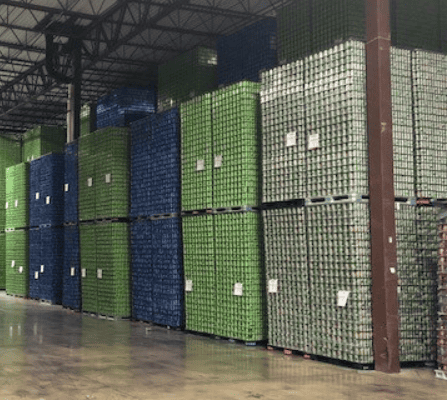
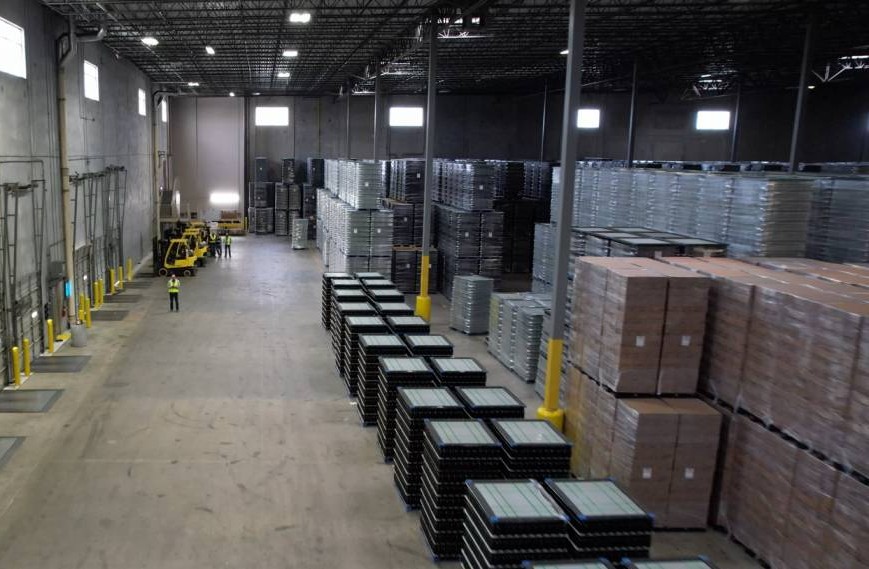
The Buske Logistics network illustrates how a well-structured 3PL can absorb this complexity at scale, operating across 40+ facilities throughout the U.S. and Canada to keep goods moving efficiently from origin to final drop.
Not all providers in this space are built the same. Understanding the different categories helps you match your operational needs to the right model.
Large, recognizable companies with coast-to-coast networks, national carriers offer broad coverage and reliable, standardized service for high-volume shippers. However, they may lack the flexibility and personalized service that mid-market and DTC brands need.
A local carrier tends to offer faster, more flexible delivery within a defined geographic area. Because their networks are concentrated, they often achieve better on-time rates in specific metro markets. The trade-off is limited scalability if your business spans multiple regions.
Often aggregated through technology platforms, independent shippers have grown with e-commerce. They offer last-minute capacity and hyper-local delivery but can vary in quality, insurance, and reliability. They are best used as a supplement rather than a primary fulfillment strategy.
A 3PL integrates warehousing, transportation management, and last mile execution under a single operational umbrella. This model is particularly effective for businesses that need a scalable, technology-enabled last mile delivery solution without building out their own infrastructure.
Buske Logistics, a top 20 private 3PL company with over 100 years of experience in the industry, operates at this level, supporting Fortune 500 and Fortune 1,000 clients like PepsiCo, Diageo, and Starbucks with fully managed supply chain solutions.
The service mix varies by provider type, but the strongest operators in this space typically offer the following:
For brands managing retail fulfillment at scale, these services are not optional features; they are core operational requirements.
Outsourcing this segment of your logistics operation to a dedicated provider carries real, measurable advantages.
Building a proprietary last mile network requires significant capital investment in vehicles, drivers, route optimization software, and facilities. Partnering with an established provider converts those fixed costs into variable ones, letting you scale up or down based on demand without carrying idle capacity.
Experienced last mile service providers already have the infrastructure, carrier relationships, and technology in place. You gain speed without the startup curve. For brands launching in new markets, this is particularly valuable.
Delivery is often the only physical touchpoint a customer has with your brand post-purchase. A provider that executes consistently, delivers on time, and communicates proactively protects your brand reputation at its most visible moment.
Retail peak seasons, product launches, and promotional events create sudden demand spikes. The right 3PL partner has the bench strength to absorb those surges without compromising service levels. Buske Logistics, with its 40+ facilities and deep operational history, has supported major consumer brands through exactly these scenarios.
Top-tier last mile delivery solution providers invest heavily in route optimization, fleet management, and customer notification platforms. When you partner with them, you inherit that technology stack without the licensing and development costs.
Retail has unique challenges beyond e-commerce delivery. Retailers manage both B2C consumer deliveries and B2B store replenishment, often simultaneously. Requirements include precise delivery windows, retailer routing guides, pallet and packaging standards, and chain-specific documentation.
For example, delivering to a large-format grocery or big-box retailer involves strict appointment scheduling, advance ship notices (ASNs), and potential chargebacks for non-compliance. A provider unfamiliar with these requirements can cost you far more in penalties than it saves in transportation fees.
This is why understanding retail freight dynamics before selecting a last mile partner matters. Providers who specialize in the retail channel have pre-existing relationships, carrier agreements, and compliance frameworks that protect you from costly errors.
Buske Logistics, for instance, has deep experience in retail freight operations, supporting consumer packaged goods brands and retailers across North America with compliant, high-frequency replenishment programs. Clients like Ball Corporation and Mother Parkers rely on this infrastructure to maintain consistent shelf availability across major retail networks.
According to the U.S. Department of Transportation's Bureau of Transportation Statistics, freight movement in the retail sector continues to grow in both volume and complexity, making experienced providers more valuable than ever.
Selecting the right partner is a structured decision, not a gut-feel one. Here is a practical framework I recommend applying.
Before evaluating providers, document your average shipment size, frequency, delivery geography, and service level requirements. A beverage manufacturer like Diageo delivering to retail locations has a completely different profile than a DTC brand shipping directly to consumers.
Your provider needs to cover every zip code or region where your customers and retail partners are located. Gaps in coverage create handoffs to secondary carriers, which introduces variability and risk.
Ask each provider about their route optimization tools, real-time tracking infrastructure, customer notification systems, and API integration capabilities with your existing WMS or OMS. Technology gaps become operational gaps quickly.
If you ship into regulated environments, such as food and beverage, automotive, or temperature-sensitive products, confirm the provider has relevant certifications and documented experience. Buske's work with clients like Stellantis in automotive sequencing demonstrates the kind of precision that transfers directly to complex last mile operations.
Last mile pricing structures vary: per-stop, per-mile, weight-based, or zone-based. Make sure you fully understand what is included and what triggers surcharges. Hidden fees in last mile logistics are common and can erode the cost savings you expected.
Request case studies, on-time delivery rates, damage rates, and customer satisfaction scores. A provider worth partnering with will share this data transparently.
If you are ready to evaluate a provider with over a century of experience and a proven track record with Fortune 500 brands, the best next step is to contact Buske Logistics directly and discuss your specific needs.
The Federal Motor Carrier Safety Administration provides a public carrier search tool that allows you to verify the safety records and operating authority of any transportation provider you are considering, which is a due diligence step we strongly recommend.
This table should help you quickly narrow down which provider category fits your business model before you begin formal vendor conversations.
With over 100 years of experience in logistics and supply chain management, Buske Logistics has built a reputation that few 3PL companies can match. Operating 40+ facilities across the U.S. and Canada, Buske serves as a strategic logistics partner for some of the most recognized brands in North America, including PepsiCo, Starbucks, and Golden State Foods.
What differentiates Buske is not just scale. It is the depth of expertise across verticals: automotive sequencing with Stellantis, beverage logistics with Molson Coors and Diageo, and retail supply chain execution for consumer packaged goods brands.
That cross-industry experience translates into faster problem-solving, more resilient operations, and better outcomes for clients navigating the complexity of last mile delivery.
If your current last mile delivery solution is costing you more than it should, or if failed deliveries and compliance issues are eating into your margins, the right partner can change that faster than you think.
Buske Logistics has spent over 100 years building the infrastructure, carrier relationships, and operational playbooks that today's most demanding brands rely on, and that same expertise is available to your business right now. Whether you are scaling a DTC brand, managing retail replenishment, or navigating multi-channel distribution, Buske has the facilities, experience, and team to execute at every level.
Fill out the Buske Logistics contact form today and tell us about your delivery challenges so we can build a solution around your specific needs.
A: Last mile delivery companies manage the final segment of a shipment's journey, from a distribution hub or warehouse to the end customer or retail location, handling retail freight operations that require specialized expertise.
They handle route planning, carrier coordination, proof of delivery, customer notifications, and in some cases returns processing. The best providers do all of this while maintaining compliance with retailer routing requirements and consumer delivery expectations, which is why selecting a provider with broad operational experience matters significantly.
A: Last mile delivery costs vary widely based on shipment size, distance, delivery type, and volume, but this segment typically represents the largest per-unit cost in the entire supply chain.
Pricing varies by provider, with charges based on stops, miles, packages, or zones. Common surcharges include failed deliveries, residential fees, and fuel adjustments. Working with a 3PL that combines transportation management and warehousing can reduce handoffs and overall costs.
A: A 3PL manages the entire logistics operation, including warehousing, inventory, carrier selection, and last mile execution, while a standard carrier focuses only on the transportation leg.
When you work with a carrier alone, you still need to manage inbound freight, storage, order processing, and outbound coordination yourself or through separate vendors. A 3PL like Buske Logistics consolidates all of those functions under one operational roof, giving you a single point of accountability and typically better overall cost control.
A: Ask the provider directly whether they have experience with retail routing guides, advance ship notices, and appointment-based receiving, then request references from current retail clients.
Retail compliance is specialized. Providers without the right expertise can make costly mistakes that trigger retailer chargebacks. Look for proven experience with CPG brands and national or regional retail chains before choosing a provider.
A: Yes, many established 3PL providers handle both consumer deliveries and business-to-business retail replenishment, but the two require different operational capabilities and should not be assumed to be interchangeable.
B2C delivery prioritizes speed, communication, and flexibility, while B2B retail delivery focuses on compliance, documentation, and appointment adherence. Strong providers support both models and can scale across channels, making them ideal for multi-channel brands.
Choosing the right last mile delivery partner is a critical supply chain decision in 2026. Your provider directly impacts customer experience, retail compliance, and logistics costs. Evaluate providers based on geographic coverage, technology, compliance expertise, and operational capabilities, not just quoted rates.
Buske Logistics brings over 100 years of hands-on logistics experience, 40+ facilities across North America, and a proven track record with some of the most recognized brands in the world to every client relationship.
If you are ready to work with a 3PL that understands both the strategy and the execution side of last mile delivery, reach out to the Buske team and start the conversation today.

Buske Logistics is a Top 20 Private Warehousing 3PL. Let's build a solution for your supply chain.