.png)
-p-130x130q80.png)
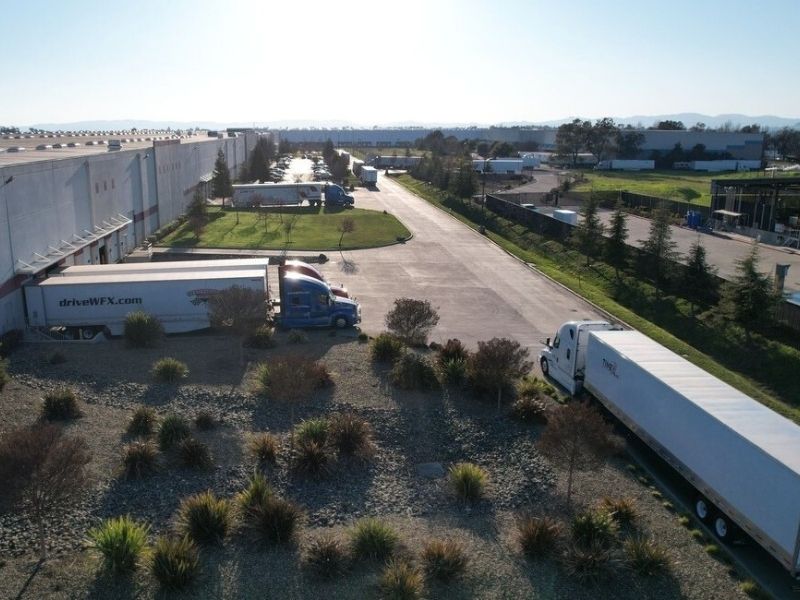
Last-mile delivery is the final stage of the logistics and supply chain process, the movement of goods from a distribution hub, fulfillment center, or transportation hub to the end customer's door. Despite being the shortest geographic leg, last-mile delivery is the most expensive, accounting for 40–55% of total shipping costs, and the most operationally complex due to high delivery density, variable customer availability, traffic congestion, and real-time visibility requirements.
The term "last mile" originated in telecommunications to describe the final connection between a provider's network and the end user. Logistics adopted it for the same concept: the final delivery leg from the last distribution point to the customer.
Last-mile delivery is the stage consumers experience directly. They never see ocean freight, rail networks, or regional distribution centers but they absolutely notice whether their package arrives on time, undamaged, and with accurate tracking. In the age of Amazon Prime, last-mile execution is a direct driver of customer satisfaction, loyalty, and repeat purchase.
Last-mile is the most expensive segment of freight per mile traveled. A full truckload costs $2–4/mile; a last-mile van making 80 individual stops per day effectively costs $10–20+ per stop. Here's why:
A long-haul truck delivers one load to one location. A last-mile delivery vehicle makes 50–150 individual stops per shift each requiring navigation, parking, customer interaction, and handling. Every stop incurs fixed costs regardless of package size or value.
When a customer is unavailable, the carrier must re-attempt or hold the package. Industry average first-attempt failure rates are 5–15% for B2C deliveries. Each failed attempt adds full re-delivery cost with zero revenue recovery.
Urban congestion and parking challenges remain a major barrier to efficient last-mile delivery. Studies show urban delivery drivers spend 20–40% of their shift on parking and navigation not delivering packages. According to McKinsey & Company’s research in The future of last-mile logistics, urban delivery costs are 2–3x higher per stop than suburban delivery.
E-commerce peaks (Cyber Monday, holiday season) create 3–5x normal volume spikes, impossible to staff and route efficiently without advanced forecasting and flexible capacity solutions.
Amazon Prime has conditioned consumers to expect free two-day delivery as a baseline. Meeting same-day and next-day standards requires dense fulfillment networks positioned close to consumers, a massive, ongoing infrastructure investment.
Optimizing delivery routes across 80–150 stops per vehicle, while accounting for traffic, time windows, vehicle capacity, driver hours-of-service, and priority deliveries, is computationally intensive. Poor routing wastes fuel, driver time, and vehicle capacity. Leading AI-powered platforms include Route4Me, OptimoRoute, and Circuit.
Modern consumers expect Amazon-level tracking: real-time GPS, estimated arrival windows, proactive exception notifications, and easy rescheduling. Building these systems requires significant technology investment and carrier API integration.
E-commerce return rates of 20–30% mean for every three deliveries, one generates a return event requiring efficient inspection, sorting, and disposition workflows. For more, see the Buske order fulfillment guide.
Last-mile delivery vehicles are a significant source of urban air pollution. The World Economic Forum estimates urban last-mile delivery contributes 25% of city CO₂ emissions. Regulators in New York, London, and Paris are actively tightening emissions standards.
Autonomous delivery & drones: Amazon Prime Air, Wing by Alphabet, and Starship sidewalk robots are commercially operational in limited markets. Industry projections: 20–30% of last-mile deliveries could be autonomous by 2035.
Key Distinction: B2C last-mile delivery prioritizes speed, visibility, and customer experience. B2B last-mile delivery prioritizes reliability, compliance (delivery appointments, dock scheduling, EDI notifications), and cost. B2B shipments are typically larger and less frequent but require more rigid scheduling and documentation.
Last-mile delivery is the final stage of logistics, moving goods from a distribution hub to the end customer. It is critically important because it accounts for 40–55% of total shipping costs and is the primary competitive differentiator in e-commerce. Businesses that execute last-mile better win more customers, generate more repeat purchases, and build stronger brand loyalty.
Last-mile delivery is expensive because it requires high-frequency stops (50–150 per vehicle per day) with low volume per stop, in congested urban environments with parking challenges, to residential addresses where customers may not be available. Failed delivery attempts (5–15% of B2C deliveries) add full re-delivery costs with no revenue recovery.
The "last-mile problem" refers to the difficulty and disproportionate cost of the final delivery leg. While long-haul transportation is highly efficient through full truckloads and optimized routes, last-mile delivery fragments into hundreds of individual stops, each requiring navigation, parking, customer interaction, and handling, making it inherently labor-intensive and expensive relative to the distance traveled.
Key strategies: positioning fulfillment centers closer to customers (10–20% cost reduction per 100 miles), AI-powered route optimization (15–25% efficiency gain), package lockers to eliminate failed deliveries, building dense routes to increase stops per vehicle hour, adopting EVs to reduce fuel costs, and leveraging crowdsourced delivery for peak volume absorption.
Same-day delivery requires fulfillment centers within 20–30 miles of the customer, fast order processing (1–2 hours from order to dispatch), and dedicated last-mile delivery capacity available throughout the day. Amazon, Walmart, Target, and DoorDash all offer same-day delivery in major markets for orders placed before a midday cutoff time.
Reverse last-mile logistics is the process of collecting returned goods from customers and transporting them back through the supply chain through scheduled home pickups, drop-off at retail or locker locations, or carrier-coordinated return shipments. With e-commerce return rates of 20–30%, reverse last-mile requires efficient inspection, sorting, and disposition workflows to recover maximum inventory value.

Buske Logistics is a Top 20 Private Warehousing 3PL. Let's build a solution for your supply chain.


