.png)
-p-130x130q80.png)
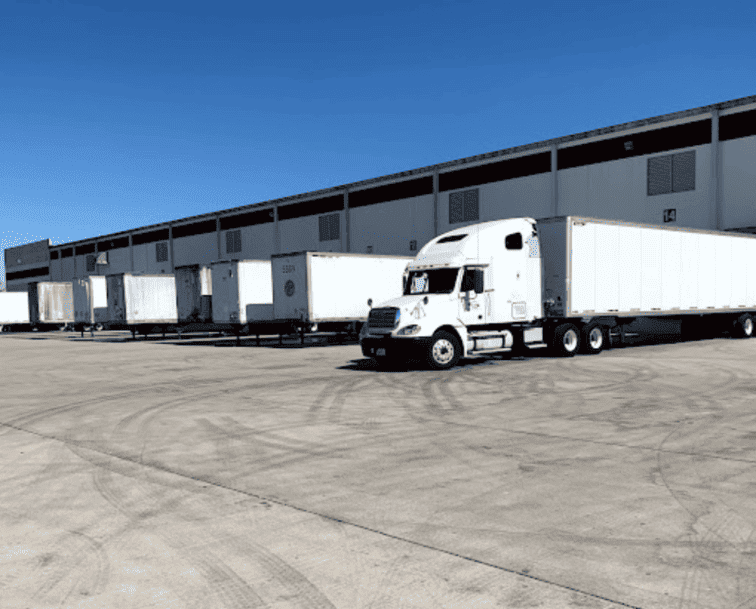
LTL (Less-Than-Truckload) shipping is used when a shipment does not fill an entire truck — your freight shares trailer space with other shippers and you pay only for the portion you use. FTL (Full Truckload) dedicates an entire trailer to a single shipper's freight. LTL is more cost-effective for smaller shipments (typically 1–6 pallets or under 15,000 lbs); FTL is faster, more secure, and more cost-effective for larger shipments.
An LTL shipment typically weighs between 150 and 15,000 pounds and occupies 1 to 6 pallet positions. LTL carriers operate hub and spoke networks, where freight is picked up locally, transported to a regional terminal, sorted, consolidated with other freight, and forwarded to its destination.
Full Truckload (FTL) shipping dedicates an entire trailer exclusively to one shipper's freight. Whether you fill the truck completely or not, you pay for the full trailer. Your freight moves directly from origin to destination without the multiple stops, terminal handling, and consolidation of LTL. According to BTS Freight Facts, trucking accounts for over 70% of all U.S. freight by value.
Quick Decision Rule: Use LTL when your shipment is under 15,000 lbs or 6 pallets and you can accept a 2–5 day transit window. Use FTL when your shipment is over 15,000 lbs, time-sensitive, high-value/fragile, or when the FTL quote is within 20% of the LTL price, at that point, FTL's speed and security advantages make it the better choice.
Internal Resources — Buske Logistics Blog
The National Motor Freight Traffic Association (NMFTA) defines 18 freight classes (50–500) based on four factors: density (lbs per cubic foot), stow-ability (how easily it loads with other freight), handling (ease of handling), and liability (susceptibility to damage or theft). Lower classes (50–85) are dense commodities like metal parts and building materials. Higher classes (250–500) are low-density or difficult commodities like ping-pong balls or mattresses.
PRO TIP: Density-Based Pricing
Many LTL carriers now use density based pricing (DBP) as an alternative to freight class, calculating the pounds per cubic foot of your shipment. DBP eliminates freight class disputes and often provides more predictable pricing. Ask your carrier or 3PL provider whether DBP applies to your freight.
For long-haul shipments of 1,500 miles or more that do not require the speed of direct trucking, intermodal freight, which combines rail and truck transportation, can often provide FTL-equivalent economics at a 10 to 20% lower cost. Freight is loaded into a container, trucked to a rail ramp, transported by train, then trucked to final delivery. Transit times are typically 1–3 days longer than over-the-road trucking. For more on freight modes, see the Buske Freight Shipping 101 guide.
LTL (Less-Than-Truckload) and FTL (Full Truckload) are two primary freight shipping options used in logistics and supply chain management. LTL shipping allows multiple shippers to share trailer space, making it a cost-effective solution for shipments that do not require a full truck, while FTL shipping dedicates an entire trailer to a single shipment for faster transit times, reduced handling, and greater security. Businesses typically choose LTL freight for shipments under 15,000 pounds or fewer than seven pallets, while FTL freight is often more efficient for larger, heavier, or time-sensitive shipments that require direct transportation.
LTL freight rates are calculated based on several factors, including freight class, shipment weight, dimensions, density, origin and destination locations, and any additional services such as liftgate delivery, residential service, appointment scheduling, or fuel surcharges. Freight class, determined by the National Motor Freight Classification (NMFC) system, plays a significant role in pricing because it evaluates a shipment's density, handling requirements, stowability, and liability risk. Understanding these factors can help businesses optimize shipping costs and improve transportation planning.
LTL shipping is typically the best choice when your freight weighs less than 15,000 pounds, occupies six pallets or fewer, and can accommodate transit times that may be slightly longer due to terminal handling and consolidation with other shipments. It is a cost-effective solution for routine inventory replenishment, regional distribution, and lower-volume freight movements because businesses only pay for the trailer space they use rather than the entire truck.
A freight class is a standardized rating established by the National Motor Freight Classification (NMFC) system that categorizes commodities based on density, handling characteristics, stowability, and liability risk. Freight classes range from 50 to 500, with lower classes generally resulting in lower shipping costs and higher classes generating higher rates. Accurate freight classification is essential because misclassified shipments can lead to reclassification fees, billing adjustments, shipping delays, and increased transportation expenses.
Intermodal freight shipping combines multiple transportation modes—most commonly truck and rail—to move freight efficiently over long distances while keeping cargo in the same container throughout the journey. This approach can reduce transportation costs, improve fuel efficiency, and lower environmental impact compared to traditional over-the-road trucking. Intermodal shipping is especially effective for long-haul freight movements exceeding 1,500 miles, where businesses can often achieve significant cost savings while maintaining reliable delivery performance.

Buske Logistics is a Top 20 Private Warehousing 3PL. Let's build a solution for your supply chain.