


Retail chargebacks are financial penalties that retailers issue to suppliers when a shipment, invoice, or delivery fails to meet their compliance requirements.
They are one of the most common and costly problems in retail logistics, and they are entirely preventable with the right systems in place.
Key Takeaways
If you supply products to major retailers like Walmart, Target, Costco, or Kroger, chances are you have already encountered a chargeback notice. Maybe it was for a late delivery. Maybe the pallet labels were in the wrong position.
Maybe the ASN was submitted after the shipment arrived. Whatever the reason, the result is the same: money comes out of your pocket, and your retail relationship takes a hit.
This article breaks down exactly what retail chargebacks are, what causes them, and how working with the right 3PL can help you stop them before they happen.
Retail chargebacks are deductions that large retailers take directly from a supplier's invoice when that supplier fails to comply with the retailer's vendor requirements. Instead of paying the full invoice amount, the retailer deducts a fee, sometimes a flat rate, sometimes a percentage of the order, and sometimes both.
These fees are detailed in each retailer’s vendor compliance manual, which can span dozens of pages. Requirements cover everything from pallet stacking and labeling to delivery times and when an Advance Ship Notice (ASN) must be submitted electronically. Missing even one requirement can result in a costly chargeback.
For context, retailers like Walmart and Target operate some of the most detailed vendor compliance programs in the country. Their requirements are not suggestions. They are enforced consistently, and the penalties can range from $50 per incident to hundreds of dollars per pallet, depending on the violation type.
According to GS1 US barcode guidelines, unreadable or improperly printed barcodes can result in retailer chargebacks. Proper labeling and barcode compliance are therefore essential to avoiding preventable costs in retail supply chains.
Understanding how the chargeback process works helps you see where things go wrong. Here is a typical sequence:
The dispute process is where a lot of suppliers lose time and money. Retailers require documentation, including signed delivery receipts, packing slips, ASN confirmations, and shipping records. Without organized records, disputing a chargeback is nearly impossible, even when you believe the penalty was applied in error.
Solid retail compliance practices are the foundation of avoiding this cycle entirely.
Most chargebacks fall into a handful of recurring categories. Knowing them puts you in a much better position to prevent them.
Missing or incorrect GS1-128 labels, wrong barcode placement, incorrect label data, or non-compliant packaging dimensions all trigger chargebacks. Each retailer has specific label requirements, and a label that works for one retailer may not work for another.
Retailers typically have preferred carriers and routing guides that suppliers must follow. Shipping with an unauthorized carrier or not following the correct retail order routing instructions will result in a chargeback, even if the shipment arrives on time and in perfect condition.
Retailers operate on tight receiving schedules. Deliveries outside the agreed-upon appointment window, whether early or late, can be refused or result in a penalty. On-time-in-full (OTIF) scorecards are now standard across major retail chains.
An Advance Ship Notice must be submitted accurately and on time, often before the shipment arrives. Errors in the ASN, or submitting it after the truck has already arrived, are among the most common chargeback triggers.
Shipping more or fewer units than the purchase order specifies, or shipping the wrong SKUs, results in discrepancies that lead to chargebacks and potential cancellations.
Retailers specify exactly how pallets must be built, including height limits, stacking patterns, and carton counts. A pallet that does not meet specs creates problems at the distribution center and generates a penalty.
Beyond the direct cost of the penalty itself, chargebacks create a ripple effect that can affect your entire business.
If your margins on a retail account are already thin, chargebacks can turn a profitable account into a loss. When you factor in the staff time spent investigating and disputing chargebacks, the true cost is often two to three times the face value of the deduction.
Retailers track vendor compliance scores. A pattern of chargebacks signals to the buyer that your operation is unreliable. Over time, this can lead to reduced shelf space, lost purchase orders, or removal from the vendor program entirely.
Chargebacks reduce what you collect on each invoice, which disrupts cash flow projections. For growing brands or seasonal businesses, this can create real financial strain.
Chasing chargebacks requires accounts receivable staff, operations managers, and often warehouse supervisors to pull records, build dispute files, and communicate with the retailer. That time is taken away from productive work.
Understanding retail freight requirements and embedding them into your operations from day one is far more cost-effective than managing chargebacks after the fact.
Prevention starts with process. Here are the most effective steps suppliers can take.
Accurate documentation and operational efficiency are essential to reliable retail partnerships. According to GS1's EDI implementation guidance, standardized data exchange helps businesses improve supply-chain efficiency, reduce costs, and coordinate more effectively with trading partners.
This is where the right logistics partner makes a measurable difference. A 3PL that specializes in retail logistics brings infrastructure, expertise, and technology that most brands cannot build on their own.
A qualified 3PL has already worked through the compliance requirements of major retailers. They know what Walmart's routing guide requires. They know what Target's ASN submission window looks like.
They know how Home Depot expects pallets to be configured. That institutional knowledge directly reduces your chargeback risk.
A well-equipped retail warehouse runs on a WMS that enforces compliance rules at the point of packing. Labels are generated and verified automatically. Pallet builds are audited before departure. Nothing ships until it passes a system check.
Most retailers require EDI connectivity for purchase order receipt, ASN submission, and invoice processing. Managing EDI in-house is complex and error-prone. A 3PL manages this infrastructure for you, reducing submission errors that trigger chargebacks.
3PLs have established carrier relationships and volume-based scheduling leverage that help secure delivery appointments and meet OTIF requirements. Consistent on-time performance protects your vendor scorecard.
When chargebacks do occur, a 3PL maintains the records you need to dispute them. Signed delivery confirmations, WMS timestamps, packing reports, and shipping manifests are all stored and retrievable.
Buske Logistics has been in the logistics and warehousing business for over 100 years. With 40-plus facilities across the U.S. and Canada and a client roster that includes companies like PepsiCo, Diageo, and Molson Coors, Buske has the experience and systems to help suppliers meet even the most demanding retailer requirements.
If you want to see how top 3PLs approach retail logistics, reviewing the best 3PLs for retailers gives you a useful benchmark.
As a top 20 private 3PL in North America, Buske serves Fortune 500 and Fortune 1,000 brands alongside growing mid-market and direct-to-consumer companies, bringing the same level of compliance rigor to every account.
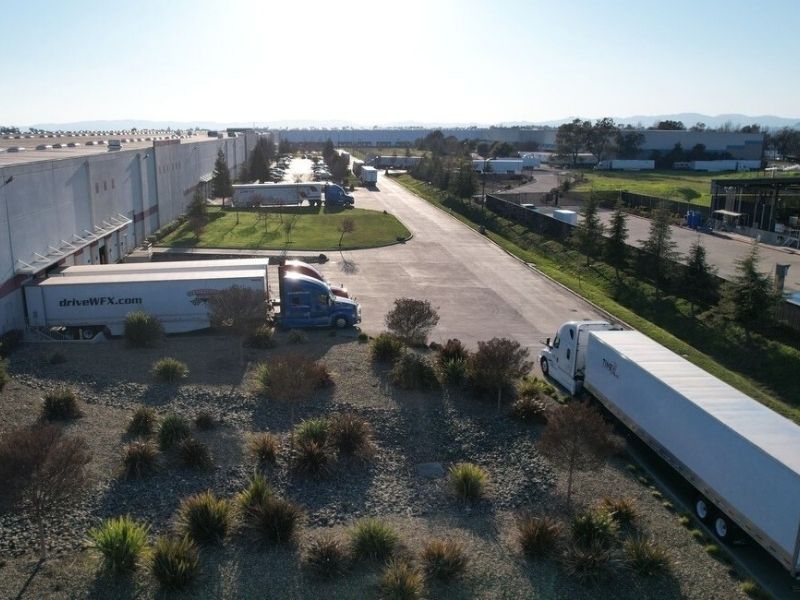
Suppliers who work with a 3PL that genuinely understands retail requirements are not just reacting to chargebacks. They are building a supply chain that makes chargebacks rare. That means more money collected on every invoice, stronger relationships with buyers, and a logistics operation that can scale as your retail footprint grows.
Whether you are shipping to a single regional chain or managing compliance across a dozen national retailers, the fundamentals are the same: accurate documentation, consistent execution, and the right partner in your corner.
Every chargeback you absorb is money your business earned but never collected. At Buske Logistics, we have spent over 100 years building retail logistics operations that meet the compliance standards of the country's most demanding retailers, so our clients do not have to absorb those losses.
Reach out to the Buske Logistics team today and tell us about your current retail accounts, chargeback history, and fulfillment challenges. We will walk you through exactly how our facilities, systems, and expertise can reduce your chargeback exposure starting with your next shipment.
Retail chargebacks are penalties that retailers deduct from a supplier's invoice when a shipment fails to meet vendor compliance requirements. They are entirely different from consumer chargebacks, which occur when a customer disputes a credit card transaction with their bank.
Retail chargebacks are a B2B issue between a supplier and a retail buyer, governed by the retailer's vendor agreement. They are typically triggered by operational failures like mislabeled pallets, late deliveries, or incorrect ASN submissions, not payment disputes.
The cost varies by retailer and violation type, but individual chargebacks commonly range from $50 to several hundred dollars per incident, and high-volume suppliers can face thousands of dollars in deductions each month.
Chargebacks cost more than the penalty itself, adding staff time for records, disputes, and retailer communication. For brands with tight margins, recurring penalties can quickly erode profitability, making chargeback tracking essential for identifying their true financial impact.
Yes, most retailers have a formal dispute process, but the burden of proof falls entirely on the supplier. To dispute a chargeback successfully, you need documented evidence: signed delivery receipts, packing reports, ASN confirmation timestamps, carrier proof of delivery, and purchase order records.
Retailers typically give suppliers a window of 30 to 60 days to submit a dispute, after which the deduction becomes final. Without organized records, winning a dispute is extremely difficult, which is why documentation systems and 3PL partnerships that maintain retrievable records are so valuable.
Large-format national retailers with strict vendor compliance programs, including Walmart, Target, Costco, Home Depot, and Amazon's vendor program, are among the most active in issuing chargebacks.
Major retailers use automated systems to quickly flag compliance issues and strictly enforce vendor requirements. Regional chains, club stores, and specialty retailers also impose chargebacks, making it essential to understand each retailer’s requirements before shipping.
A 3PL that specializes in retail logistics brings retailer-specific compliance knowledge, warehouse technology, and EDI infrastructure that most brands cannot efficiently replicate on their own.
In-house teams often juggle multiple retailer requirements, where one labeling or routing error can trigger costly chargebacks. Experienced 3PLs have systems to enforce compliance throughout fulfillment, helping growing brands protect margins as retail volume scales.
Retail chargebacks are not just an accounting nuisance. They are a direct signal that something in your supply chain is not aligned with your retail partners' expectations, and left unaddressed, they compound into serious revenue losses and damaged buyer relationships.
The good news is that the vast majority of chargebacks are preventable with the right processes, the right technology, and the right logistics partner.
Buske Logistics has helped suppliers across North America, including brands like PepsiCo, Diageo, and Golden State Foods, build retail logistics operations that hold up under the compliance scrutiny of the country's largest retailers.
With over 100 years of experience, 40+ facilities across the U.S. and Canada, and deep expertise in retail warehousing and fulfillment, we are positioned to help you eliminate chargeback exposure at its source.
If you are ready to stop absorbing preventable penalties and start collecting every dollar you earn, connect with Buske Logistics and let us show you what a compliance-first 3PL looks like in practice.

Buske Logistics is a Top 20 Private Warehousing 3PL. Let's build a solution for your supply chain.


