.png)
-p-130x130q80.png)
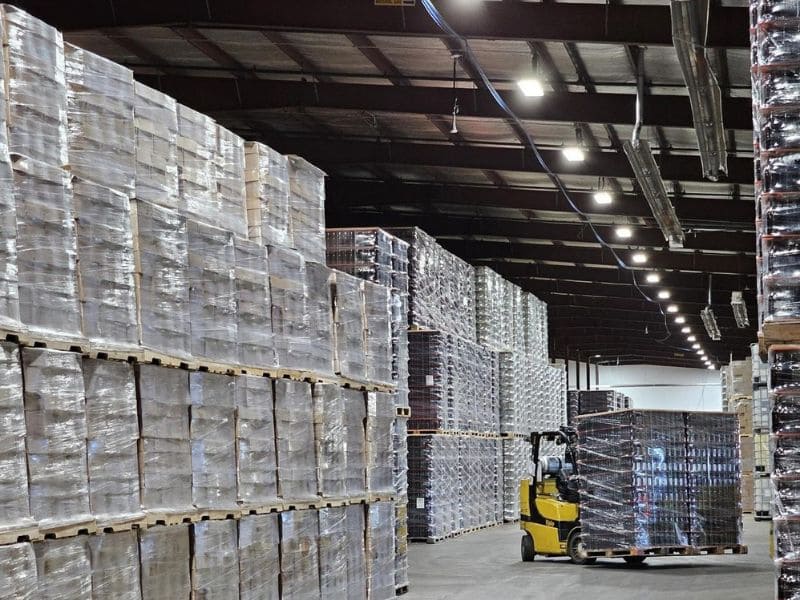
When a customer places an order, retail order routing is the process that decides where that order gets fulfilled from and how it gets to the customer. Done right, it cuts fulfillment costs, speeds up delivery, and keeps your retail partners happy.
Retail order routing is the logic-driven process of assigning incoming customer or retailer orders to the best possible fulfillment source. That source could be a warehouse, a distribution center, a retail store, or even a vendor. The assignment is based on a set of rules: inventory availability, shipping distance, carrier capacity, cost thresholds, and retailer requirements.
Think of it like a GPS for your supply chain. Instead of guessing which warehouse should ship a pallet of beverages to a Walmart distribution center in Memphis, your routing system calculates the fastest and cheapest path automatically.
For brands like PepsiCo or Molson Coors, which move enormous volumes across dozens of retail accounts simultaneously, having a precise routing system is not a luxury. It is the difference between on-time delivery and a costly chargeback.
Understanding the step-by-step flow helps you identify where breakdowns happen and where automation can help.
An order enters your system, either from an EDI transmission, an eCommerce platform, or a retailer portal. The system validates the order against your product catalog, customer account rules, and any compliance requirements tied to that retailer.
The routing engine checks real-time inventory across all fulfillment nodes. If you have three distribution centers, it sees what is available at each one and flags any low-stock locations.
This is where the intelligence kicks in. The system applies pre-set routing rules:
The order is assigned to a location, a pick-and-pack team is triggered, and a shipping label is generated. If your system integrates with a transportation management platform, a carrier is selected automatically at this stage.
The retailer or end customer receives an order confirmation with tracking. Your team monitors the shipment through delivery, and any exceptions like delays or returns are fed back into the system.
Working with a solid set of order management systems is what makes this entire process reliable at scale. Without that integration layer, you are making routing decisions manually, which is slow and error-prone.
Order routing for multi-location retailers is a different challenge compared to single-node fulfillment. When you are managing five, ten, or twenty fulfillment points, the number of routing variables multiplies fast.
Here is a scenario: a national grocery chain places an order for 500 cases of a beverage product. Your routing system needs to determine whether to ship from your Midwest distribution center, your East Coast hub, or split the order between both. Each decision affects carrier cost, transit time, and the retailer's receiving schedule.
The best multi-location routing strategies account for:
This last point is critical. Retailers like Target, Costco, and Walmart enforce strict routing compliance programs through retail compliance standards. Missing a routing guide requirement can trigger fines that eat directly into your margins.
If you want to understand what is at stake, reviewing retailer compliance standards is a smart starting point before you build out your routing logic.
When your routing logic is dialed in, the advantages stack up quickly across cost, speed, and relationships.
Brands that manage high-velocity retail accounts, think Starbucks-level SKU complexity or Golden State Foods-level volume, rely on routing accuracy to maintain their retailer relationships. One missed delivery window at a major retail partner can cascade into deductions, lost shelf space, and strained buyer relationships.
The connection between smart routing and strong retail distribution performance is direct. When your orders flow to the right nodes at the right time, your entire distribution network performs better.
These are the practices that high-performing retailers and their 3PL partners use to stay consistent.
Every major retailer has a routing guide. Those guides dictate carrier selection, delivery windows, packaging standards, and advance ship notice (ASN) requirements.
Your routing rules should start with those constraints, not your internal preferences. Falling outside a retailer's routing guide triggers chargebacks, and the retail compliance stakes are real for any brand selling through major retail channels.
A warehouse management system without a connected order management system creates blind spots. If your WMS does not feed real-time inventory data into your routing engine, you will route orders to locations that cannot fulfill them. That creates split shipments, delays, and unhappy customers.
The U.S. Census Bureau's retail eCommerce data shows that online sales continue to grow. In Q1 2026, U.S. retail eCommerce sales reached $326.7 billion, up 9.8% from Q1 2025, increasing the need for retailers to manage order routing efficiently across growing order volumes.
Routing logic that worked six months ago may not work today. Carrier rates change, inventory positions shift, and retailer requirements get updated. A quarterly audit of your routing rules catches misalignments before they become costly mistakes.
No routing system is perfect. Carrier disruptions, weather events, or sudden stockouts will break your standard routing flow. Having documented exception handling protocols, including which team member makes the call and how quickly, keeps your operations from stalling when the unexpected happens.
This is where your choice of logistics partner matters more than most brands realize. A 3PL with a broad physical network gives you more routing options. Buske Logistics operates across 40+ facilities across the U.S. and Canada, which means there is almost always a Buske facility close to where your orders need to go.
With over 100 years of industry experience, Buske has built the operational depth that fast-growing brands and Fortune 500 companies both depend on. You can learn more about what Buske offers across Buske Logistics' full suite of supply chain solutions.
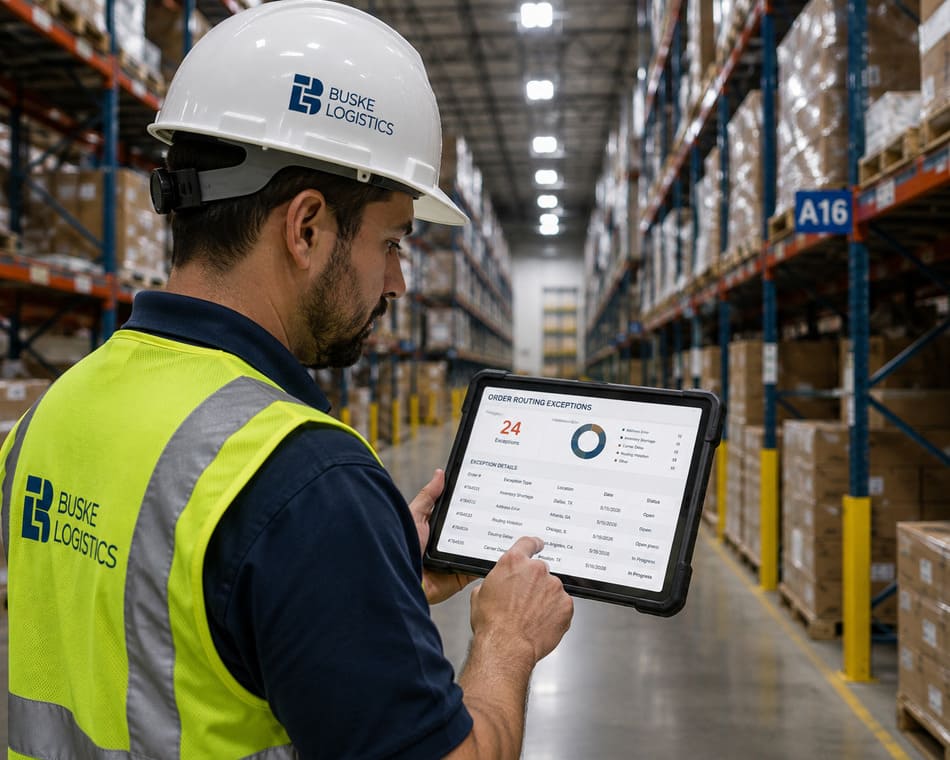
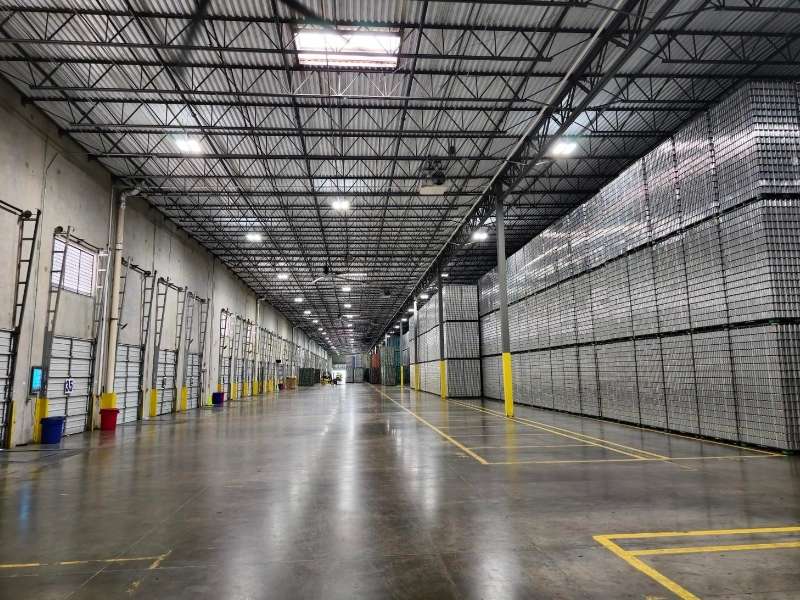
Even experienced operations teams run into these pitfalls.
Inventory visibility gaps: If your systems do not reflect real-time stock levels, your routing engine will direct orders to locations that cannot fulfill them. This is one of the most common and costly routing failures.
Carrier capacity constraints: During peak season, your preferred carrier at a given node may not have available capacity. Without fallback routing rules, orders stall.
Retailer guide complexity: Large retail accounts often update their routing guides without much advance notice. Keeping up manually is nearly impossible at scale. Automating retailer compliance checks within your routing logic is the practical solution.
Split shipment costs: When a routing engine splits an order across two nodes to hit a faster delivery time, the cost savings from speed can be wiped out by double the shipping expense. Your routing rules need a clear split shipment policy.
System integration failures: When your ERP, WMS, and OMS are not talking to each other cleanly, routing decisions can be based on stale or incomplete data. MIT Center for Transportation & Logistics research shows that channel integration and fulfillment decisions are among the leading challenges in omnichannel supply chains, while visibility remains a significant operational concern.
If your retail order routing is costing you more than it should, creating chargeback exposure, or simply not scaling with your growth, it is time to talk to a 3PL that has the network and experience to fix it. Buske Logistics has spent over a century helping brands like PepsiCo, Diageo, and Ball Corporation run tighter, smarter supply chains.
With 40+ facilities across North America and deep expertise in retail compliance and fulfillment, Buske is built for exactly this kind of challenge. Contact Buske Logistics today to discuss how we can take your routing strategy from reactive to optimized.
Retail order routing is the process of automatically directing orders to the best fulfillment location based on inventory, distance, cost, and retailer requirements. It removes the guesswork from deciding which warehouse or distribution center should ship a given order. For businesses with multiple fulfillment nodes, this process runs through a rules-based engine that evaluates all variables before assigning the order.
Routing logic assigns orders to the closest stocked fulfillment location, which shortens transit distance and lowers carrier cost per shipment. It also enables zone skipping for large orders and real-time carrier rate shopping, both of which contribute to cost savings. Over time, even small per-shipment savings compound into significant annual reductions for high-volume retailers.
Retailers issue chargebacks or deductions directly from your invoice when you ship outside their routing guide requirements. These fines can range from a flat fee to a percentage of the order value. For large wholesale orders, a single non-compliant shipment can cost hundreds or thousands of dollars in deductions.
Yes, a 3PL with the right systems and network can manage your routing logic end-to-end, including retailer compliance, carrier selection, and exception handling. The key is finding a 3PL with facilities close to your customers and strong system integrations. Buske Logistics, with its 40+ facilities and over 100 years of experience, is a strong option for brands that need scalable, compliance-ready routing support across the U.S. and Canada.
You need an order management system (OMS), a warehouse management system (WMS), and ideally a transportation management system (TMS) that all share real-time data. Without tight system integration, routing decisions get made on outdated inventory and carrier data, which leads to fulfillment errors. Many 3PL providers offer these systems as part of their managed services.
DTC orders typically route to the nearest parcel-optimized fulfillment node, while wholesale retail orders follow retailer routing guides that dictate carrier, timing, and labeling specifics. The rules, priorities, and compliance requirements are different enough that most operations teams manage DTC and retail routing through separate rule sets within the same platform.
Routing rules should be reviewed at least quarterly, and immediately whenever a major retailer updates their routing guide or your carrier rates change. Stale routing logic is one of the leading causes of unnecessary chargebacks and inflated shipping costs. Building a review cadence into your operations calendar prevents these issues from accumulating quietly.
Retail order routing is not a back-office detail. It is a direct driver of your fulfillment costs, delivery speed, and retailer relationships. Whether you are managing five distribution points or fifty, getting your routing logic right means fewer chargebacks, lower shipping spend, and happier retail partners.
The smartest move is to work with a 3PL that already has the network, the systems, and the experience to make routing decisions that serve your business. Buske Logistics has been doing this for over 100 years. Start by auditing your current routing performance, then reach out to a partner who can help you close the gaps.

Buske Logistics is a Top 20 Private Warehousing 3PL. Let's build a solution for your supply chain.