.png)
-p-130x130q80.png)
Retail fulfillment is the end-to-end process of receiving, storing, picking, packing, and shipping products to retail customers or store locations. When it runs efficiently, it keeps shelves stocked, orders on time, and customers coming back.
If you are a brand trying to grow through retail channels, you already know how quickly fulfillment problems compound. One missed shipment window can mean a chargeback.
One mislabeled pallet can hold up an entire store's replenishment cycle. Getting fulfillment right is not just a logistics priority; it is a revenue priority.
This article walks you through exactly how the process works, what separates average operations from excellent ones, and how the right 3PL partner makes the difference between growth and gridlock.
Most people think of fulfillment as "shipping stuff." In reality, it is a multi-step operation that requires coordination across receiving, storage, order management, picking, packing, compliance, and transportation. Here is how each stage plays out in practice.
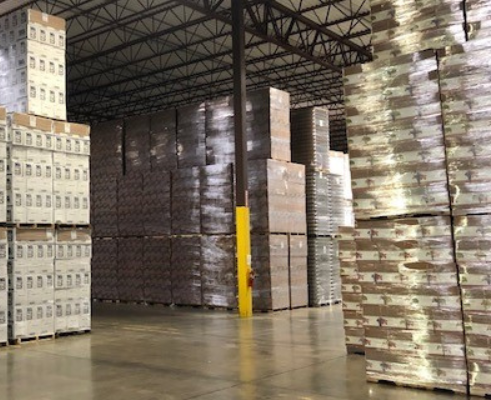
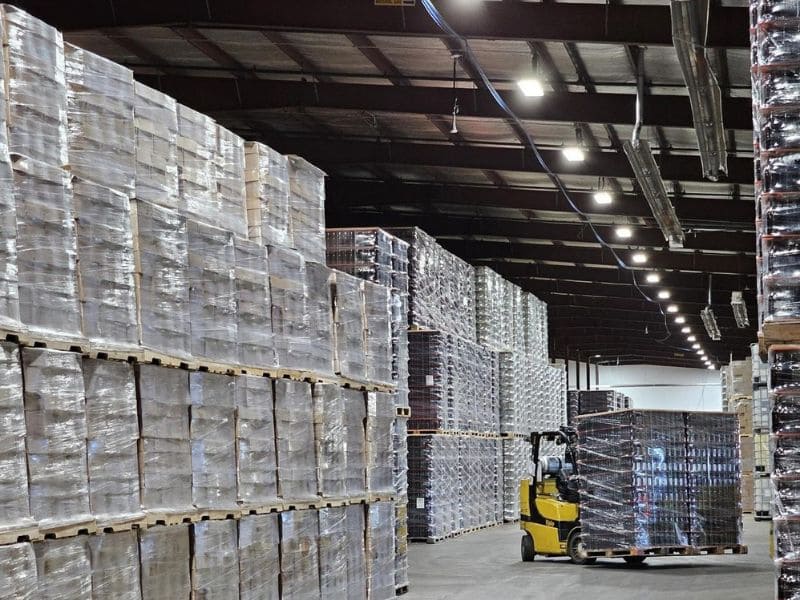
When inventory arrives at a warehouse, it gets checked against purchase orders, inspected for damage, and logged into a warehouse management system (WMS). Products are then assigned storage locations based on demand velocity, size, and special handling requirements. This step sets the accuracy baseline for everything that follows.
Inventory needs to be stored efficiently to support fast picking later. High-velocity SKUs go near pick stations. Seasonal items rotate in and out of active storage.
A good WMS tracks every unit in real time so that stock levels are never a guessing game. If you are working with a retail warehouse that uses manual tracking or outdated software, errors at this stage cascade throughout the rest of your operation.
When a retail order comes in, whether from a big-box retailer, a regional grocery chain, or an e-commerce platform, it gets processed through an order management system.
The system validates the order, checks available inventory, and routes it to the appropriate fulfillment location. Smart retail order routing assigns orders to the warehouse closest to the destination, reducing transit time and carrier costs simultaneously.
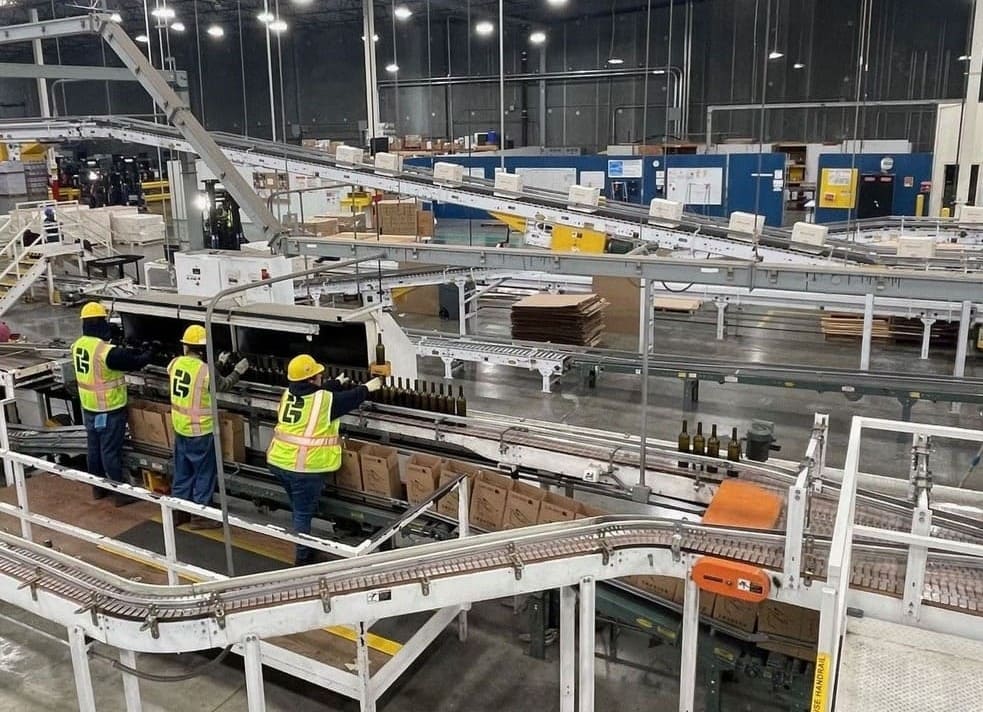
Pickers pull the correct items from storage based on the order specifications. Packing teams then box, label, and prepare each shipment to meet carrier requirements and, critically, retailer compliance standards.
Major retailers like Walmart, Target, and Costco have specific labeling, pallet configuration, and documentation requirements. Non-compliance leads to chargebacks that eat directly into your margins.
Once packed, orders are loaded onto outbound carriers and routed to their destinations. For retail replenishment, this often means full truckload or less-than-truckload (LTL) shipments to distribution centers or store locations.
For direct-to-consumer (DTC) orders, the focus shifts to parcel carriers and last mile delivery efficiency. The last mile is typically the most expensive segment of the entire supply chain, so optimizing it directly impacts your cost per order.
Fulfillment is not a back-office function but it is a commercial one. Here is why the decisions you make about your fulfillment operations affect your top line, not just your costs.
Major retailers grade suppliers on on-time, in-full (OTIF) delivery rates. Consistently missing these targets can result in reduced shelf space, fines, or being deprioritized during peak seasons.
According to the U.S. Census Bureau's retail trade data, retail sales represent trillions of dollars annually, and competition for shelf space is fierce. Getting your fulfillment right directly supports your position within that ecosystem.
Shoppers now expect fast, accurate delivery whether they buy in-store or online. Stockouts, delays, or damaged products can quickly send customers to competitors. Delivery speed and reliability are key factors in earning repeat purchases.
A single non-compliant shipment to a major retailer can trigger a chargeback equivalent to a significant percentage of that order's value. Multiply that across dozens of shipments per month and the impact becomes substantial very quickly.
This is why brands like PepsiCo and Molson Coors work with high-capacity 3PL providers rather than managing fulfillment in-house. The complexity and compliance burden at scale demands a partner with the systems, space, and experience to execute consistently.
The baseline expectation is that orders go out accurately and on time. Great fulfillment goes beyond that. Here is what distinguishes a high-performing operation.
For most growing brands and mid-market companies, the math on 3PL fulfillment is straightforward. You trade a higher per-unit cost for lower capital risk, better technology, and access to expertise that would take years to build internally.
Whether you are currently managing fulfillment in-house or evaluating a 3PL partner, these practices apply across the board.
Audit your SKU velocity regularly
Not all products move at the same rate. Classifying SKUs by velocity (fast, medium, slow) and positioning them accordingly in your warehouse layout reduces pick times and improves throughput.
Build retailer compliance into your process, not as an afterthought
Every major retailer has its own routing guides, labeling standards, and packing requirements. These should be mapped and embedded into your fulfillment workflow from day one, not checked at the end.
Use data to forecast demand
Historical sales data, promotional calendars, and seasonal trends should inform your replenishment planning. Reactive inventory management leads to stockouts and overstock simultaneously, which is a costly combination.
Establish clear SLAs with your fulfillment partner
Service level agreements around order accuracy, OTIF rates, and turnaround time hold everyone accountable and give you a baseline for continuous improvement.
Invest in visibility tools
Real-time tracking at the order, shipment, and inventory level is table stakes now. If you cannot see what is happening across your supply chain at any given moment, you cannot respond quickly when things go wrong.
Review your carrier mix
Using a single carrier for all outbound shipments creates vulnerability. A diversified carrier strategy, combined with smart routing, gives you options when capacity tightens during peak periods.
With over 100 years of logistics experience, Buske Logistics provides the infrastructure and expertise needed for retail fulfillment at scale. As a top 20 private 3PL in the U.S., Buske serves Fortune 500 and Fortune 1,000 clients across industries.
With 40+ facilities across the U.S. and Canada and operations in Mexico, Buske offers the multi-region coverage needed for national retail distribution. Its integrated warehousing, contract logistics, and value-added services provide a streamlined fulfillment solution through one partner.
If you are a brand looking to expand your retail footprint, improve your OTIF scores, or reduce the compliance burden on your internal team, Buske has the capacity, the technology, and the experience to support that growth. You can visit Buske's 3PL Solutions to learn more about the full range of services available.
Your fulfillment operation is either helping you grow or holding you back. There is rarely a middle ground when you are competing for retail shelf space and consumer attention at scale. If your current setup is generating chargebacks, missing delivery windows, or simply not keeping up with volume, now is the right time to evaluate your options.
Contact Buske Logistics today to talk through your specific fulfillment challenges with a team that has been solving them for over a century. Tell us your current pain points, your growth targets, and the retailers you serve, and we will show you exactly how our network and capabilities can help you perform better, faster.
If your current fulfillment operation is generating chargebacks, missing delivery windows, or struggling to keep pace with retail volume demands, the cost of staying with the status quo can quickly add up.
Buske Logistics has spent over 100 years building the kind of fulfillment infrastructure that retail brands need to compete at the highest level. With a team that understands the compliance requirements of the country's largest retailers, Buske is the partner that helps brands like PepsiCo, Diageo, and Ball Corporation execute at scale without dropping the ball.
Reach out to Buske Logistics today, share your current challenges and growth targets, and let our team build a fulfillment solution that is designed around your retail program from day one.
Retail fulfillment involves preparing and delivering products to retail partners or customers while meeting specific retailer requirements. Unlike standard fulfillment, retail orders often require compliance with routing guides, labeling standards, EDI requirements, and delivery windows.
Missing these requirements can lead to chargebacks, delays, and strained retailer relationships. A 3PL with retail compliance expertise helps manage these requirements efficiently.
If your team is spending too much time on warehouse operations, retailer compliance, or carrier management, it may be time to outsource. Rising chargebacks, peak-season challenges, limited distribution reach, or EDI integration issues are also strong signals.
A qualified 3PL can reduce fulfillment costs through greater efficiency, technology, and carrier volume while allowing your team to focus on growth.
Look for a 3PL with retail compliance experience, multi-region coverage, real-time WMS technology, and the ability to scale with your business. Also consider EDI capabilities, retailer experience, value-added services, and peak-season capacity. Buske Logistics provides these capabilities across a 40+ facility network, supporting complex retail fulfillment at scale.
Your OTIF score depends heavily on the accuracy and speed of your fulfillment operation. OTIF measures whether orders arrive complete and within the required delivery window, so delays, picking errors, or unreliable transportation can negatively affect your retailer scorecard.
Maintaining strong OTIF performance requires a 3PL with efficient fulfillment processes, reliable carrier relationships, and real-time inventory visibility. Consistent performance helps reduce penalties and protect important retailer relationships.
Warehouse location directly affects transit times, shipping costs, and your ability to meet retailer delivery windows. A single warehouse serving a national retail footprint can increase transportation costs and delivery times.
Strategically placed fulfillment centers near major retail hubs and population centers help reduce both. With 40+ facilities across the U.S. and Canada, Buske Logistics gives brands the geographic coverage to serve national retail accounts efficiently without investing in their own multi-site warehouse network.

Buske Logistics is a Top 20 Private Warehousing 3PL. Let's build a solution for your supply chain.