.png)
-p-130x130q80.png)
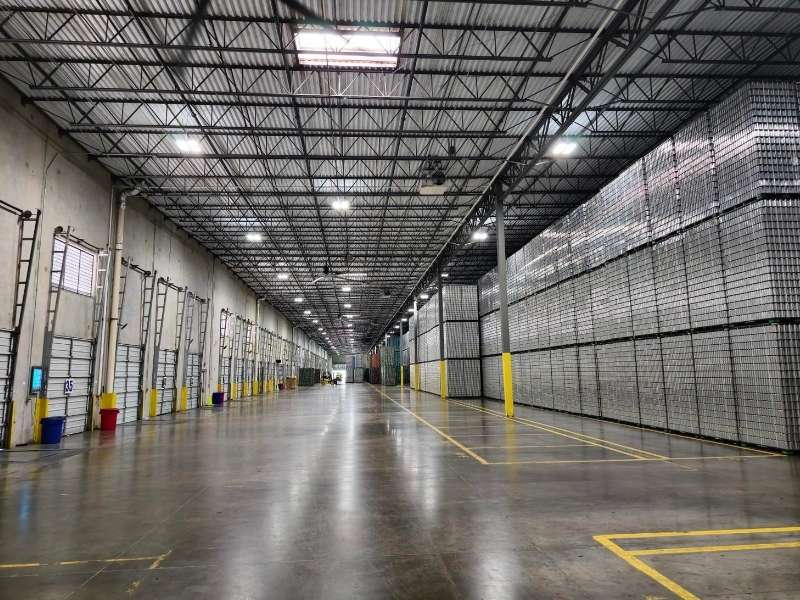
Speed matters in modern logistics. But if you're rethinking your distribution strategy, one question keeps coming up: do you need regional distribution centers, a national distribution center, or both?
The two models serve different purposes. A national distribution center consolidates inventory in one large facility to serve the entire country. Regional distribution centers spread inventory across multiple smaller facilities closer to end customers. The wrong choice can mean slower deliveries, higher transportation costs, and missed growth opportunities.
At Buske Logistics, we've spent over 100 years helping businesses optimize supply chains across North America. We work with leading brands like PepsiCo, Diageo, Stellantis, Mother Parkers, Golden State Foods, and Starbucks to improve delivery speed, reduce freight costs, and design flexible distribution networks.
In this guide, you'll learn:
Here's how to evaluate each model against your operations.
Regional distribution centers serve specific geographic markets by storing inventory closer to customers, while national distribution centers distribute products across an entire country from one or a few centralized facilities.
The right model depends on delivery speed requirements, transportation costs, inventory complexity, and long-term business growth goals. This distinction may seem simple, but the impact on your supply chain can be significant.
A regional distribution center (RDC) is a warehouse strategically located to serve customers within a specific geographic area. Instead of shipping every order from one central location, inventory is distributed across multiple facilities closer to end customers.
Examples include:
This approach allows businesses to reduce shipping distances while improving delivery performance.
Key Characteristics
Regional distribution centers typically offer:
Many ecommerce brands, retailers, consumer packaged goods companies, and healthcare organizations use regional distribution centers to meet increasing customer expectations for fast delivery.
Your customers increasingly expect two-day, next-day, or even same-day delivery, which means your distribution strategy plays a critical role in meeting those expectations. By positioning inventory closer to your customers through regional distribution centers, you can ship orders faster, lower parcel shipping costs, provide a more reliable delivery experience, and respond more quickly to shifts in demand.
Instead of shipping products across the country from a single location, you can fulfill orders from the facility closest to your customers, creating a more efficient, cost-effective, and responsive supply chain.
A national distribution center (NDC) is a centralized warehouse that stores inventory for distribution across the entire country. Rather than maintaining multiple warehouse locations, businesses consolidate inventory into one or a few large facilities that supply every customer and sales channel.
Key Characteristics
National distribution centers typically provide:
Manufacturers, industrial suppliers, wholesalers, and emerging brands often choose this model because it simplifies logistics operations and reduces facility costs.
If your business operates with predictable demand patterns or lower order volumes, a national distribution center can help you streamline operations and reduce costs.
By keeping inventory in a single location rather than spreading it across multiple facilities, you can purchase inventory more efficiently, reduce excess safety stock, improve forecasting accuracy, simplify replenishment planning, and lower overall warehouse operating expenses.
While neither approach is universally better, each supports different business priorities.
Businesses focused on speed and customer experience often gain significant advantages from regional distribution strategies.
Faster Delivery Times
The reality is, your customers expect their orders yesterday. When your products sit closer to where they live, you stop losing sales to competitors who can ship faster. Here's what you unlock:
Lower Last-Mile Shipping Costs
Last-mile delivery is often the most expensive part of the fulfillment process, and those costs can quickly add up across thousands of orders. By using regional distribution centers, you can reduce shipping distances and serve customers from locations closer to their destination.
Better Customer Experience
Your customers care just as much about reliability as they do about speed. When orders show up on time and exactly as promised, they come back for more. Positioning inventory regionally helps you:
Improved Inventory Availability
Relying on a single warehouse to serve your entire market can create inventory and fulfillment challenges. By positioning inventory closer to where demand exists, you can improve product availability, reduce stockouts, shorten replenishment times, minimize shipping delays, and avoid lost sales caused by inventory being too far from your customers.
Supports Omnichannel Fulfillment
Retailers serving stores, ecommerce customers, and wholesale partners benefit from inventory positioned across multiple locations. Regional distribution centers allow businesses to fulfill orders from the closest warehouse, regardless of sales channel.
Regional distribution centers deliver the biggest wins for industries where speed and customer experience make or break the sale. You'll see the strongest results if you're in:
Although regional networks offer speed advantages, national distribution centers continue to provide substantial value for many businesses.
Lower Facility Costs
Running one large warehouse almost always costs less than juggling several smaller ones. If you're growing fast but watching your logistics budget closely, a national distribution center keeps things lean. You'll see:
Centralized Inventory Management
Keeping inventory in a single location gives you greater visibility and control over your operations. With centralized inventory management, you can track stock more accurately, reduce duplicate inventory, simplify replenishment processes, and make more informed purchasing decisions. It also minimizes unnecessary inventory transfers between facilities, helping you operate more efficiently and keep costs under control.
Easier Demand Forecasting
Managing inventory from one central location makes forecasting far less of a guessing game. That translates to healthier cash flow and better turnover across the board. You'll gain:
Economies of Scale
Larger distribution centers can help you achieve greater operational efficiency by leveraging automated warehouse systems, bulk receiving processes, consolidated shipping, and higher labor productivity.
As operations scale, these efficiencies can lower handling, storage, and transportation costs, helping you reduce overall logistics expenses while improving performance.
National distribution centers are the right fit when operational simplicity matters more than getting products to consumers overnight. They work especially well for:
Regional distribution centers offer faster delivery and better customer experiences, but they come with added layers of complexity that need to be managed carefully.
Without the right technology and logistics partner in place, running multiple warehouses can quickly drive costs up and pull efficiency down. Here are the challenges to watch for:
Unlike a national model built around a single facility, regional networks require multiple warehouses spread across different markets. That means you'll need to budget for:
Transportation costs may go down, but warehouse operating costs often climb in their place.
Maintaining inventory across multiple locations often increases carrying costs because each facility needs enough stock to meet local demand. This can require more safety stock, higher inventory investment, additional storage space, and greater exposure to obsolete or slow-moving products.
Without accurate demand forecasting, you may also face inventory imbalances, with excess stock in one region and shortages in another.
Customer demand never sits still. One region might see a surge in orders while another slows down at the same time. Without real-time visibility into your inventory, you could find yourself having to:
A modern Warehouse Management System (WMS) takes the guesswork out of this by giving you full inventory visibility across every location.
Managing multiple regional distribution centers adds complexity because it requires tight coordination across warehouse operations, transportation providers, inventory planning, procurement, and customer service teams.
Every decision across these areas can directly impact both delivery performance and overall operating costs. For this reason, many businesses work with experienced Third-Party Logistics (3PL) providers, who already have the infrastructure, systems, and expertise to efficiently manage multi-location distribution networks.
National distribution centers simplify operations, but they also come with trade-offs that can impact customer experience and business resilience.
When everything ships from one central location, orders heading to distant markets simply take longer to arrive. With customer expectations climbing every year, slower delivery quickly turns into a competitive disadvantage. You may end up dealing with:
Shipping products across long distances can significantly increase transportation expenses, particularly for heavy or oversized items. This often results in higher parcel and freight costs, longer delivery routes, and increased fuel consumption.
While operating from fewer facilities may reduce overhead, those savings are frequently offset by the added cost of moving goods across the country.
Today's shoppers expect their orders fast, and a single national distribution center often can't keep up. You may find it difficult to offer:
For ecommerce brands especially, falling short here can hurt your conversion rates and chip away at customer retention.
Relying on a single centralized distribution center can leave your supply chain more exposed to disruptions. If that facility experiences issues, it can impact your entire operation. These disruptions may come from severe weather, labor shortages, transportation delays, power outages, or equipment failures.
During peak seasons, a single national distribution center can quickly become a bottleneck as order volumes spike. This can lead to receiving delays, warehouse congestion, shipping backlogs, and carrier capacity issues. Without backup capacity in other locations, it becomes harder to maintain consistent service levels during high demand periods.
Regional distribution centers are ideal for businesses focused on speed, customer experience, and scalable fulfillment. You should consider a regional distribution strategy if your business:
Ecommerce Brands
Fast delivery is a major factor for online shoppers, making regional distribution an effective way to improve the buying experience. By positioning inventory closer to customers, ecommerce brands can reduce shipping times and costs while encouraging repeat purchases.
Retail Businesses
Retailers serving both physical stores and online customers benefit from keeping inventory closer to demand. Regional warehouses support faster store replenishment, better product availability, and more flexible fulfillment options.
Health and Wellness Companies
Health and wellness products require reliable delivery and consistent inventory availability to meet customer expectations. Regional distribution helps speed up deliveries, reduce transportation delays, and maintain product availability.
Consumer Electronics and Beauty Brands
Consumer electronics and beauty brands compete in fast-moving markets where delivery speed can influence purchasing decisions. Keeping inventory closer to customers helps meet delivery expectations, improve fulfillment efficiency, and support faster order turnaround.
For many organizations, simplicity and centralized control outweigh the need for ultra-fast delivery. National distribution centers are often the best choice for businesses that:
Manufacturers
Manufacturers often ship large volumes to distributors and retailers rather than directly to consumers. Centralized operations help streamline production planning, inventory management, bulk shipping, and demand forecasting.
Industrial Product Companies
Industrial buyers typically prioritize product availability and dependable service over same-day delivery. A national distribution center allows businesses to efficiently serve customers from a single strategic location.
Wholesale Distributors
Wholesale distributors benefit from keeping inventory in one location to simplify operations and maximize efficiency. Centralized inventory supports larger shipment volumes, streamlines purchasing, and helps reduce warehouse costs.
Automotive and Specialty Equipment Suppliers
Automotive and specialty equipment suppliers often manage thousands of SKUs with predictable demand patterns. Centralized inventory helps reduce duplicate stock, improve inventory accuracy, and maintain product availability.
Many businesses today have stopped treating regional and national distribution centers as an either-or decision. Instead, they're blending the two to build a logistics network that's both flexible and resilient.
This approach helps you strike the right balance between cost, speed, and operational efficiency.
A typical hybrid setup includes:
The key advantages of combining both are:
Faster Delivery
Regional fulfillment centers keep high-demand products closer to customers, while slower-moving inventory remains in a national facility. This improves delivery speeds without requiring every SKU to be stocked in multiple locations.
Lower Transportation Costs
Orders are fulfilled from the most efficient warehouse based on location and inventory availability. This helps reduce shipping distances, transportation expenses, and last-mile delivery costs.
Better Inventory Utilization
Advanced inventory management systems provide real-time visibility across all warehouse locations, creating a connected inventory network. This helps reduce stockouts, excess inventory, emergency transfers, and missed sales opportunities.
Improved Supply Chain Resiliency
A multi-location network allows inventory to be fulfilled from alternate facilities when disruptions occur. This helps maintain service levels during weather events, transportation delays, labor shortages, and seasonal demand spikes.
Scalability for Future Growth
Hybrid distribution networks allow businesses to expand strategically as demand increases. Many companies begin with a national distribution center and add regional facilities over time, providing the flexibility to support growth while maintaining operational efficiency.
Building an efficient distribution network takes more than warehouse space. That is why many businesses partner with a trusted third party logistics (3PL) provider to scale efficiently. A strategic 3PL partner gives businesses the flexibility to operate regional, national, or hybrid distribution networks while reducing capital investments and operational complexity.
Here are some of the key advantages businesses gain by partnering with an experienced 3PL provider.
One of the biggest wins of partnering with a 3PL is instant access to an established warehouse network. Rather than building facilities from the ground up, you can tap into strategically located warehouses that shorten shipping distances and sharpen delivery performance. A multi-location network gives you the ability to:
Whether you're serving one region or shipping nationwide, a 3PL gives you the infrastructure to support your growth without the heavy lift.
Warehousing is just one piece of the supply chain and transportation plays an equally important role in getting products delivered efficiently. When a modern 3PL integrates transportation management with warehouse operations it creates a more seamless fulfillment process.
Managing inventory across multiple warehouses can be challenging, but advanced inventory management systems give you real time visibility into stock levels, demand trends, and replenishment needs.
Modern warehouse management systems use intelligent order routing to automatically choose the best fulfillment location for each order. Instead of shipping everything from one facility, the system considers customer location, inventory availability, shipping costs, carrier performance, and delivery commitments.
Data driven decisions are essential for building a strong distribution strategy. An experienced 3PL uses historical sales data, seasonal trends, and inventory analytics to help you forecast demand more accurately, plan replenishment ahead of time, reduce safety stock, make better purchasing decisions, and maximize your existing warehouse capacity.
Peak seasons like holidays, promotional campaigns, and product launches can quickly strain internal logistics teams. A flexible 3PL gives you access to additional warehouse capacity, labor, and transportation support when demand increases, without the need for permanent investment.
Choosing between regional and national distribution centers is only one piece of the puzzle. Just as important is picking a logistics partner with the experience, technology, and infrastructure to support your growth for the long haul.
For more than 100 years, Buske Logistics has helped manufacturers, retailers, ecommerce brands, and consumer goods companies build efficient, scalable supply chains that keep pace with shifting customer expectations and market demands.
More Than 100 Years of Logistics Expertise
Over the past century, Buske Logistics has managed complex warehousing and distribution operations across a wide range of industries, giving clients confidence that their inventory is in capable hands.
Flexible Regional and National Distribution Solutions
No two businesses have the same fulfillment needs. Buske Logistics builds customized distribution strategies tailored to support:
Integrated Warehousing and Transportation
By combining warehousing, inventory management, and transportation under one provider, you gain greater visibility across your supply chain, faster order processing, lower transportation costs, improved inventory accuracy, and a more reliable overall delivery experience.
Advanced Warehouse Management Technology
Advanced technology plays a critical role in managing today’s complex distribution networks. Buske Logistics uses modern Warehouse Management Systems and inventory technology to provide real time inventory visibility, automated order processing, barcode accuracy, performance reporting, and intelligent inventory allocation.
Industry-Specific Distribution Expertise
Buske Logistics supports a wide range of industries including consumer packaged goods, food and beverage, retail, manufacturing, healthcare, automotive, industrial products, and ecommerce.
A regional distribution center serves a specific geographic market by storing inventory closer to customers, while a national distribution center distributes products across the country from one or a few centralized locations. The right choice depends on delivery speed requirements, transportation costs, inventory strategy, and business growth objectives.
Regional distribution centers improve delivery speed, reduce last-mile shipping costs, enhance customer experience, and support same-day or next-day fulfillment. They are particularly beneficial for ecommerce, retail, and consumer goods companies with customers spread across multiple markets.
National distribution centers simplify inventory management, reduce warehouse operating costs, improve inventory visibility, and create economies of scale through centralized operations. They are often ideal for manufacturers, wholesalers, and businesses with predictable demand patterns.
National distribution centers generally have lower facility and inventory costs, while regional distribution centers reduce transportation expenses and improve delivery performance. The most cost-effective solution depends on order volume, customer distribution, shipping requirements, and inventory complexity.
Yes. Many companies implement hybrid distribution networks that combine one national distribution center with multiple regional fulfillment centers. This strategy balances delivery speed, inventory efficiency, transportation costs, and supply chain resiliency.
A 3PL provider offers strategically located warehouse networks, transportation management, inventory optimization, order routing technology, and scalable fulfillment services. This allows businesses to operate regional, national, or hybrid distribution models without investing in their own logistics infrastructure.
Industries that prioritize fast delivery and customer experience including ecommerce, retail, healthcare, beauty, consumer electronics, and food and beverage typically benefit the most from regional distribution strategies.
Consider your customer locations, shipping expectations, inventory complexity, order volume, and growth plans. Many businesses also conduct a logistics network analysis with an experienced 3PL partner to determine whether a regional, national, or hybrid distribution model will deliver the best long-term value.
Choosing between regional and national distribution centers is a strategic decision that impacts delivery speed, transportation costs, inventory efficiency, and overall customer experience.
Regional centers support faster fulfillment and lower last mile costs, while national distribution centers offer centralized control, efficiency, and economies of scale for more predictable demand. Many growing businesses benefit most from a hybrid model that combines both approaches to improve resilience and optimize costs.
With over 100 years of logistics expertise, Buske Logistics helps you design a distribution network that fits your growth goals. Whether you need a national setup, a regional network, or a hybrid solution, our team provides the infrastructure, technology, and support to strengthen your supply chain.
Talk to Buske Logistics today to build a smarter, more scalable distribution strategy.

Buske Logistics is a Top 20 Private Warehousing 3PL. Let's build a solution for your supply chain.


