.png)
-p-130x130q80.png)
Supply chain management (SCM) is the end-to-end coordination and optimization of all activities involved in sourcing raw materials, transforming them into finished products, and delivering those products to end customers. It encompasses supplier management, procurement, manufacturing, warehousing, transportation, demand planning, and reverse logistics.
The Council of Supply Chain Management Professionals (CSCMP) defines SCM as “the planning and management of all activities involved in sourcing and procurement, conversion, and all logistics management activities.” Effective SCM reduces costs, improves product availability, and creates competitive advantages that are difficult for competitors to replicate.
The term "supply chain management" was first coined in 1982 by Keith Oliver, a consultant at Booz Allen Hamilton, to describe the discipline of managing the flow of goods, information, and money from raw material origin to end consumer. Over four decades later, SCM has evolved from a back-office logistics function into a board-level strategic priority, directly determining a company's ability to compete on cost, speed, quality, and sustainability.
At its simplest, every supply chain answers three questions: How do we get the right materials from suppliers? How do we transform those materials into products? How do we deliver those products to customers at the right time, in the right quantity, at the right cost? Supply chain management is the discipline that answers those questions systematically, at scale, and continuously.
A critical distinction: supply chain management is not the same as logistics. Logistics is the physical movement and storage of goods, one component within a much larger SCM system that also includes supplier relationships, demand planning, financial flows, risk management, and strategic network design. For a deeper look at logistics specifically, see the Buske guide: What is Logistics?
For most businesses, supply chain costs represent the single largest operating expense, often accounting for 50–70% of total revenue in manufacturing and retail. A 1% improvement in supply chain efficiency can therefore translate into profit margin improvements that exceed the impact of a 10% increase in sales. This asymmetry is why companies like Amazon, Apple, and Walmart have invested billions in supply chain capabilities that have become their most durable competitive advantages.
Research by Gartner consistently demonstrates that companies in the top quartile of supply chain performance deliver three times higher EBITDA margins than median performers. The mechanism is straightforward: great SCM simultaneously drives down cost (through procurement leverage, operational efficiency, and inventory optimization) while driving up revenue (through better product availability, faster delivery, and superior customer experience).
McKinsey estimates that supply chain disruptions of one month or longer occur roughly every 3.7 years for the average company and that such disruptions erode an average of 45% of one year's EBITDA over a ten-year period. Companies with resilient, well-managed supply chains recover 2–3x faster from disruptions than their less-prepared competitors, creating compounding advantages over time.
Closer to home, the businesses that emerged strongest from the COVID-19 supply chain crisis of 2020–2022 were those that had invested in supply chain visibility, supplier diversification, and inventory positioning before the crisis hit. Reactive supply chain management is expensive. Proactive supply chain management is a profit generator.
Perhaps the most important conceptual shift in modern SCM is the move from purchase price thinking to total cost of ownership thinking. A component sourced from an overseas supplier at 20% lower unit cost may actually cost more when you factor in: longer lead times requiring higher inventory investment, quality inspection costs, tariff and customs expenses, currency hedging, freight costs, and the cost of supply chain disruption risk. Great supply chain managers see the full picture, not just the invoice.
A complete supply chain management system integrates eight distinct functional disciplines. Understanding each and how they interact is essential to building a supply chain that performs at the highest level.
Every supply chain begins with a forecast. Demand planning uses historical sales data, market intelligence, seasonal patterns, promotional calendars, and increasingly machine learning models to predict what customers will want, when they will want it, and in what quantity. Forecast accuracy is the single most powerful driver of supply chain efficiency; it determines inventory levels, production schedules, supplier orders, and transportation capacity.
The APICS CPIM body of knowledge identifies three primary forecasting approaches: qualitative methods (expert judgment, market research), time series analysis (moving averages, exponential smoothing, ARIMA models), and causal methods (regression models linking demand to external variables like weather, economic indicators, or promotional spend). Leading companies combine all three using AI-powered forecasting platforms that continuously recalibrate against real-time signals.
Procurement is the process of acquiring the goods, services, and raw materials that a business needs to operate. Strategic sourcing elevates procurement from a transactional function to a competitive capability; systematically evaluating and selecting suppliers not just on price, but on quality, reliability, financial stability, capacity, geographic positioning, sustainability practices, and alignment with long-term business strategy.
World-class procurement organizations maintain tiered supplier portfolios: Tier 1 suppliers (direct suppliers of finished components), Tier 2 suppliers (suppliers to your suppliers), and increasingly Tier 3+ sub-suppliers because supply chain disruptions most often originate at lower tiers where visibility is weakest. The discovery during COVID-19 that automotive chip shortages originated at Tier 3 and 4 semiconductor suppliers which is invisible to most OEMs was a watershed moment for sub-tier supply chain visibility investment.
Beyond transactional procurement lies strategic supplier relationship management, the ongoing development of deep, collaborative, mutually beneficial partnerships with key suppliers. Companies that practice SRM effectively share demand forecasts with key suppliers (reducing uncertainty costs for both parties), co-invest in supplier capability development, collaborate on innovation (Apple's exclusive chip partnerships being the canonical example), and create joint risk management frameworks.
The conversion process such as transforming raw materials and components into finished products sits at the heart of the supply chain for manufacturers. Operations management encompasses production planning and scheduling, quality management, capacity planning, lean manufacturing, and plant network design. The strategic decision of where to manufacture (near-shore, off-shore, or domestic) has profound supply chain implications for cost, lead time, flexibility, and risk.
Key manufacturing SCM concepts include: make-to-stock (MTS) — producing to a forecast and holding finished goods inventory; make-to-order (MTO) — producing only after a confirmed customer order; and assemble-to-order (ATO) — maintaining component inventory and assembling to order, enabling mass customization with shorter lead times than full MTO. Dell's original direct-to-consumer model, built on ATO manufacturing, is a textbook SCM innovation that created a decade of competitive advantage.
Inventory is the buffer that absorbs variability in supply and demand but it is also working capital tied up, warehouse space consumed, and obsolescence risk accumulated. The art of inventory management is holding exactly enough inventory to maintain service levels without holding so much that it destroys financial returns. This requires sophisticated balancing of cycle stock (inventory to meet expected demand between replenishments), safety stock (buffer against demand or supply uncertainty), and pipeline inventory (goods in transit).
Key inventory management methodologies include Economic Order Quantity (EOQ) which balances ordering costs against carrying costs to find the optimal reorder quantity and Reorder Point (ROP) systems, which trigger replenishment when inventory falls to a defined threshold calculated from lead time demand plus safety stock. For businesses managing thousands of SKUs, ABC analysis (ranking items by revenue contribution and managing each tier differently) and XYZ analysis (classifying items by demand variability) provide essential frameworks for prioritization.
The warehousing and distribution network is the physical backbone of the supply chain, the system of facilities, equipment, processes, and technology that stores inventory and executes order fulfillment. Network design decisions (how many facilities, where to locate them, what to stock in each) have profound implications for cost and service levels. See the comprehensive Buske guide to warehousing for a complete treatment of warehouse types, operations, and strategy.
Modern distribution network design uses mathematical optimization models to solve the classic trade-off: more facilities positioned closer to customers improve service levels and last-mile delivery costs, but increase facility fixed costs. Leading retailers and e-commerce companies have dramatically expanded their facility footprints in recent years to enable same-day and next-day delivery fundamentally reshaping supply chain network economics.
Transportation is typically the largest variable cost in a supply chain and one of the most complex to manage given the interplay of mode selection, carrier relationships, routing optimization, load consolidation, and real-time exception management. Supply chains must manage transportation across multiple modes: inbound transportation (raw materials from suppliers to manufacturing), inter-facility transportation (between plants and distribution centers), and outbound transportation (from DCs to customers).
For a complete guide to freight modes and how to optimize transportation costs, see Buske's Freight Shipping 101 guide and the LTL vs. FTL decision framework.
Reverse logistics, the management of product returns, repairs, remanufacturing, recycling, and disposal has historically been treated as an afterthought, but it is rapidly becoming a strategic priority. With e-commerce return rates averaging 20–30%, the cost of reverse logistics can represent 10–15% of total logistics spend. Companies that build efficient, transparent returns processes convert a cost center into a source of customer loyalty and recovered asset value. See Buske's last-mile delivery guide for a treatment of reverse last-mile challenges.
The Supply Chain Operations Reference (SCOR) model, maintained by the Association for Supply Chain Management (ASCM), is the most widely adopted framework for evaluating and improving supply chain performance. SCOR provides a common language, a standardized set of processes, metrics, and best practices that enables organizations to benchmark their supply chains against industry peers and identify improvement opportunities systematically.
The power of the SCOR model lies in its three-level hierarchical structure. At Level 1, the six process domains provide a high-level view of the supply chain. Level 2 breaks each domain into process categories, such as "Make" becoming MTS, MTO, and ETO (Engineer-to-Order). Level 3 defines specific process elements with standard inputs, outputs, and performance metrics. This structure enables organizations to diagnose performance gaps with surgical precision and map them to specific process improvements.
The SCOR model also defines five performance attributes: reliability (delivering the right product to the right place at the right time in the right condition), responsiveness (the speed at which supply chain activities are performed), agility (the ability to respond to market changes), cost (the cost of operating the supply chain), and asset management efficiency (how effectively assets are utilized). These attributes map directly to the KPIs covered in Section 10.
Not all supply chains are created equal. The right supply chain structure depends fundamentally on the product characteristics, market dynamics, customer expectations, and competitive context in which a company operates. Understanding the key archetypes helps leaders make better strategic choices.
The seminal academic framework for supply chain type selection comes from Marshall Fisher's 1997 HBR article "What Is the Right Supply Chain for Your Product?" which argued that functional products (stable demand, low margins, long life cycles) require efficient supply chains, while innovative products (unpredictable demand, high margins, short life cycles) require responsive supply chains. This framework remains foundational to supply chain strategy design three decades later.
COVID-19, the US-China trade war, the Russia-Ukraine conflict, and the Suez Canal blockage of 2021 collectively forced a fundamental rethinking of global supply chain architecture. The era of optimizing purely for lowest cost through maximum globalization is over.
Companies are now actively re-shoring, moving production back to domestic markets, and near-shoring, moving production to nearby markets such as Mexico for U.S. companies or Eastern Europe for Western European companies. They are also building dual-source or multi-source supplier strategies to reduce geographic concentration risk. This structural shift, which Gartner calls the movement from "just-in-time" to "just-in-case" supply chain philosophy, is reshaping supply chain capital allocation globally.
The greatest supply chain organizations in the world are distinguished not just by operational execution but by the strategic frameworks that guide their decisions. Here are the most impactful SCM strategies in use today.
S&OP is the monthly cross-functional process that aligns demand forecasts with supply capacity plans, reconciles gaps between what customers want and what the business can produce, and produces a single agreed-upon operating plan for the business. Done well, S&OP eliminates the destructive misalignments between sales (optimistic demand signals), operations (conservative capacity planning), and finance (budget constraints) that generate excess inventory, stockouts, and expediting costs simultaneously.
The evolution of S&OP into Integrated Business Planning (IBP) extends the process to include financial impact modeling, strategic scenario planning, and a rolling 18–24 month planning horizon converting S&OP from a tactical coordination process into a strategic business management tool.
Lean SCM applies the principles of the Toyota Production System to the entire supply chain: relentlessly eliminating the eight forms of waste (overproduction, waiting, transportation, overprocessing, inventory, motion, defects, and unutilized talent) while continuously improving through kaizen. Lean supply chains are characterized by small, frequent supplier deliveries (kanban replenishment), aggressive inventory reduction, visual management systems, and a culture of problem-solving at every level of the organization.
Where lean SCM optimizes for efficiency, agile SCM optimizes for responsiveness to market uncertainty. Agile supply chains invest in manufacturing flexibility (quick changeover capabilities, modular production lines), postponement strategies (delaying product differentiation as long as possible to maintain flexibility), rapid supplier sourcing capabilities, and excess capacity buffers that enable surge response.
Agile SCM accepts higher base costs in exchange for the ability to respond to demand surges or supply disruptions without the stockouts and lost sales that rigid efficient supply chains suffer.
Postponement, or delayed differentiation, means delaying product customization or final configuration until closer to customer demand. HP pioneered this approach in the 1990s by configuring printers for different markets at distribution centers instead of factories, reducing inventory needs.
Demand-Driven Material Requirements Planning (DDMRP) is a modern version of MRP that reduces reliance on forecasts by using strategic inventory buffers and actual demand signals to drive replenishment. Documented implementations have shown 30–50% inventory reductions while improving service levels.
Vendor-Managed Inventory (VMI) is an arrangement in which the supplier takes responsibility for managing and replenishing the customer's inventory with access to the customer's real-time inventory levels and point-of-sale data. VMI reduces the bullwhip effect, lowers the customer's inventory management burden, and helps suppliers optimize production and deliveries using actual consumption data rather than orders. Procter & Gamble's VMI partnership with Walmart in the late 1980s is a well-known example that helped drive supply chain collaboration.
Digital transformation is reshaping supply chain management faster and more profoundly than any previous wave of change. The convergence of cloud computing, artificial intelligence, IoT sensors, blockchain, and advanced analytics is enabling a generation of supply chains that are more visible, more responsive, and more autonomous than anything previously possible.
Enterprise Resource Planning platforms (SAP, Oracle, Microsoft Dynamics) integrate data across procurement, manufacturing, inventory, sales, and finance providing a single source of truth for supply chain decision-making. Modern cloud ERP eliminates the data silos that historically prevented cross-functional visibility.
Control towers provide end-to-end, real-time visibility across the entire supply chain, tracking inventory positions, shipments in transit, supplier production status, and customer demand signals in a unified dashboard. Leading platforms include Blue Yonder, o9 Solutions, and SAP IBP. When exceptions occur, control towers alert operators and recommend corrective actions.
AI is transforming demand forecasting (reducing forecast error by 30–50% versus statistical models), dynamic pricing, supplier risk scoring, transportation routing, and warehouse automation. Large language models (LLMs) are beginning to enable natural language interfaces that allow supply chain professionals to query complex multi-source datasets conversationally.
IoT sensors embedded in products, pallets, vehicles, and facilities provide continuous real-time data on location, temperature, humidity, vibration, and condition enabling proactive exception management rather than reactive problem-solving. Cold chain monitoring using IoT has become mandatory in pharmaceutical and premium food supply chains.
WMS platforms manage every aspect of warehouse operations — receiving, putaway, slotting, pick-and-pack, shipping, and inventory counting. Modern WMS integrates with robotic picking systems, autonomous mobile robots (AMRs), and voice-directed picking to achieve fulfillment rates and accuracy levels impossible with manual systems.
Blockchain creates immutable, shared records of supply chain transactions enabling end-to-end provenance tracking that is transforming food safety (Walmart's Leafy Greens program), pharmaceutical serialization, and conflict mineral compliance. Digital twins create virtual replicas of the physical supply chain for simulation, optimization, and scenario planning before making costly real-world changes.
A TMS manages the full transportation lifecycle: carrier selection and contracting, load planning, route optimization, freight audit and payment, and performance analytics. Leading TMS platforms integrate with carrier APIs for real-time tracking and with ERP systems for efficient order-to-shipment execution. Companies that implement TMS typically achieve 5–15% transportation cost reduction through load consolidation, carrier optimization, and freight audit often delivering full ROI within 12–18 months of implementation.
Supply chain risk management (SCRM) has risen from a niche discipline to a board-level priority in the wake of COVID-19, the Suez Canal blockage, the semiconductor shortage, geopolitical trade conflicts, and climate-related extreme weather events that have collectively demonstrated the fragility of globally optimized supply chains. The question is no longer whether supply chains will be disrupted, it is how quickly organizations can detect, respond to, and recover from disruptions when they occur.
Resilience is the supply chain's ability to anticipate, withstand, adapt to, and recover from adverse events. It differs from risk management (which focuses on prevention) in that it accepts disruption as inevitable and invests in recovery capability. The ASCM Resilience report identifies four dimensions of supply chain resilience:
Supply chain sustainability has shifted from a corporate social responsibility initiative to a core strategic priority driven by three forces: regulatory requirements, customer expectations, and investor pressure. This includes climate disclosure rules, forced labor import bans, B2B supply chain ESG audits, and sustainability-linked financing programs.
The challenge is significant: Scope 3 emissions, those occurring in a company's supply chain, rather than in its own operations typically represent 70–90% of a company's total carbon footprint. Managing Scope 3 requires visibility and influence extending deep into supplier tiers that most companies have never previously mapped.
You cannot manage what you cannot measure. World-class supply chain organizations maintain a balanced scorecard of KPIs spanning all five SCOR performance attributes — reliability, responsiveness, agility, cost, and asset management efficiency. Here are the metrics that matter most:
No company manages its entire supply chain internally. The decision of what to outsource and to whom is one of the most consequential in supply chain strategy. Understanding the difference between Third-Party Logistics (3PL) and Fourth-Party Logistics (4PL) providers, and how they fit within a broader SCM framework, is essential for building an optimal supply chain operating model.
Third-party logistics providers like Buske Logistics combine physical logistics infrastructure, such as facilities, equipment, and transportation networks, with supply chain expertise, technology, and industry best practices. The strongest case for a 3PL partnership is not just cost reduction. While 3PLs can reduce logistics costs through scale and operational efficiency, they also provide strategic supply chain capabilities that could take years and significant capital to build internally.
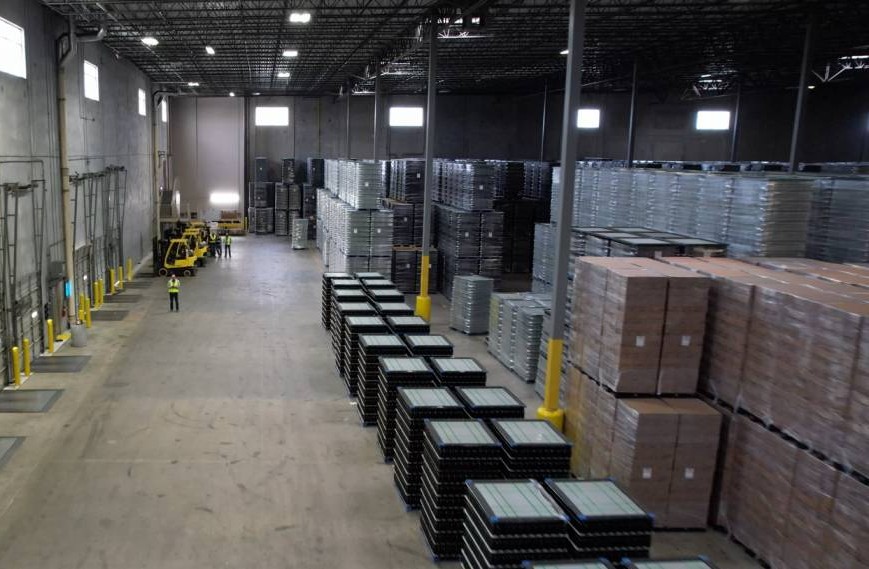
Buske Logistics operates a strategically distributed network of fulfillment and distribution centers positioned to minimize last-mile delivery distance and cost across North American consumer markets.
Our contract warehousing model provides clients with the operational control and customized processes of a private warehouse at the capital efficiency of a 3PL, the optimal combination for most growing businesses. See our complete 3PL guide and public vs. private warehouse comparison for a full treatment of warehousing outsourcing strategy.
A: Supply chain management (SCM) is the discipline of coordinating and optimizing all activities involved in sourcing raw materials, converting them into finished products, and delivering those products to end customers, including the flow of information, finances, and relationships between every participant in the chain. The term was first coined in 1982 by consultant Keith Oliver of Booz Allen Hamilton.
A: Logistics is the physical movement and storage of goods, making it just one component within a broader SCM system. Supply chain management also includes supplier relationships, demand planning, financial flows, risk management, and strategic network design, making it a far larger and more strategic discipline than logistics alone.
A: The eight core components of supply chain management are: demand planning and forecasting, procurement and strategic sourcing, supplier relationship management (SRM), manufacturing and operations management, inventory management, warehousing and distribution, transportation and logistics execution, and returns management and reverse logistics.
A: Supply chain costs represent 50–70% of total revenue for most manufacturers and retailers, making SCM the single largest operating expense category. Gartner research shows that companies in the top quartile of supply chain performance deliver three times higher EBITDA margins than median performers, making SCM a direct driver of profitability and competitive advantage.
A: McKinsey estimates that supply chain disruptions lasting one month or longer occur roughly every 3.7 years for the average company. Over a ten-year period, such disruptions erode an average of 45% of one year's EBITDA, and companies with resilient supply chains recover 2–3 times faster than less-prepared competitors.
A: Total cost of ownership (TCO) is the practice of evaluating the full cost of a sourcing decision, not just the unit price, by factoring in lead times, inventory investment, quality inspection, tariffs, freight, currency hedging, and disruption risk. A component priced 20% lower from an overseas supplier may actually cost more when all TCO factors are included.

Buske Logistics is a Top 20 Private Warehousing 3PL. Let's build a solution for your supply chain.