.png)
-p-130x130q80.png)

Kitting companies are third-party logistics (3PL) providers or specialized fulfillment operations that assemble multiple individual products into a single, ready-to-ship kit or bundle before distribution. Services include subscription box assembly, promotional kit building, retail-ready multipacks, e-commerce product bundles, and manufacturing support kitting.
When choosing a kitting company, evaluate warehouse infrastructure, WMS technology, scalability, industry-specific experience, accuracy rates (target: 99.5%+), and integration with broader fulfillment operations.
At the operational level, a kitting company receives individual component products (from a manufacturer, importer, or brand), stores them within a fulfillment facility, and then assembles them into a predefined kit configuration based on a bill of materials (BOM). The completed kit is assigned a single SKU, labeled, and positioned in inventory as a fulfilllable unit ready to ship the moment an order arrives.
This matters enormously for brands managing complex product catalogs. Rather than picking five separate items for every order; each requiring individual bin locations, pick paths, and quality checks, a kitting company pre-builds the combination. The result is dramatically faster order processing, higher accuracy rates, and a more consistent unboxing experience for the end customer.
Modern kitting companies handle a wide spectrum of assembly complexity from straightforward retail-ready multipacks assembled in seconds to sophisticated promotional kits requiring custom inserts, branded tissue paper, personalized cards, and tamper-evident sealing. The best 3PL kitting partners build purpose-designed workflows for each client's specific requirements, rather than forcing every product through a one-size-fits-all assembly line.
Kitting is not just a fulfillment convenience but it is a strategic supply chain capability that reshapes how inventory is positioned, how orders are processed, and how efficiently distribution operations run. When integrated correctly into a 3PL's warehousing and fulfillment workflow, kitting produces compounding operational benefits that ripple through every stage of order execution.
The single biggest supply chain benefit of kitting is fulfillment velocity. When a multi-item order arrives, a warehouse without kitting must pick each component individually and navigating to multiple bin locations, verifying each item, and assembling the shipment at the pack station. With pre-built kits, fulfillment is reduced to a single pick from a single location. This is the difference between a 4-minute order and a 45-second order at scale.
For businesses shipping thousands of orders per day, that time compression translates directly into the ability to meet same-day or next-day cut-off windows that would be operationally impossible with individual-component picking.
Pre-assembled kits are stored as discrete inventory units with their own SKU, bin location, and inventory count dramatically simplifying warehouse management. Rather than tracking six component items and calculating theoretical kit availability from their individual stock levels, inventory managers see a single unit count that directly reflects what's shippable. This clarity reduces the risk of partial kit shortages going undetected until the moment of fulfillment.
Every additional pick touchpoint in a fulfillment process introduces error risk. Kitting consolidates those touchpoints into a controlled, dedicated assembly process where quality control is applied once at kit build rather than at every individual pick. Leading 3PL kitting operations like Buske Logistics use barcode verification at each component stage and final kit scan confirmation before storage, achieving order accuracy rates of 99.5% or higher.
Many 3PLs perform kitting during lower-volume operating windows or through dedicated assembly workflows, allowing labor to be allocated more efficiently across fulfillment operations. By shifting work away from real-time order processing, preassembled kits reduce repetitive picking activity, warehouse travel time, and handling touchpoints associated with multi-SKU fulfillment.
Industry research consistently identifies order picking as one of the most labor-intensive warehouse functions, making batch-oriented kitting strategies an effective way to improve labor productivity, throughput efficiency, and overall fulfillment cost control.
Pre-kitted inventory simplifies every downstream step: fewer line items per shipment, simpler cartonization, more predictable parcel weights and dimensions, and fewer shipping exceptions. For retailers and brands shipping to major retail partners like Target, Walmart, or Costco where compliance requirements (EDI, labeling, barcode standards, packaging specifications) are strict and 3PL kitting partners with retail compliance expertise eliminate the costly chargebacks that non-compliant shipments generate.
Integration Advantage
The most powerful supply chain benefit of 3PL kitting is end-to-end integration: when kitting, receiving, storage, order management, fulfillment, and outbound shipping all operate within a single 3PL ecosystem sharing the same WMS, the same inventory database, and the same facility; the friction that exists between separate vendors disappears. This is the fundamental reason businesses consolidate kitting with their fulfillment 3PL rather than using a standalone kitting-only provider.
The best 3PL kitting partners offer a full spectrum of assembly services, each purpose-built for a specific channel, customer type, or fulfillment workflow. Understanding which service type aligns with your distribution model is an important first step in evaluating potential partners.
Selecting a kitting partner is not a commodity decision. The right 3PL will become deeply embedded in your product presentation, your fulfillment SLAs, and your customer experience. The wrong choice will generate errors, delays, compliance chargebacks, and the painful cost of switching mid-operation. Here are the seven criteria that separate great kitting companies from average ones.
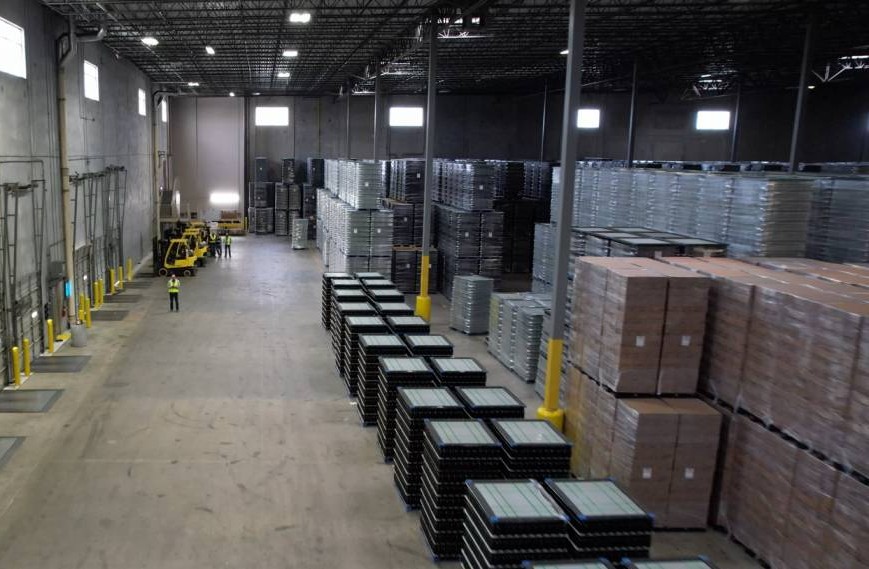
Kitting requires purpose-designed workspace: dedicated assembly stations with component staging, adequate lighting, ergonomic workstation design, and separation from outbound fulfillment operations to prevent inventory cross-contamination. Ask prospective partners how much dedicated kitting floor space they allocate, whether kitting stations are fixed or ad-hoc, and how they physically separate kit components from individual-SKU inventory.
A best-in-class kitting operation runs on a Warehouse Management System (WMS) that manages bills of materials, component lot tracking, kit SKU assignment, and real-time inventory visibility for both components and finished kits. Ask whether the WMS integrates directly with your ERP or ecommerce platform (Shopify, NetSuite, SAP, etc.) seamless data flow eliminates manual reconciliation and prevents overselling finished kits when components run low.
Kitting demand is rarely linear. Subscription box shipments concentrate within 48–72 hour windows. Promotional campaigns create sudden surges. Seasonal peaks can multiply baseline kitting volume 3–5x within days. Evaluate prospective partners on their demonstrated ability to surge assembly capacity through flexible labor models, cross-trained fulfillment staff, and physical space that can be reconfigured rapidly for high-volume kitting events.
Kitting for a consumer packaged goods (CPG) brand is fundamentally different from kitting for a SaaS company's hardware bundle or a pharmaceutical company's clinical trial kit. Look for documented experience in your specific product category, with references from similar clients. Ask about accuracy rates (target: 99.5%+), on-time completion rates for time-sensitive kitting events, and how they handle component shortages mid-run.
The highest-value kitting partners are those where kitting is not a separate service but an integrated capability within a complete warehousing and fulfillment ecosystem. When your kitting, storage, inventory management, order management, and outbound shipping are all managed by a single 3PL with unified technology, shared staff, and end-to-end visibility the operational complexity and coordination costs of working with separate vendors disappear entirely.
Understand the specific QC checkpoints in a prospective partner's kitting workflow. Do they verify component accuracy with barcode scans at each assembly stage, or just a final visual check? Is there a dedicated QC inspection step before kits enter finished goods inventory? Do they photograph completed kits for documentation? How are rejected kits tracked, remediated, and reported? QC rigor is the difference between a 98% and 99.8% accuracy rate and at scale, that difference costs real money.
Kitting pricing models vary: per-kit fees, per-component fees, hourly labor rates, project-based pricing, or hybrid models. Get full transparency on what's included and what triggers surcharges. Evaluate whether pricing scales favorably with volume growth. Confirm that SLAs (turnaround time, accuracy rate, damage rate) are contractually defined with measurable remedies, not just aspirational commitments in a sales presentation.
The choice between in-house kitting, a standalone kitting-only vendor, and a full-service 3PL kitting partner is one of the most consequential operational decisions a growing brand will make. The case for integrated 3PL kitting is compelling across every dimension that matters.
When you work with a 3PL like Buske Logistics, all of your inventory including components, finished kits, individual-SKU products, packaging materials lives in a single managed facility under a single WMS. There is no transfer of goods between a standalone kitting vendor and a separate fulfillment warehouse, no inventory reconciliation across two systems, and no delay introduced by a hand-off step. Your kit components are in the same building as your outbound shipping dock.
Building an in-house kitting operation requires facility space, dedicated equipment, trained labor, WMS technology, and management bandwidth. Outsourcing to a 3PL kitting partner converts those fixed costs to variable costs that scale with your volume and adds the 3PL's existing infrastructure, technology, and expertise from day one. For brands in growth mode, that capital efficiency is transformative: the dollars that would have funded a kitting build-out can fund product development, marketing, or inventory instead.
Integrated 3PL kitting eliminates the most common bottleneck in multi-channel fulfillment: the kit assembly lag. When orders arrive from your Shopify store, Amazon, retail EDI, or wholesale portals simultaneously, a unified 3PL system allocates pre-built kit inventory against all channels in real time with no manual intervention and no inter-facility transit delay before shipping.
Kitting services are not confined to a single sector. Any business that ships multi-component products, builds curated experiences, or serves multiple channels with different packaging configurations is a candidate for 3PL kitting. The following industries represent the highest concentrations of kitting service demand:
Understanding how a well-run 3PL kitting operation is structured from facility design through technology to quality control helps businesses ask the right questions when evaluating partners and set realistic expectations for operational performance.
Elite kitting operations design fulfillment floor layouts with kitting as a first-class workflow, not an afterthought. This means dedicated zones for component staging, kit assembly, finished kit storage, and kit quality inspection — physically separated from general inbound/outbound operations to prevent inventory mixing and operational interference. Component pick paths are engineered for kitting efficiency: high-velocity components positioned closest to assembly stations, with visual management systems (kanban signals, clearly labeled component bins) that enable rapid line replenishment without supervisor intervention.
Purpose-built kitting stations accommodate the specific ergonomic and operational requirements of the kitting program: appropriately sized work surfaces, component presentation gravity racks, barcode scanners at every station, and adequate lighting for precise assembly work. The best 3PLs design stations that can be rapidly reconfigured for different kit BOMs — enabling the same physical space to handle a two-component skincare bundle in the morning and a six-component promotional holiday set in the afternoon, with minimal changeover time.
The technology backbone of a scalable kitting operation includes: a WMS that manages component BOM requirements, real-time component inventory, finished kit inventory, and kit demand allocation simultaneously; barcode or RFID verification at each assembly stage; integration with the client's ERP, order management system, or ecommerce platform for seamless demand signaling; and real-time dashboards that give clients visibility into kit inventory levels, assembly progress, and upcoming component shortfall alerts. Some 3PLs are incorporating pick-to-light systems and conveyor automation for highest-volume kitting lines, further increasing throughput while reducing manual error rates.
For clients in regulated industries (food & beverage, health, pharmaceutical, beauty), lot tracking and expiry date management are non-negotiable. A qualified 3PL kitting partner manages component lot numbers through the assembly process, ensuring that finished kits contain components from the correct lots and that FEFO (First Expired, First Out) discipline is maintained. This capability is essential for brands like Kikkoman or Starbucks, where product freshness, regulatory compliance, and traceability requirements are built into every operational process.
The QC architecture of a world-class kitting operation includes: pre-assembly component verification (barcode scan of each component against the BOM before assembly begins); in-process checks at defined intervals; final kit verification (scan confirmation that all components are present before sealing); and post-assembly inspection sampling (visual or weight-based verification of a defined percentage of completed kits before they enter finished goods inventory). Rejected kits are documented, remediated, and tracked providing both operational feedback and client-facing quality reporting.
Buske Logistics is a leading North American 3PL with decades of experience delivering integrated kitting, warehousing, and fulfillment services to brands across consumer goods, food & beverage, ecommerce, and retail channels. Here's what distinguishes Buske as a kitting partner:
Buske operates a distributed network of fulfillment facilities positioned across key North American logistics corridors enabling clients to position kit inventory close to their highest-density consumer markets. Closer inventory means shorter last-mile distances, lower shipping costs, faster delivery windows, and the ability to commit to same-day or next-day fulfillment SLAs that increasingly define competitive advantage in ecommerce.
Unlike standalone kitting vendors, Buske delivers kitting as a fully integrated capability within a complete 3PL ecosystem: receiving and inbound quality inspection, component storage, kit assembly, finished kit inventory management, order management, outbound fulfillment, freight management, and returns processing. When kitting is one step in a unified operation rather than a hand-off between vendors; speed increases, errors decrease, and clients have a single point of accountability for their entire fulfillment operation.
There is no universal kitting process at Buske. Every kitting program begins with a detailed operational design: analyzing the bill of materials, defining assembly sequences, designing the physical kit station layout, building WMS kit configurations, establishing QC checkpoints, and setting production throughput targets. The result is a kitting workflow engineered specifically for your product and not a generic process retrofitted to it.
Buske's kitting operations have earned the trust of globally recognized brands including Diageo, Kikkoman, and Starbucks partners who demand precision, product integrity, and operational consistency that matches their brand standards. Serving these clients at scale has built institutional knowledge, quality management processes, and operational reflexes that benefit every business in the Buske portfolio regardless of size or volume.
Whether you are a growing DTC brand shipping 500 subscription boxes per month or an enterprise CPG company kitting 50,000 promotional sets for a national retail launch, Buske's infrastructure scales to match your requirements. Flexible labor models, modular assembly station configurations, and a network-wide capacity pool mean that volume surges whether planned or reactive are absorbed without the service disruptions that smaller or less integrated kitting operations routinely produce.
Brands that consolidate kitting with their 3PL combine assembly, packaging, and fulfillment under one provider, reducing handoffs, speeding order-to-ship times, and improving accuracy and consistency. The annual Third-Party Logistics Study consistently links outsourced value-added services like kitting to gains in service levels, cost, and customer satisfaction making the operational simplification reason enough to consolidate, with cost and speed improvements as the upside.
A: Kitting companies receive individual component products, store them in a fulfillment facility, and assemble them into predefined kit configurations based on a bill of materials (BOM). The completed kit is assigned a single SKU, labeled, and stored as a ready-to-ship inventory unit, reducing order processing time and picking errors for brands managing complex product catalogs.
A: 3PL kitting companies typically offer ecommerce product bundling, subscription box kitting, retail and promotional kit assembly, manufacturing support kitting, custom corporate gifting bundles, and co-packing or contract packaging services. Each service type is purpose-built for a specific distribution channel, customer type, or fulfillment workflow.
A: Kitting companies improve supply chain efficiency by reducing multi-item orders to a single pick from a single bin location, cutting order processing time from several minutes to under one minute at scale. Pre-assembled kits also simplify inventory management, reduce picking errors through controlled quality checks, lower labor costs, and streamline downstream shipping with more predictable parcel weights and dimensions.
A: Leading 3PL kitting operations achieve order accuracy rates of 99.5% or higher. This is accomplished through barcode verification at each component stage and a final kit scan confirmation before the assembled kit is placed into storage inventory.
A: Choose a kitting company by evaluating seven key criteria: dedicated warehouse and assembly space, WMS technology with ERP or ecommerce platform integration, scalability for peak volume surges (which can be 3–5x baseline demand), documented experience in your product category, order accuracy rates of 99.5%+, seamless integration with fulfillment operations, and verified client references from similar businesses.
A: Kitting involves assembling multiple existing products into a single ready-to-ship bundle using a predefined bill of materials (BOM), while co-packing (contract packaging) focuses on repackaging, relabeling, shrink-wrapping, or modifying finished goods packaging for new channels or markets. Many 3PL providers offer both services within the same fulfillment facility.

Buske Logistics is a Top 20 Private Warehousing 3PL. Let's build a solution for your supply chain.