.png)
-p-130x130q80.png)

Dry and veterinary diet cat food brands rely on specialized 3PL providers to manage food-grade warehousing, palletized storage, and regulated distribution across retail chains, distributors, and veterinary clinic networks.
Enterprise cat food manufacturers typically require logistics capabilities such as:
These operational requirements make specialized pet food logistics infrastructure essential for brands distributing dry and veterinary diet cat food at scale.
Buske Logistics provides custom 3PL solutions for dry cat food and veterinary diet cat food brands that require compliant bulk storage, palletized distribution, and retail routing expertise.
Our food-grade warehouse infrastructure supports regulated pet food manufacturers distributing through national retailers, veterinary clinics, and regional distribution networks.
A dry and veterinary diet cat food 3PL provides food-grade warehousing, palletized storage, inventory control, and regulated distribution for bulk pet food products. These providers ensure compliance with retail routing guides, veterinary distribution requirements, and FDA-aligned warehouse standards.
Unlike direct-to-consumer fulfillment models, dry cat food logistics typically involves palletized inventory, bulk freight shipments, and scheduled replenishment cycles for retailers, distributors, and veterinary networks.
A specialized 3PL partner supports these operations through warehouse infrastructure and compliance workflows designed for enterprise supply chains.
Key capabilities generally include:
Enterprise pet food manufacturers often require a logistics partner that can support both retail chain distribution and veterinary diet product networks within the same supply chain infrastructure.
Buske Logistics supports these complex distribution models through custom 3PL solutions designed for regulated pet food operations and large-scale palletized inventory management.
Brands looking for broader logistics support across cat food products and accessories can also explore complete cat food 3PL solutions designed for enterprise pet brands managing multiple product categories.
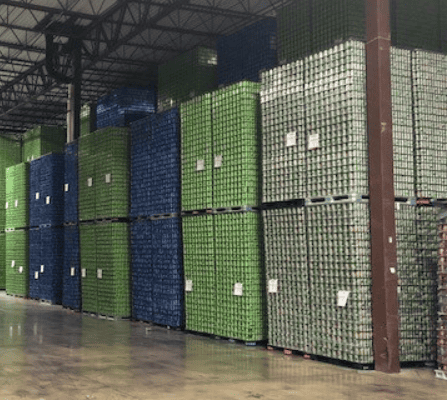
Dry cat food 3PL operations require scalable palletized storage, structured inventory rotation, and freight coordination to support high-volume retail replenishment.
Unlike smaller e-commerce fulfillment environments, dry cat food logistics typically involves large pallet quantities, container-level inbound shipments, and regular retail replenishment cycles. Warehouses must be designed to handle high-volume pallet storage while maintaining food-grade handling standards.
A specialized dry cat food 3PL provider manages these operations through infrastructure built for palletized pet food logistics.
Typical storage and handling requirements include:
Dry cat food manufacturers often ship inventory in large production batches that must be stored efficiently while remaining accessible for retail distribution.
To support this model, warehouses typically combine racked pallet storage with bulk floor storage zones. This allows logistics teams to manage both reserve inventory and active picking locations for outbound shipments.
These operations require warehouse infrastructure specifically designed for regulated food products. Buske supports pet food manufacturers through food-grade warehousing environments built for compliant storage and palletized distribution.
Inbound freight handling is also a critical component of palletized pet food logistics. Large shipments arriving from manufacturing facilities must be unloaded, inspected, and staged for storage without disrupting warehouse throughput.
At Buske Logistics, dry cat food inventory is managed within food-grade warehouse environments designed for palletized distribution and large-scale retail replenishment, allowing brands to scale production while maintaining operational visibility across inventory and freight movement.
Veterinary diet cat food distribution requires food-grade warehousing, documented controls, and precise lot traceability to meet regulatory and veterinary network standards.
Unlike conventional retail pet food, veterinary diet products are often distributed through controlled channels such as veterinary clinics, specialty retailers, and authorized distributors. These products may include prescription diets designed to address specific health conditions, which means manufacturers must maintain strict documentation and traceability across the supply chain.
A specialized veterinary diet cat food 3PL supports this distribution model by implementing compliance-focused warehouse operations and controlled inventory handling procedures.
Key operational requirements typically include:
Veterinary networks also require predictable replenishment schedules to ensure clinics and authorized distributors maintain adequate inventory levels for patients.
This means logistics providers must coordinate bulk shipments, regional distribution, and clinic-level delivery workflows while maintaining product traceability and compliance records.
Buske Logistics supports veterinary diet cat food manufacturers through food-grade warehouse environments, structured lot tracking systems, and distribution processes designed for regulated pet food supply chains, helping brands maintain compliance while scaling distribution across veterinary and specialty retail channels.
Veterinary diet products often require specialized handling and compliance processes similar to other regulated pet food categories. Learn more about how logistics providers support dehydrated and freeze-dried cat food 3PL operations within regulated pet food supply chains.
Retail pet food brands rely on 3PL partners that embed routing guide compliance directly into warehouse and transportation workflows to prevent costly chargebacks.
Major retailers enforce strict routing guide requirements that govern how shipments must be prepared, documented, and scheduled. These guidelines are designed to standardize inbound freight processes across large retail distribution networks.
For pet food brands distributing dry or veterinary diet products, routing guide compliance becomes a critical component of the supply chain. A specialized logistics partner helps ensure that every shipment meets the retailer’s operational standards before it leaves the warehouse.
Key areas of routing guide compliance typically include:
Retail non-compliance can result in delayed deliveries, rejected shipments, or financial penalties issued by retailers. Because dry cat food shipments are often palletized and distributed in large quantities, even minor errors in pallet configuration or documentation can lead to significant disruptions in the supply chain.
Pet food brands shipping to national retail chains must meet strict operational standards. Buske supports these distribution models through logistics solutions designed for retail fulfillment capabilities and retailer compliance workflows and with routing guide compliance processes built directly into warehouse operations and transportation coordination.
A custom 3PL enables bulk dry and veterinary diet cat food brands to scale regional and national distribution without sacrificing compliance or inventory accuracy.
Dry cat food distribution often involves palletized freight shipments moving between manufacturing facilities, warehouses, retailer distribution centers, and veterinary networks. These shipments must be coordinated efficiently to maintain replenishment schedules and control transportation costs.
A specialized 3PL partner manages these flows through structured freight planning and regional distribution strategies. Key elements of palletized pet food logistics typically include:
As retail and veterinary distribution networks expand, many pet food brands adopt multi-node distribution strategies. Instead of shipping from a single warehouse, inventory is positioned across multiple regions to support faster delivery and more consistent supply.
This approach allows brands to shorten transit distances while improving service levels for both retailers and veterinary clinics.
Many pet food manufacturers operate across retail stores, distributors, and e-commerce channels simultaneously. Buske supports these operations through integrated omnichannel fulfillment services, scalable warehouse networks and freight coordination designed for palletized pet food logistics, helping brands maintain reliable supply across national retail and veterinary channels.
For regulated dry and veterinary diet cat food, enterprise brands depend on 3PL partners that embed compliance, traceability, and recall readiness into daily warehouse operations.
Pet food manufacturers distributing through retail chains and veterinary networks must maintain strict product traceability throughout the supply chain. Each pallet, case, and shipment must be linked to identifiable production batches and lot numbers to ensure transparency and regulatory compliance.
A specialized 3PL partner manages these requirements through structured warehouse management systems and documented quality control procedures. Key compliance systems typically include:
Traceability systems allow manufacturers to track where each lot of product was stored, shipped, and delivered. This level of visibility is critical when responding to product recalls, regulatory inspections, or retailer compliance audits.
Food-grade storage facilities must also follow regulatory guidance for safe handling and storage of animal food products. The U.S. Food and Drug Administration (FDA) outlines safety standards for animal food storage, sanitation, and distribution across regulated supply chains.
As distribution networks expand across multiple regions and channels, maintaining consistent compliance procedures becomes increasingly important.
Buske Logistics supports regulated pet food manufacturers with food-grade warehouse environments, detailed lot tracking systems, and compliance-driven logistics workflows, helping brands maintain regulatory readiness while scaling distribution across retail and veterinary channels. Buske provides compliance and quality assurance services to support regulated pet food supply chains.
When Retail & Veterinary Brands Should Move to a Custom 3PL
As distribution volumes grow, many pet food manufacturers reach a point where standard warehousing or in-house logistics operations can no longer support the complexity of their supply chains. Retail expansion, palletized shipping requirements, and veterinary distribution networks introduce operational demands that require specialized infrastructure and compliance-driven logistics processes.
Companies distributing dry or veterinary diet cat food often begin evaluating a custom 3PL partner when several operational triggers appear. Common decision points include:
At this stage, logistics operations must support not only product storage and shipping but also documentation, traceability, and retailer compliance processes. A custom 3PL partner allows manufacturers to align warehouse infrastructure, freight coordination, and compliance workflows with the operational realities of large-scale pet food distribution.
The best dry and veterinary diet cat food 3PL partners provide customized bulk logistics solutions designed to meet retail, veterinary, and enterprise compliance requirements.
Buske Logistics supports dry and veterinary diet cat food manufacturers through food-grade warehousing, palletized distribution infrastructure, and compliance-driven supply chain operations, helping brands scale retail and veterinary distribution while maintaining operational control.
A dry cat food 3PL handles food grade pallet storage, FIFO and FEFO inventory rotation, lot and expiration tracking, bulk order fulfillment, case and pallet picking, freight coordination across FTL, LTL, and intermodal lanes, and retail compliance for major chains. Dry cat food typically ships in high volume pallet quantities to retailers like Chewy, Petco, PetSmart, Walmart, Target, Costco, Sam's Club, Tractor Supply, Kroger, and Amazon Vendor, requiring strong OTIF (On Time In Full) performance and EDI transactions. Strong dry pet food 3PLs operate FDA registered facilities with FSMA aligned sanitation programs, integrated pest management (IPM), and labeling support. Buske Logistics combines over 100 years of food grade contract warehousing experience with proven retail compliance to support dry cat food brands at every stage of growth.
Yes. Veterinary diet cat food, also known as therapeutic or prescription pet food, is regulated more strictly than standard commercial cat food because it is formulated to manage specific medical conditions and is typically dispensed under veterinary authorization. These products require stricter documentation, full lot and batch traceability, controlled distribution channels limited to licensed veterinary clinics and authorized retailers, and detailed recordkeeping aligned with FDA Center for Veterinary Medicine (CVM) guidance. Some veterinary diet products may also require state level controls, prescription verification systems, and adverse event reporting protocols. A specialized 3PL ensures compliance with these regulatory and veterinary network requirements through audit ready documentation, segregated handling, and chain of custody controls. Buske Logistics supports veterinary diet brands with FDA aligned facilities and structured workflows designed for regulated pet nutrition programs.
Prescription pet food distribution is the regulated handling and controlled shipment of veterinary diet pet food products from manufacturers to veterinary clinics, animal hospitals, authorized online retailers like Chewy Pharmacy and Petco Vital Care, and specialty channels that require veterinary authorization. It requires food grade warehousing, detailed lot tracking, expiration management, FEFO rotation, prescription verification systems, controlled storage with restricted access, and chain of custody documentation that meets FDA and veterinary network expectations. Distribution programs often include direct ship to clinic, drop ship to consumer with vet authorization, and case level retail distribution to vet supply distributors like MWI Animal Health, Patterson Veterinary, and Covetrus. Buske Logistics supports prescription pet food distribution with documented compliance programs, integrated WMS visibility, and proven operational discipline tailored for regulated nutrition channels.
Retail routing guide compliance directly impacts pet food brand profitability and retailer relationships because non compliance results in costly chargebacks, missed delivery windows, rejected shipments, and reduced shelf space. Routing guides specify retailer specific requirements for labeling, UPC and SCC barcoding, pallet configuration, case pack quantities, ASN (Advance Shipping Notice) timing, EDI 856 transactions, carrier selection, appointment scheduling, and OTIF (On Time In Full) performance benchmarks (typically 95 percent or higher). Major retailers like Walmart, Target, Costco, Sam's Club, Chewy, Petco, PetSmart, and Tractor Supply each maintain their own routing guides with strict requirements and chargeback structures that can reach 3 percent or more of invoice value. Buske Logistics applies more than 100 years of retailer compliance expertise to help pet food brands maintain strong OTIF performance and protect retailer relationships.
Yes. A custom omnichannel 3PL can support both retail chain distribution and veterinary clinic replenishment within a single integrated logistics network, improving inventory visibility, regulatory compliance, and operational efficiency. Strong omnichannel pet food 3PLs maintain segregated handling and documentation for veterinary diet products while running parallel high volume retail distribution programs for standard commercial SKUs. Unified WMS technology, EDI integration, and ERP connections provide real time inventory visibility across both channels, while shared inventory pools (where regulatory rules permit) reduce duplicate storage costs and prevent stock imbalances. Buske Logistics supports pet food brands operating across retail, veterinary, marketplace, and DTC channels with consistent operational standards, dedicated account management, and the compliance discipline required for regulated pet nutrition programs.
Dry and veterinary diet cat food brands operate within complex supply chains that combine food-grade storage, palletized distribution, and strict retailer compliance requirements.
Managing these operations internally can become difficult as distribution expands across national retailers, veterinary clinic networks, and regional distributors. A specialized 3PL partner provides the infrastructure, compliance systems, and freight coordination needed to support large-scale pet food distribution.
Working with a logistics partner experienced in regulated pet food supply chains allows brands to maintain traceability, protect product quality, and scale distribution without disrupting operational performance.
Dry and veterinary diet cat food brands require logistics infrastructure that supports palletized distribution, routing guide compliance, and food-grade warehouse operations. A custom 3PL solution helps manufacturers manage bulk inventory, maintain traceability, and coordinate freight across retail chains, distributors, and veterinary clinic networks.
Talk to a Pet Logistics Specialist at Buske Logistics about scalable food-grade storage, palletized distribution infrastructure, and retail routing expertise designed for enterprise pet food brands.

Buske Logistics is a Top 20 Private Warehousing 3PL. Let's build a solution for your supply chain.