.png)
-p-130x130q80.png)
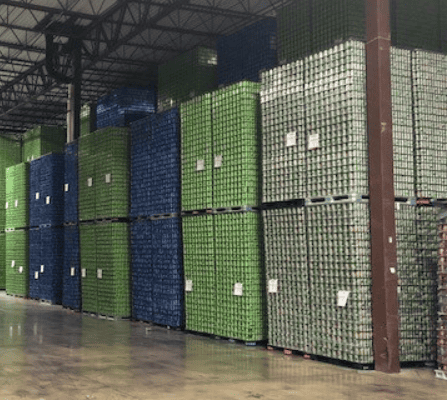
Inventory shrinkage is the loss of products between the point of purchase or manufacture and the point of sale, caused by theft, damage, administrative errors, or supplier fraud. Left unchecked, it quietly erodes your bottom line, disrupts operations, and puts your customer relationships at serious risk.
Most business owners know shrinkage exists. Very few understand how much it actually costs them. According to the National Retail Federation's 2022 National Retail Security Survey, U.S. retailers lost an estimated $94.5 billion to inventory shrinkage in 2021.
While this figure reflects retail operations, inventory losses across warehouses, distribution centers, and third-party logistics (3PL) facilities can further increase the total cost of shrink throughout the supply chain.
For context, a shrinkage rate of just 1.5% on $10 million in annual inventory equals $150,000 in direct losses. That is not a rounding error. That is a meaningful chunk of your operating margin, and in thin-margin industries like food and beverage, consumer packaged goods, or automotive parts, it can be the difference between a profitable quarter and a painful one.
What makes inventory shrinkage particularly dangerous is that it often goes undetected for months and by the time a physical count reveals a discrepancy, the losses have already compounded. This is why proactive inventory management systems and experienced warehouse partners matter far more than reactive audits.
Understanding what drives shrinkage in your operation is the first step toward reducing it. The causes vary depending on whether you are in retail, distribution, or warehousing, but they generally fall into four categories.
Employee theft consistently ranks as one of the top contributors to shrinkage across industries. The Association of Certified Fraud Examiners estimates that businesses lose 5% of their annual revenue to occupational fraud, with inventory theft being a significant component. This includes direct product theft, falsified receiving records, and collusion with outside vendors.
For retail-facing operations, external theft is a major driver of retail shrinkage. But even in warehouse and distribution environments, cargo theft is a growing concern. The FBI reported that cargo theft costs American businesses over $15 billion per year, with organized retail crime increasingly targeting fulfillment centers and distribution hubs rather than storefronts.
This category is more common than most people expect. Mislabeled items, inaccurate receiving counts, incorrect data entry, and poor system integration all create discrepancies between your recorded inventory and what is actually on your shelves.
These errors do not involve dishonesty, but they produce the same result: your books say you have product that does not exist.
Short shipments, substituted products, and falsified delivery records from suppliers contribute significantly to inventory shrinkage in warehouse settings. Without rigorous inbound receiving processes, these discrepancies can sit undetected for months.
The inventory shrinkage formula is straightforward:
Shrinkage Rate (%) = ((Recorded Inventory Value - Actual Inventory Value) / Recorded Inventory Value) x 100
Here is a practical example:
A rate above 2% is a significant red flag. Industry benchmarks suggest that well-managed operations should target a shrinkage rate below 1%. If your rate consistently sits above that, your current systems, processes, or partners are not doing enough to protect your assets.
Calculating shrinkage should not be a once-a-year exercise tied to your annual physical count, as high-performing operations run cycle counts on a rotating basis, reconciling segments of inventory continuously rather than waiting for a full-facility audit. This approach catches discrepancies earlier and reduces cumulative losses substantially.
Retail shrinkage gets most of the attention in industry coverage, but inventory shrinkage in warehouse settings presents its own distinct set of challenges. Warehouses handle higher volumes, larger SKU counts, and more complex receiving and fulfillment workflows. The opportunities for loss multiply accordingly.
In a warehouse environment, shrinkage typically occurs at five key points:
Each of these touch points requires a specific control mechanism. Relying on a single annual audit to catch problems across all five areas is not a realistic strategy for any operation handling significant volume.
For brands like PepsiCo or Molson Coors, which move enormous quantities of product through distribution networks, even a fraction-of-a-percent shrinkage rate translates to millions of dollars in losses. That is why the largest and most sophisticated brands in North America partner with 3PLs that have robust inventory management systems built into every step of the warehousing process.
Preventing shrinkage requires layered controls. No single solution eliminates it entirely, but combining several strategies significantly reduces your exposure.
Implement Real-Time Inventory Tracking
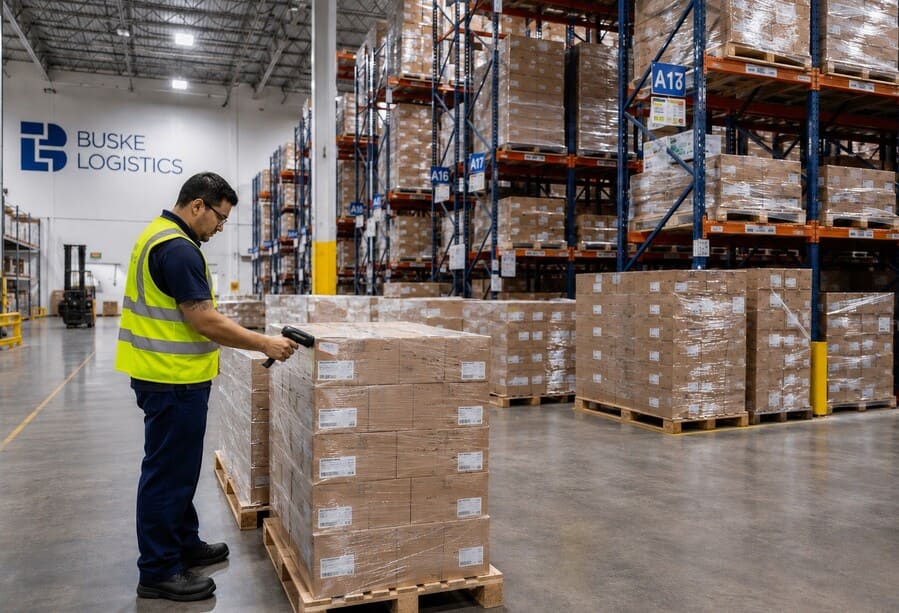
Warehouse management systems (WMS) that update inventory in real time give you visibility into every movement, from receiving through shipping. When discrepancies appear, you can identify them in hours rather than months.
Run Regular Cycle Counts
Cycle counting divides your inventory into segments and counts each segment on a rotating schedule. This keeps your recorded inventory accurate without shutting down operations for a full physical count. High-velocity SKUs should be counted more frequently than slow-moving ones.
Tighten Inbound Receiving Controls
Every inbound shipment should be checked against the purchase order, counted, inspected for damage, and documented before it is accepted. Discrepancies should be flagged to the supplier immediately and tracked in your system. This single process improvement eliminates a significant portion of vendor-related shrinkage.
Use Access Controls and Surveillance
Limiting access to high-value storage areas, combined with camera surveillance and alarm systems, reduces both internal and external theft. This is standard practice at well-run distribution centers and should be non-negotiable for operations handling high-value goods.
Audit Your Supplier Network
Vendor fraud is underreported because it is hard to detect without strong inbound controls. Regular supplier audits, cross-checking delivery records against actual receipts, and rotating your auditing personnel all help close this gap.
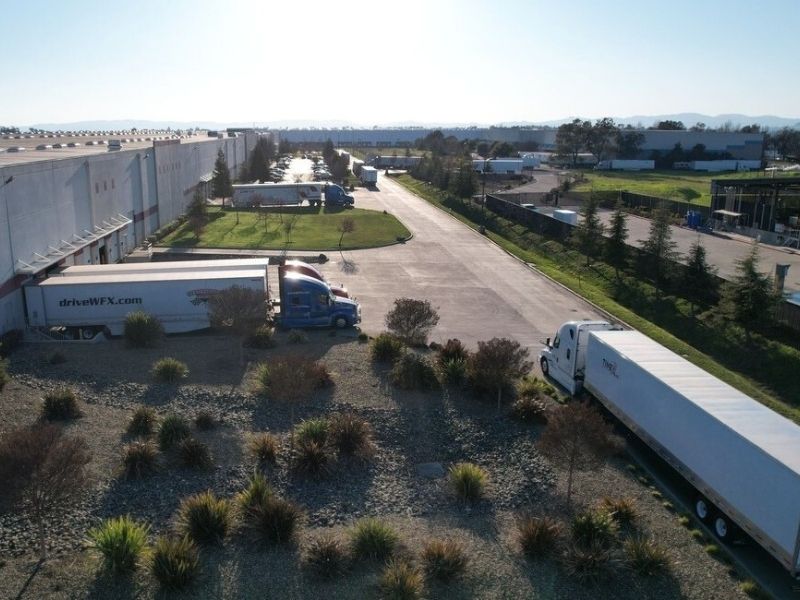
With over 100 years of experience in logistics and supply chain management, Buske Logistics has seen every variation of inventory shrinkage across virtually every industry. As a top 20 3PL company in North America, Buske operates 40+ warehouse facilities covering more than 8.5 million square feet of warehousing, packaging, and distribution space across the U.S. and Canada.
Buske's inventory management solutions are built around real-time tracking, cycle counting, rigorous receiving protocols, and dedicated account management. For clients like Golden State Foods, Ball Corporation, and Starbucks, maintaining near-zero shrinkage rates is not optional. It is a baseline expectation, and Buske's systems are designed to meet it.
Buske goes beyond standard warehousing with fully integrated processes. Here's what you get:
If you are currently experiencing unexplained inventory losses or simply want a more rigorous system in place, you can explore Buske's full range of 3PL services.
If shrinkage is eating into your margins and your current systems are not catching it fast enough, the next step is a conversation with a 3PL partner who has the experience and infrastructure to fix it.
You can contact Buske Logistics directly to discuss your current inventory challenges and get a clearer picture of what tighter controls would look like for your operation.
The average inventory shrinkage rate for U.S. retailers and distributors typically falls between 1.4% and 1.6% of total sales. Well-managed operations target rates below 1%, while rates above 2% indicate serious process or security gaps that need immediate attention. Industry benchmarks vary by sector, with grocery and apparel typically seeing higher rates than industrial or automotive distribution.
The inventory shrinkage formula is: ((Recorded Inventory Value - Actual Inventory Value) / Recorded Inventory Value) x 100. This gives you your shrinkage rate as a percentage of recorded inventory. You should run this calculation regularly, not just during annual physical counts, to catch problems early and limit cumulative losses.
The four most common causes are employee theft, administrative errors, vendor fraud, and external theft or cargo theft. In warehouse environments specifically, receiving errors and put-away mistakes are particularly prevalent because of the volume and speed at which product moves. Robust inbound receiving controls and real-time WMS tracking are the most effective countermeasures.
Cycle counting reduces shrinkage by identifying discrepancies between recorded and actual inventory on a continuous basis rather than waiting for a single annual count. By dividing inventory into segments and counting each segment on a rotating schedule, operations catch errors, theft, and process failures much faster. This limits the window during which shrinkage can accumulate undetected.
Yes. A qualified 3PL partner with real-time WMS capabilities, rigorous receiving protocols, and dedicated inventory control processes can significantly reduce your shrinkage rate. Buske Logistics, for example, provides clients with full inventory visibility across its 40+ facilities, continuous cycle counting, and account-level reporting that makes discrepancies immediately visible and actionable.
Inventory shrinkage is not an unavoidable cost of doing business. It is a controllable problem with known causes, a clear measurement formula, and proven prevention strategies. The businesses that manage it best are the ones that treat it as a process discipline issue, not just a security issue, and that partner with 3PL providers who have the systems and experience to enforce those disciplines at scale.
With over 100 years of logistics expertise and more than 8.5 million square feet of managed warehousing space, Buske Logistics is built to help enterprise brands and mid-market operators protect their inventory at every stage of the supply chain.
If you are ready to stop accepting shrinkage as a fact of life and start managing it as the operational risk it truly is, reach out to Buske team today.

Buske Logistics is a Top 20 Private Warehousing 3PL. Let's build a solution for your supply chain.