.png)
-p-130x130q80.png)
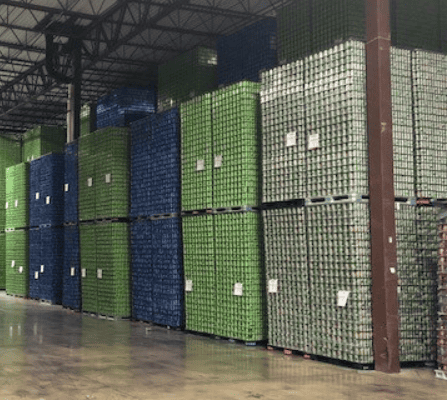
Retail supply chain limitations are the structural, operational, and logistical barriers that prevent goods from moving efficiently from suppliers to store shelves or customers' doors. Understanding these constraints is the first step toward building a retail operation that can absorb disruption, control costs, and consistently meet customer expectations.
Before exploring solutions, it helps to define “limitations.” These are not one-off disruptions, but recurring systemic constraints that reduce efficiency, increase costs, and shrink margins.
In retail, the supply chain typically spans raw material sourcing, manufacturing, international shipping, domestic freight, warehousing, distribution, and final delivery to either a retail location or an end consumer. A breakdown at any one of those stages creates a ripple effect that the whole chain feels.
Some limitations are internal: outdated technology, poor demand forecasting, or weak supplier relationships. Others are external: port backlogs, regulatory changes, weather events, or geopolitical instability. Most retailers deal with a mix of both at any given time.
According to the U.S. Department of Commerce, strengthening supply chain resilience has become a major U.S. economic and national security priority, with consumer goods among the sectors identified for supply chain resilience efforts. The pressure is real, and it is not going away.
Let me walk through the most frequently encountered issues, because naming them specifically matters. Vague terms like "inefficiency" or "disruptions" are not actionable. These are:
Retail is inherently seasonal and trend-driven. When forecasting tools are weak or data inputs are stale, retailers either overstock (tying up cash in sitting inventory) or understock (losing sales and customer trust). Neither outcome is acceptable in a competitive market.
Many U.S. retailers still depend on a small number of suppliers, often concentrated in a single country or region. When that region faces labor unrest, regulatory changes, or shipping delays, the entire replenishment cycle stalls.
Getting goods to the final destination, whether a store shelf, a fulfillment center, or a residential address, is consistently the most expensive and unpredictable part of the chain. Urban density, driver shortages, and customer delivery windows compound this problem.
Without real-time tracking across the full supply chain, retailers are flying partially blind. They cannot respond quickly to delays, cannot give customers accurate ETAs, and cannot optimize inventory positioning.
Many retailers still operate with legacy systems that do not communicate with each other. A warehouse management system (WMS) that cannot talk to a transportation management system (TMS) or an ERP creates data silos that slow decisions.
Managing retail freight effectively, for example, requires live carrier data, freight audit capabilities, and route optimization tools working in concert. Without that integration, costs climb and service levels drop.
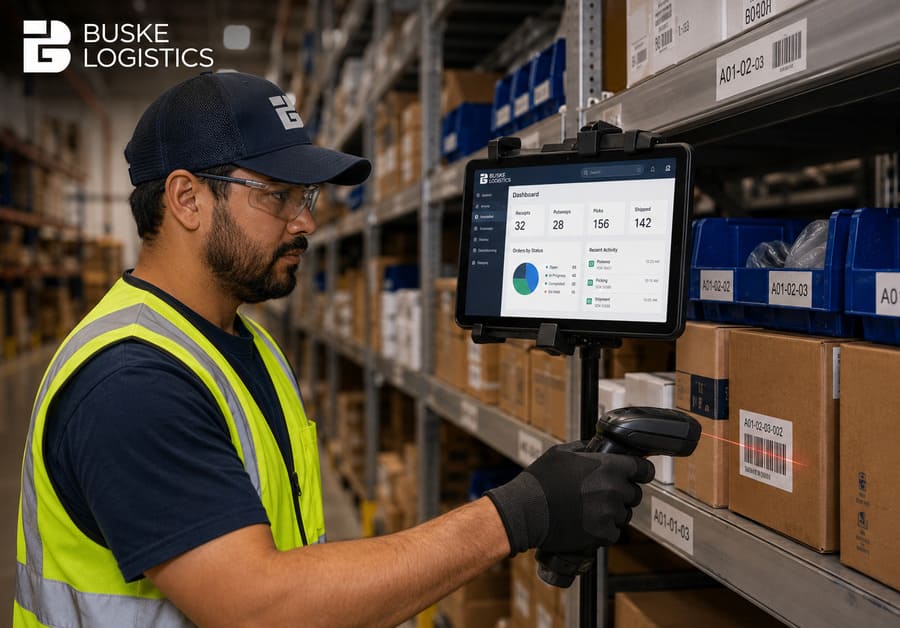
Managing a retail supply chain is not the same as managing a manufacturing supply chain. Retail adds layers of complexity: multiple SKUs, unpredictable consumer behavior, promotional planning, and retailer-specific compliance requirements.
Inventory Imbalance Across Locations
Centralizing inventory sounds logical until you realize that a stockout in Dallas while a warehouse in Ohio is overstocked costs you in both locations. Effective inventory positioning requires both data and physical infrastructure across the right geography.
Chargebacks and Compliance Penalties
Major retailers like Walmart, Target, and Kroger have strict vendor compliance programs, and understanding retail compliance is not optional for any brand selling through major retail channels. Miss a labeling requirement, deliver outside a delivery window, or ship the wrong pallet configuration, and you face chargebacks that can significantly erode your margins.
Workforce Instability
Labor shortages and turnover in warehousing and transportation remain persistent challenges in 2026. High employee turnover can disrupt distribution-center productivity and service performance.
According to the Bureau of Labor Statistics, the transportation, warehousing, and utilities sector recorded a 2.5% quit rate in June 2026, above the 2.2% rate across all industries, while wages in transportation and warehousing have continued to rise.
Returns Management
Reverse logistics is often treated as an afterthought, but returns represent a major cost center for retailers, particularly in apparel and electronics. Without a structured returns process, you end up with unsellable inventory clogging your distribution network.
Seasonal Surges
Holiday peaks, back-to-school rushes, and major sale events like Black Friday compress the demand curve into narrow windows. Scaling up capacity on short notice, without pre-arranged 3PL partnerships or flex warehouse agreements, is nearly impossible without paying a significant premium.
National-scale operations introduce a separate layer of complexity that regional retailers may not fully encounter. When you are moving product across 48 states, through multiple ports of entry, and into thousands of retail locations, the margin for error narrows significantly.
The ports of Los Angeles and Long Beach handle a massive share of U.S. consumer goods imports. Congestion, labor actions, and inspection backlogs at these facilities can delay entire product lines by weeks.
Retailers with diverse port strategies, using East Coast and Gulf ports in addition to West Coast facilities, are better insulated against these disruptions.
Moving freight from the coasts inland requires intermodal coordination between ocean carriers, rail operators, and trucking companies. When any segment of that chain is capacity-constrained, dwell times spike and costs follow.
Not every part of the U.S. is equally well served by logistics infrastructure, and a well-configured retail warehouse network that positions inventory strategically across the country can absorb some of this volatility.
Rural markets and secondary cities often have longer lead times, fewer carrier options, and higher per-unit delivery costs. Retailers with aspirations to serve the full national market need a distribution network that accounts for these geographic realities.
Tariff changes and trade policy shifts create uncertainty in import costs that can flip a product's margin calculation overnight. Retailers dependent on single-source international suppliers are particularly exposed to this risk.
The good news is that most retail supply chain limitations are solvable with the right combination of technology, strategy, and partnerships. Here is what actually works:
No single supplier, region, or country should be a single point of failure. Spreading procurement across multiple sources adds resilience and negotiating leverage. This is table-stakes supply chain strategy in 2026.
Platforms that provide end-to-end shipment tracking, inventory visibility, and exception management allow your team to act before problems become crises. The investment in these tools pays back quickly in reduced expediting costs and fewer service failures.
Pre-negotiated agreements with 3PL partners for overflow warehousing and transportation allow you to scale up during peak periods without paying spot market rates at the worst possible time. Buske Logistics, operates 40+ facilities across the U.S. and Canada which gives brands exactly that kind of flexible, scalable capacity.
Combine point-of-sale data, historical trends, and market intelligence to build more accurate forecasts. Share those forecasts upstream with suppliers so they can plan production accordingly. This is called collaborative planning, and it consistently reduces both stockouts and overstock situations.
Brands like PepsiCo and Molson Coors rely on specialized logistics partners like Buske Logistics because experienced 3PLs understand retail compliance, carrier relationships, and network optimization in ways in-house teams often cannot, especially at scale.
Buske Logistics has been doing this for over 100 years. That experience translates into institutional knowledge about what works, what does not, and how to solve problems before they escalate.
Getting the strategy right is one thing. Executing it consistently is another. Here are the practices that separate high-performing retail supply chains from average ones:
If you’re ready to close the gaps in your retail supply chain, contact our team. Buske Logistics helps Fortune 500 brands and growing mid-market retailers overcome retail supply chain challenges, improve fulfillment efficiency, reduce costs, and build a more resilient supply chain.
Tell us where your biggest pain points are, and we will show you exactly how Buske can help you address them.
If your retail supply chain is underperforming, every week you wait to address it is a week of lost sales, unnecessary costs, and damaged retailer relationships. Buske Logistics has spent over 100 years solving exactly these kinds of problems for brands like PepsiCo, Diageo, and Molson Coors, across 40+ facilities in the U.S. and Canada.
Reach out to our team today and tell us where your supply chain is breaking down. We will map out a solution that fits your network, your retail partners, and your growth goals.
The most common limitations include poor demand forecasting, supplier concentration risk, last-mile delivery complexity, real-time visibility gaps, and technology fragmentation across warehouse and transportation systems.
These issues often compound. Poor demand forecasting can cause inventory imbalances, fulfillment delays, and retailer chargebacks. Addressing them individually rarely works. A systemic approach that considers the full supply chain is more effective.
Supply chain inefficiencies directly reduce margins through excess inventory carrying costs, expedited freight premiums, chargeback deductions from retail partners, and elevated labor costs tied to reactive problem-solving.
For brands selling through major retail channels, chargebacks, air freight, stockouts, and excess inventory can significantly impact revenue. Fixing these supply chain limitations is not just an operational improvement, but a financial one.
A supply chain issue is typically a one-off disruption, such as a delayed shipment or a short-term labor shortage, while a structural limitation is a recurring, systemic constraint embedded in how the supply chain is designed or managed.
Structural limitations require strategic solutions such as network redesign, technology investment, supplier diversification, or 3PL partnerships. Operational issues can often be fixed tactically, but day-to-day demands frequently distract retailers from addressing deeper problems that keep recurring.
A third-party logistics provider offers physical infrastructure, carrier relationships, technology platforms, and operational expertise that allow retailers to scale capacity, improve service levels, and reduce costs without building those capabilities in-house.
For brands selling through major retail accounts, a 3PL with strong retail compliance expertise can reduce errors and improve fulfillment. Buske Logistics brings over 100 years of experience serving Fortune 500 and Fortune 1,000 clients across diverse retail sectors, helping brands achieve more reliable and predictable operations.
The most immediate steps are auditing your current network for single points of failure, establishing real-time shipment visibility across your carrier base, and opening conversations with a 3PL partner about flex capacity agreements before your next peak season.
Over the long term, investing in better demand planning tools and diversifying your supplier base can reduce exposure to operational disruptions and trade policy changes. The retailers that perform best under pressure are those that build resilience into their supply chain before disruptions occur.
Retail supply chain limitations do not mean your business is broken. They often signal that your network has outgrown its current design, your technology needs updating, or you need a logistics partner with greater scale and expertise. From growing DTC brands to national retailers, every business faces these challenges at some point.
What separates the retailers that grow through supply chain pressure from those that get stuck is the willingness to make structural changes rather than just applying tactical fixes.
If you are ready to take a hard look at where your supply chain is holding you back and build a plan to fix it, Buske Logistics has the experience, the infrastructure, and the team to help you get there. Start the conversation today.

Buske Logistics is a Top 20 Private Warehousing 3PL. Let's build a solution for your supply chain.