.png)
-p-130x130q80.png)
E-commerce has dramatically increased the complexity of modern logistics operations. Online retailers must fulfill orders quickly, manage fluctuating demand, and ship products to customers across multiple regions.
At the same time, customers expect fast delivery, accurate tracking, and reliable service.
Because of these challenges, many ecommerce companies partner with third-party logistics providers to handle inventory storage, fulfillment operations, and shipping coordination. Working with a logistics partner allows e-commerce businesses to scale faster without investing in warehouse infrastructure or managing complex distribution networks.
For a broader overview of logistics outsourcing, you can explore the complete guide to third-party logistics, which explains how 3PL providers support modern supply chains.
Ecommerce 3PL refers to third-party logistics providers that specialize in storing inventory, processing online orders, and shipping products for e-commerce businesses.
These providers operate warehouse networks, fulfillment technology systems, and shipping partnerships that allow online retailers to outsource logistics operations.
Instead of managing fulfillment internally, ecommerce brands rely on 3PL providers to handle the operational side of order delivery.
Managing logistics internally becomes increasingly difficult as ecommerce companies grow. Order volumes rise, inventory expands, and shipping operations become more complex.
3PL providers help ecommerce businesses scale logistics operations by offering:
These capabilities allow ecommerce brands to maintain reliable delivery performance even as order volumes increase. Outsourcing logistics also allows businesses to focus on core activities such as marketing, product development, and customer experience.
As ecommerce sales continue to rise, managing internal logistics becomes increasingly challenging. The U.S. Census Bureau reports that ecommerce now accounts for a growing share of total retail sales in the U.S., emphasizing why many businesses turn to 3PL providers to handle scalable fulfillment, fast shipping, and inventory management.
Ecommerce logistics providers offer a range of specialized services that help online retailers streamline operations, reduce overhead, and scale efficiently. Third-party providers typically offer several services designed to support online retailers.
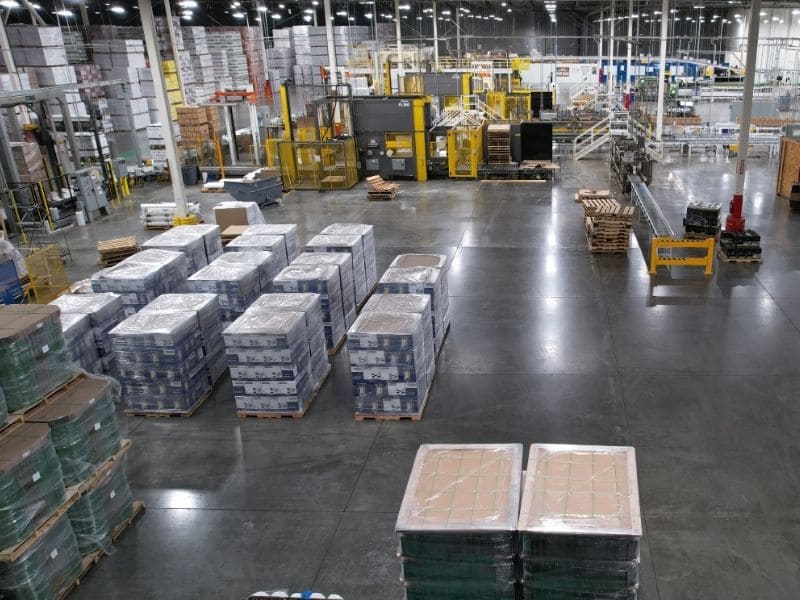
Ecommerce 3PL providers operate warehouse facilities where businesses store their inventory. Products are organized using warehouse management systems that track inventory levels and product locations.
Efficient storage systems ensure products can be retrieved quickly when orders are placed.
Businesses interested in the infrastructure behind inventory storage can explore third-party logistics warehousing to understand how warehouse operations support fulfillment.
When customers place orders, the fulfillment process kicks into action to ensure products are accurately picked, packed, and shipped on time. Efficient fulfillment operations are essential for maintaining customer satisfaction and supporting scalable ecommerce growth.
Typical fulfillment operations include:
Automation helps ensure accuracy and efficiency during the fulfillment process.
Online retailers that want a deeper explanation of fulfillment workflows can learn about 3PL fulfillment services, which explain the operational steps involved in order processing and shipping.
Shipping coordination is another critical responsibility of ecommerce 3PL providers. These providers use established carrier relationships, logistics technology, and operational expertise to streamline shipping processes and ensure orders reach customers efficiently.
Logistics teams manage:
Many providers operate multiple warehouse locations to reduce shipping distances and improve delivery speed.
Distributed logistics networks allow ecommerce businesses to reach customers faster while controlling shipping costs.
Returns are a common part of ecommerce operations, particularly in industries such as apparel and consumer electronics where customers frequently exchange or return products. Many 3PL providers manage reverse logistics processes to streamline returns handling and ensure inventory systems remain accurate and up to date.
3PL providers often manage reverse logistics processes that include:
Efficient returns management improves the customer experience while helping businesses recover inventory value and maintain accurate stock levels for future sales.
Outsourcing ecommerce logistics to a third-party provider can significantly improve operational efficiency while reducing the internal workload required to manage fulfillment processes. By leveraging specialized infrastructure, logistics expertise, and advanced technology, ecommerce businesses can scale faster and deliver a more consistent customer experience.
Outsourcing ecommerce logistics provides several operational advantages.
These benefits help ecommerce brands grow faster while maintaining efficient logistics operations.
Modern ecommerce logistics relies heavily on technology integrations that connect online stores with fulfillment systems to streamline operations.
Most 3PL providers integrate directly with ecommerce platforms so that customer orders, inventory data, and shipping information automatically flow into the warehouse management system without requiring manual input.
Common platform integrations include:
These integrations ensure:
Automation reduces manual work, minimizes the risk of human error, and helps ecommerce businesses maintain accurate inventory visibility while improving overall operational efficiency.
Many ecommerce businesses initially manage logistics internally, handling order fulfillment, packing, shipping, and inventory management on their own during the early stages of growth.
However, as order volumes increase and operational complexity expands, maintaining efficient logistics internally can become challenging and may begin to affect delivery speed, customer satisfaction, and overall scalability.
Businesses often consider an ecommerce 3PL when:
Outsourcing fulfillment allows ecommerce companies to maintain reliable delivery performance while freeing internal resources to focus on marketing, product development, and long-term business growth.
Ecommerce 3PL is a third-party logistics service where a specialized provider manages inventory storage, order fulfillment, pick and pack, parcel shipping, and returns processing for online retailers. Ecommerce 3PLs operate fulfillment centers equipped with advanced warehouse management systems (WMS), real-time inventory tracking, and direct integrations with platforms like Shopify, Amazon, Walmart Marketplace, BigCommerce, WooCommerce, TikTok Shop, eBay, and Etsy.
Services typically include eaches-level picking, custom branded packaging, kitting, subscription box assembly, Amazon FBA prep, and reverse logistics. By outsourcing to an ecommerce 3PL like Buske Logistics, online retailers streamline logistics while focusing on product development, marketing, and customer experience, the core activities that drive growth and brand equity.
Ecommerce 3PL helps businesses scale by providing immediate access to multi-facility warehouse networks, enterprise-grade WMS technology, established carrier relationships, and flexible labor pools without the capital investment of building in-house fulfillment. This allows brands to handle higher order volumes, expand into new geographies, and absorb seasonal surges or viral demand spikes without operational disruption.
A 3PL also reduces shipping costs through parcel carrier volume discounts, while strategically positioned facilities reduce shipping zones and shorten delivery times to meet 1–2 day expectations set by Amazon. Buske Logistics supports ecommerce brands at every stage of growth from emerging DTC startups to enterprise omnichannel shippers with scalable infrastructure that grows alongside the business.
Yes, most ecommerce 3PL providers integrate directly with leading online stores and marketplaces, including Shopify, Amazon, Walmart Marketplace, BigCommerce, WooCommerce, TikTok Shop, eBay, Etsy, Magento, and headless commerce platforms. These integrations allow orders, tracking numbers, inventory levels, and returns data to sync automatically in real time, eliminating manual order entry and reducing errors.
Strong 3PLs also integrate with ERP systems, plus order management systems (OMS) and shipping platforms. Buske Logistics supports easy multi-platform integrations that enable omnichannel inventory pooling, real-time visibility, and consistent customer experiences across DTC, marketplace, and retail channels.
Ecommerce 3PL providers support a wide range of industries, including apparel and footwear, consumer electronics, beauty and personal care, health and wellness, nutraceuticals, food and beverage, pet products, home goods, toys, sporting goods, and subscription box businesses. Each vertical has unique requirements. For example, beauty brands need ISO 22716-aligned handling and premium packaging, food and beverage shippers need FDA-registered FSMA-compliant facilities, nutraceuticals need lot tracking and cGMP processes, and pet brands need food-grade compliance and mixed-product handling.
Any online retailer that ships products to consumers, regardless of vertical, can benefit from 3PL services. Buske Logistics serves ecommerce brands across these industries with tailored programs that combine compliance, scalability, and proven operational expertise.
Ecommerce 3PL costs vary based on storage space, order volume, SKU count, parcel shipping rates, and value-added services such as custom packaging, kitting, gift wrap, returns processing, and Amazon FBA prep. Typical pricing structures include inbound receiving fees (per pallet or per case), storage fees (per pallet position or cubic foot per month), pick and pack fees (per order plus per additional unit), packaging materials, parcel postage, and returns handling fees.
Subscription box, branded unboxing, and influencer kit programs may include additional per-unit assembly charges. Most ecommerce brands save versus self-managed fulfillment through carrier volume discounts, shared overhead, and reduced damages. Buske Logistics offers transparent, customized pricing for ecommerce brands based on SKU profile, order velocity, and channel mix.
An ecommerce business should consider using a 3PL when order volumes outpace in-house capacity, shipping operations become too complex to manage internally, or when the business needs faster delivery, multi-channel fulfillment, or expanded warehouse space. Common triggers include processing more than 100–200 orders per day, expanding into Amazon FBA, Walmart Marketplace, or TikTok Shop, launching subscription programs, entering retail channels alongside DTC, or experiencing peak season strain during Q4 holiday surges.
Other indicators include rising fulfillment errors, slow shipping speeds, customer complaints, and founders spending more time packing boxes than building the brand. Partnering with a 3PL like Buske Logistics frees ecommerce operators to focus on growth while gaining access to enterprise-grade logistics infrastructure.
Running a successful e-commerce business takes more than great products; fast, reliable logistics are key to keeping customers happy.
Partnering with an ecommerce 3PL lets you scale without the hassle of managing warehouses or fulfillment processes. You can focus on growth while orders are fulfilled accurately and efficiently.
If you’re considering logistics outsourcing, start with our ultimate guide to third-party logistics. It explains how 3PL providers handle fulfillment, shipping, and returns to help you make smarter logistics decisions.
If your ecommerce business is growing and logistics operations are becoming more complex, partnering with the right 3PL provider can transform your supply chain.
Talk to our logistics specialists today to discover how a scalable e-commerce 3PL solution can help your business ship faster, reduce operational costs, and deliver a better customer experience.

Buske Logistics is a Top 20 Private Warehousing 3PL. Let's build a solution for your supply chain.