.png)
-p-130x130q80.png)

3PL services include warehousing, order fulfillment, inventory management, transportation management, and reverse logistics.
Third-party logistics providers offer a wide range of services designed to help businesses manage supply chains efficiently. Instead of operating logistics infrastructure internally, companies can rely on 3PL providers to manage storage, shipping, and distribution operations.
Understanding the different types of 3PL services helps businesses select the right logistics partner for their operational needs.
For a full overview of logistics outsourcing models, read our third-party logistics guide.
Third-Party Logistics (3PL) providers typically handle a wide range of logistics operations, helping businesses streamline their supply chain and focus on growth. These providers offer expertise, technology, and resources that many companies might not have in-house.
Key services provided by 3PL companies include:
Each of these functions plays a critical role at different stages of the supply chain, ensuring products move efficiently from manufacturer to customer while maintaining quality, accuracy, and cost-effectiveness.
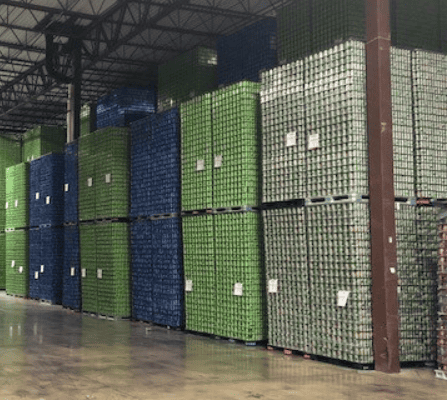
Warehousing is the foundation of most 3PL operations and plays a critical role in keeping your supply chain organized and responsive. When you partner with a 3PL provider, your products are stored securely in professionally managed facilities that are strategically located near major transport hubs and key markets, helping reduce transit times and improve delivery speed to your customers.
For your business, this means better inventory visibility, improved order readiness, and the flexibility to scale your storage needs as demand grows. Instead of worrying about storage capacity or operational complexity, you can focus on growing your business while the 3PL manages day-to-day warehouse operations efficiently.
Typical warehouse services include:
If you want a deeper look into how these operations work, you can learn more about 3PL warehousing.
Fulfillment services focus on processing customer orders and ensuring they move quickly and accurately from the warehouse to your customers. These services are especially important for ecommerce businesses that manage large volumes of daily orders and need a reliable system to keep operations running smoothly.
The typical fulfillment workflow includes:
Transportation services ensure your products move efficiently between suppliers, warehouses, retailers, and customers. With the right transportation strategy in place, you can reduce shipping costs while maintaining reliable and consistent delivery performance.
Transportation management also helps you coordinate complex logistics networks, especially when shipments move across multiple regions or countries. This ensures your products arrive where they need to be on time while keeping transportation operations organized and cost-efficient.
These services may include:
Inventory management ensures your stock levels are accurately tracked and maintained in real time. With proper inventory management, you can prevent shortages, avoid overstocking, and keep operations running smoothly.
Inventory management also helps you make informed decisions about reordering, allocation, and warehouse organization. This ensures your products are always available to meet demand while minimizing storage costs and reducing waste.
These services may include:
Reverse logistics focuses on managing returned products and ensuring they are handled efficiently once they move back through the supply chain. When managed properly, reverse logistics helps protect customer satisfaction while minimizing operational losses.
An organized returns process also allows your business to recover value from returned goods through restocking, refurbishment, or responsible disposal. This ensures returned inventory is processed quickly while maintaining accurate stock levels.
Common reverse logistics processes include:
Many logistics providers also offer specialized services that enhance and streamline your supply chain operations. These value-added services allow you to customize logistics workflows without needing to expand your internal team or operational infrastructure.
By integrating these services into your logistics strategy, you can improve operational efficiency while meeting specific retail, ecommerce, or distribution requirements. This flexibility helps your business adapt to different product needs, packaging standards, and customer expectations.
Examples include:
The main types of third-party logistics (3PL) services include warehousing, order fulfillment, transportation management, inventory management, distribution, and reverse logistics. These services help businesses outsource critical supply chain operations to experienced logistics providers instead of managing logistics internally. Many 3PL companies also provide specialized solutions such as eCommerce fulfillment, cross-docking, freight management, and value-added warehousing services. By using 3PL services, businesses can improve operational efficiency, reduce logistics costs, and scale supply chain operations more effectively.
3PL fulfillment services typically include order processing, inventory storage, picking and packing, shipping coordination, and real-time tracking for customer orders. Many third-party logistics providers also offer additional services such as kitting, subscription box assembly, custom packaging, labeling, returns management, and inventory reporting. These fulfillment solutions are designed to improve order accuracy, speed up delivery times, and streamline warehouse operations for both eCommerce and retail businesses. Advanced 3PL fulfillment providers also integrate with ERP and eCommerce platforms for better supply chain visibility.
3PL warehousing services allow businesses to store inventory in professionally managed warehouse facilities operated by logistics experts. These warehouses are often strategically located near major transportation hubs and customer markets to improve distribution efficiency and reduce shipping times. A 3PL provider manages inventory tracking, storage optimization, inbound receiving, and outbound shipping while using warehouse management systems (WMS) to maintain inventory accuracy. This helps businesses reduce overhead costs, improve inventory control, and scale storage capacity based on demand.
Transportation management in 3PL services involves coordinating the movement of goods from warehouses to customers, retail locations, or distribution centers. This includes carrier selection, freight planning, route optimization, shipment tracking, freight auditing, and cost management. Third-party logistics providers use transportation management systems (TMS) and logistics expertise to improve shipping efficiency, reduce freight expenses, and ensure on-time delivery performance. Effective transportation management also helps businesses improve supply chain visibility and customer satisfaction.
Yes. Many 3PL providers specialize in omnichannel fulfillment solutions that support shipping for eCommerce websites, online marketplaces, retail stores, and wholesale distribution channels. These providers integrate with platforms like Shopify, Amazon, Walmart Marketplace, and ERP systems to synchronize inventory and automate order processing across multiple sales channels. Omnichannel 3PL fulfillment helps businesses maintain accurate stock levels, reduce overselling, and deliver a consistent customer experience regardless of where orders are placed.
Yes. In addition to warehousing and transportation, many 3PL providers offer value-added logistics services designed to improve operational efficiency and support unique business requirements. These services may include kitting, custom packaging, labeling, product assembly, quality inspections, retail compliance support, subscription box fulfillment, and reverse logistics management. Value-added 3PL services help businesses streamline supply chain operations, improve brand presentation, and enhance the customer experience while reducing internal workload.
Businesses should evaluate their order volume, shipping requirements, inventory complexity, growth plans, and customer expectations when selecting a 3PL service provider. The right third-party logistics partner should offer scalable warehousing and fulfillment solutions, reliable technology integrations, strong transportation networks, and industry-specific expertise. Companies should also consider factors such as warehouse locations, service flexibility, reporting capabilities, and fulfillment accuracy. Choosing the right 3PL provider can improve supply chain efficiency, lower operational costs, and support long-term business growth.

Buske Logistics is a Top 20 Private Warehousing 3PL. Let's build a solution for your supply chain.