.png)
-p-130x130q80.png)

Whether you're expanding into new markets or improving fulfillment, choosing the right facility can have a major impact on your supply chain. One of the most common questions companies ask is: what's the difference between a distribution center and a warehouse?
The two are often used interchangeably, but they serve different purposes. A warehouse is built for storing inventory, while a distribution center is designed to move products quickly. Knowing the difference can help you cut costs, improve customer satisfaction, and build a more resilient network.
For over 100 years, Buske Logistics has helped manufacturers, retailers, and consumer brands optimize their warehousing and distribution. From long-term storage to high-volume distribution and omnichannel fulfillment, we deliver scalable solutions across North America for brands like PepsiCo, Diageo, Starbucks, Stellantis, and Golden State Foods.
In this guide, you'll learn:
Quick Answer: Distribution Center vs Warehouse
A warehouse is primarily used for storing inventory, while a distribution center is designed to receive, process, and quickly ship products to retailers, businesses, or customers. Warehouses focus on long-term inventory storage, whereas distribution centers prioritize inventory movement, order fulfillment, and efficient transportation.
Key takeaway: Every distribution center is a type of warehouse, but not every warehouse functions as a distribution center. The biggest difference lies in how inventory moves through the facility.
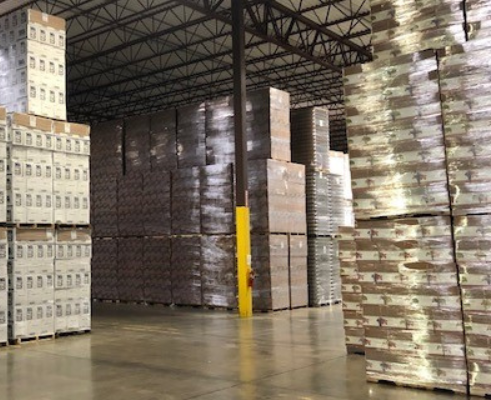
A warehouse is a facility built to receive, store, and protect inventory until it's needed, whether that's finished goods, raw materials, seasonal stock, or safety stock. Unlike a distribution center, the focus is on accuracy and protection rather than speed, so inventory may sit for weeks or months before shipping.
Common Warehouse Activities
If your business primarily needs inventory storage with occasional shipments, a warehouse is often the most cost-effective solution. For a deeper look at warehouse operations, read our guide on What Is a Warehouse Distribution Center?
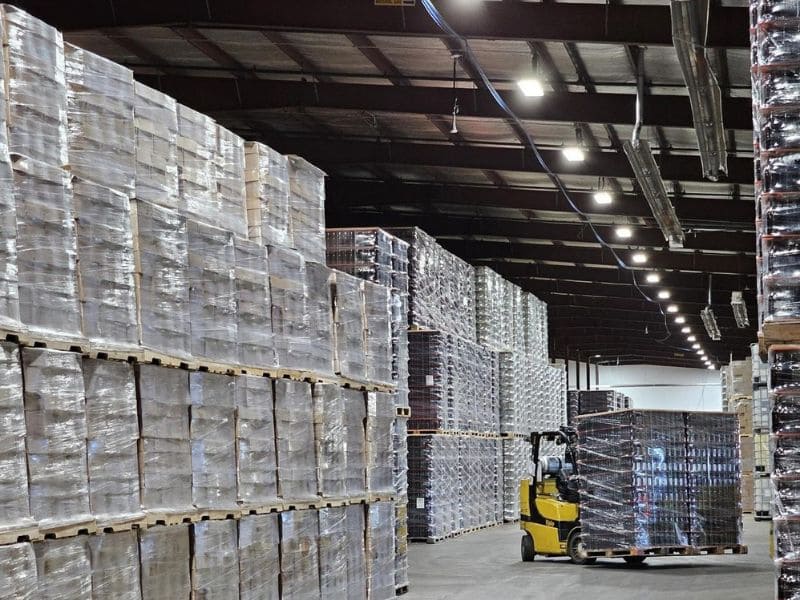
A distribution center is a logistics facility built to receive, process, and quickly ship inventory to retailers, distributors, and end customers. Unlike a warehouse, the focus is speed rather than storage, with products typically staying on-site only hours or days. It supports retail replenishment, B2B distribution, omnichannel fulfillment, and regional inventory positioning.
Common Distribution Center Activities
To keep inventory moving, distribution centers depend on advanced technology like WMS, barcode scanning, RFID, TMS, and real-time tracking. If your business ships daily or needs rapid replenishment, a distribution center can improve speed, visibility, and service.
Although both facilities store inventory, their operational goals are very different.
The biggest distribution center vs warehouse difference comes down to function. A warehouse stores products safely until they're needed, prioritizing protection and space utilization. A distribution center is built to move inventory quickly, with every process designed to keep products flowing.
Warehouse Goal: Store inventory.
Distribution Center Goal: Move inventory.
Warehouse inventory often stays in storage for weeks or months, while distribution centers move products through in hours or days. Faster turnover reduces storage and carrying costs, keeps inventory fresher, improves cash flow, and speeds up deliveries, making it essential for retailers and fast-moving consumer goods (FMCG) brands.
Warehouses typically ship on a scheduled basis to maximize efficiency, while distribution centers handle continuous inbound and outbound shipments. This enables faster deliveries, supports just-in-time inventory, and helps businesses meet retailer requirements and changing customer demand.
Another key difference between a warehouse and a distribution center is who they serve. Warehouses mainly support manufacturers, wholesalers, importers, and businesses that need secure storage before products are sold or distributed. Distribution centers serve a broader network and regularly ship to:
Because they handle multiple outbound destinations every day, distribution centers require highly coordinated inventory management, transportation planning, and order processing.
Both facilities use technology, but distribution centers require more advanced systems due to the speed and complexity of their operations. A traditional warehouse typically relies on barcode scanning, inventory software, and a Warehouse Management System (WMS) to track stock and optimize storage.
Distribution centers often integrate multiple technologies, including:
These tools reduce manual work, improve order accuracy, and accelerate fulfillment. In fact, Gartner predicts that by 2028, 80% of warehouses and distribution centers will deploy some form of warehouse automation equipment, highlighting how quickly the industry is shifting toward technology-driven operations.
A major warehouse vs distribution center difference is how orders are handled. Warehouses focus on storage, so fulfillment is often secondary and processed in batches or on a schedule. Distribution centers are built for fast, accurate fulfillment, with services like case, piece, and pallet picking, pick and pack, kitting, retail labeling, returns processing, and same-day or next-day shipping.
For businesses meeting retailer compliance or fast delivery demands, a distribution center offers a clear advantage. If you serve multiple sales channels, see our guide to Omnichannel Distribution.
Transportation plays a much larger role in distribution centers. Warehouses ship only when inventory is needed, while distribution centers run as transportation hubs with constant inbound and outbound activity.
They support LTL, FTL, and intermodal shipping, cross-docking, pool distribution, and route optimization, all driving faster transit times and stronger service. See our guide to 3PL for LTL Shipments for more.
Another key difference between a warehouse and a distribution center is the services offered beyond storage. Warehouses focus on secure inventory storage, while distribution centers provide value-added services such as product inspection, kitting, light assembly, custom packaging, retail labeling, and repackaging to improve efficiency and speed up fulfillment.
Modern supply chains rely on real-time inventory data. While warehouses focus on storage and stock control, distribution centers require greater visibility because inventory moves constantly. Real-time tracking helps prevent stockouts, reduce excess inventory, improve order accuracy, and support better business decisions.
The biggest difference between a warehouse and a distribution center is speed. Warehouses prioritize efficient storage, while distribution centers focus on fast, accurate order processing and continuous inventory movement. This makes distribution centers ideal for industries that require quick fulfillment and frequent shipments.
Many businesses also ask about the warehouse vs distribution center vs fulfillment center comparison. Although these facilities share similarities, each serves a different purpose.
Here's a simple way to think about it:
Some modern logistics providers, including Buske Logistics, operate facilities that combine all three functions, allowing businesses to scale without changing providers as their needs evolve.
A warehouse is the right choice when you need secure, long-term storage rather than rapid order fulfillment. It's ideal for storing seasonal or overflow inventory, building stock before peak seasons, holding manufacturing materials, importing products ahead of demand, or storing regulated and high-value goods.
Warehouses are best suited for manufacturers and businesses with predictable shipping schedules. See our guide to Effective Warehouse Capacity Planning for tips on maximizing space.
A distribution center is the better choice when speed and efficient inventory movement are priorities. It's ideal for businesses that ship orders daily, supply multiple retail locations, support wholesale or omnichannel operations, need faster replenishment, require value-added services, or experience high inventory turnover.
Distribution centers are especially valuable for companies serving national retailers with strict shipping deadlines and compliance requirements. Compare options in our guide on Regional vs National Distribution Centers.
Understanding the distribution center vs warehouse definition becomes easier when looking at real business scenarios.
Food & Beverage
Beverage manufacturers often store finished products in a warehouse, then move them to regional distribution centers for delivery to grocers, restaurants, and wholesalers. This lowers transportation costs while keeping products close to customers.
Retail
With stores replenished several times a week, distribution centers move inventory quickly from suppliers to shelves, especially during seasonal promotions and holidays. Learn more in our guide to the Retail Supply Chain.
Automotive
Automotive manufacturers use distribution centers to deliver parts quickly to assembly plants and dealerships, reducing delays and supporting just-in-time manufacturing.
Consumer Packaged Goods (CPG)
Fast-moving CPG brands rely on high-volume distribution centers to replenish retailers quickly, making inventory accuracy and transportation coordination essential to service levels.
Managing warehouses and distribution centers requires significant investments in facilities, labor, technology, transportation, and inventory management. For many companies, partnering with an experienced third-party logistics (3PL) provider is a more cost-effective and scalable solution.
A trusted 3PL can help you:
If you're considering outsourcing logistics, our guide on What Is a 3PL? explains how third-party logistics providers help businesses improve supply chain performance:
With over 100 years of experience, Buske Logistics helps manufacturers, retailers, and consumer brands across the U.S. and Canada build faster, more efficient supply chains. From dedicated contract warehousing to high-volume distribution and end-to-end optimization, we deliver solutions built around your goals.
Our capabilities include:
Top brands like PepsiCo, Diageo, Starbucks, and Stellantis trust Buske Logistics to manage complex supply chains with accuracy and efficiency. We design tailored strategies, not one-size-fits-all solutions, and can help you choose the right fit between a warehouse and a distribution center.
Choosing the wrong facility can increase costs, slow deliveries, and reduce efficiency. Before deciding, make sure your choice aligns with your business goals, inventory strategy, and fulfillment needs, not just your current storage requirements.
Here are some of the most common mistakes businesses make:
A warehouse may look cheaper upfront, but higher labor, transportation, and fulfillment costs can quickly wipe out those savings. Evaluate total supply chain costs rather than storage alone, since the right strategy often lowers overall spend even when facility costs run higher.
How quickly your inventory moves is one of the clearest signals of which facility you need. Slow-moving products that sit for months are better suited to a warehouse, while constantly replenished stock runs more efficiently through a distribution center. Knowing your turnover rate leads to smarter long-term decisions.
Many businesses choose a facility based on today's needs instead of tomorrow's growth. As order volumes increase, customer expectations change, and new sales channels emerge, logistics requirements also evolve.
Ask yourself:
Modern supply chains rely on real-time data, and without the right technology, businesses often face inventory inaccuracies, shipping delays, manual errors, poor visibility, and higher labor costs. Investing in tools like a Warehouse Management System (WMS), barcode scanning, EDI, and real-time reporting improves accuracy, visibility, and operational efficiency.
Running your own warehouse or distribution center demands heavy investment in facilities, equipment, technology, labor, transportation, safety, and compliance. For many growing businesses, partnering with an experienced third-party logistics provider offers greater flexibility while reducing costs and complexity.
If you're still deciding between the two, start by evaluating how your inventory moves through your supply chain.
A warehouse is usually the better choice if you:
A distribution center is often the better option if you:
Many businesses benefit from a mix of both, storing inventory in a warehouse before moving it to a regional distribution center for final delivery. McKinsey research shows leading companies tailor their network to the speed, cost, and service needs of each customer segment, and an experienced 3PL can help you design the right one.
Here are the most important points to remember:
For over 100 years, Buske Logistics has helped businesses across North America improve warehousing, streamline distribution, and optimize supply chains. We deliver scalable solutions in contract warehousing, B2B fulfillment, and supply chain optimization, which is why leading brands and Fortune 500 companies trust us with their operations.
Ready to Optimize Your Supply Chain?
Whether you need a warehouse, a distribution center, or both, our experts will build a customized strategy to improve efficiency, reduce costs, and support long-term growth. Contact Buske Logistics today to strengthen your supply chain.
A warehouse is primarily used for storing inventory until it is needed, while a distribution center is designed to receive, process, and quickly ship products to retailers, distributors, businesses, or customers. Distribution centers focus on inventory movement, whereas warehouses focus on inventory storage.
No. Although both store inventory, they serve different purposes. Warehouses emphasize long-term storage, while distribution centers prioritize fast order processing, inventory turnover, and efficient distribution.
No. Warehousing is one part of the distribution process. Distribution includes receiving, inventory management, order fulfillment, transportation, shipping, and returns management, making it much broader than storage alone.
The primary purpose of a distribution center is to move products through the supply chain quickly and efficiently. It helps businesses improve delivery speed, increase inventory accuracy, reduce transportation costs, and support retail, wholesale, and omnichannel operations.
A warehouse is best for businesses that need long-term inventory storage, seasonal inventory management, safety stock, manufacturing support, or overflow storage capacity.
A distribution center is ideal for businesses that ship products frequently, replenish retail stores, support multiple sales channels, or require fast order fulfillment and value-added logistics services.
Yes. Many third-party logistics providers, including Buske Logistics, offer integrated warehousing and distribution services. This allows businesses to store inventory, manage orders, optimize transportation, and scale operations through a single logistics partner.

Buske Logistics is a Top 20 Private Warehousing 3PL. Let's build a solution for your supply chain.