.png)
-p-130x130q80.png)
A fulfillment center processes and ships individual orders directly to end customers, while a distribution center moves bulk inventory to retailers, wholesalers, or other facilities. Knowing which model fits your operation can save you money, reduce delivery times, and prevent costly supply chain mistakes.
A fulfillment center focuses on individual customer orders. When someone buys online, the order is routed to the facility, where workers or robots pick, pack, label, and ship the item through carriers like UPS, FedEx, or USPS. Speed is the priority to meet fast delivery expectations.
Fulfillment centers typically hold less inventory than distribution centers because products move through quickly. They focus on pick-and-pack, returns, kitting, and services like custom inserts or gift wrapping. For direct-to-consumer businesses selling online, a fulfillment center is often a key part of the supply chain.
For brands managing retail fulfillment across multiple channels, the fulfillment center becomes the critical last node before a product reaches a customer's hands. Getting that node right is what separates brands with five-star reviews from brands dealing with a flood of refund requests.
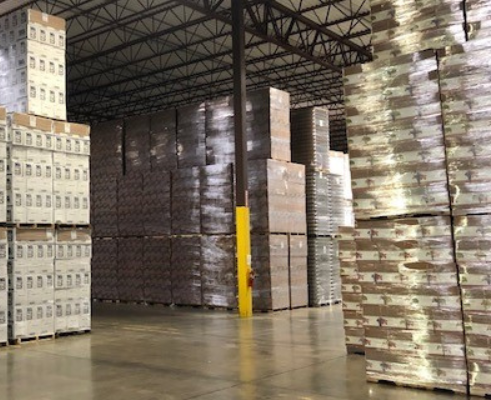
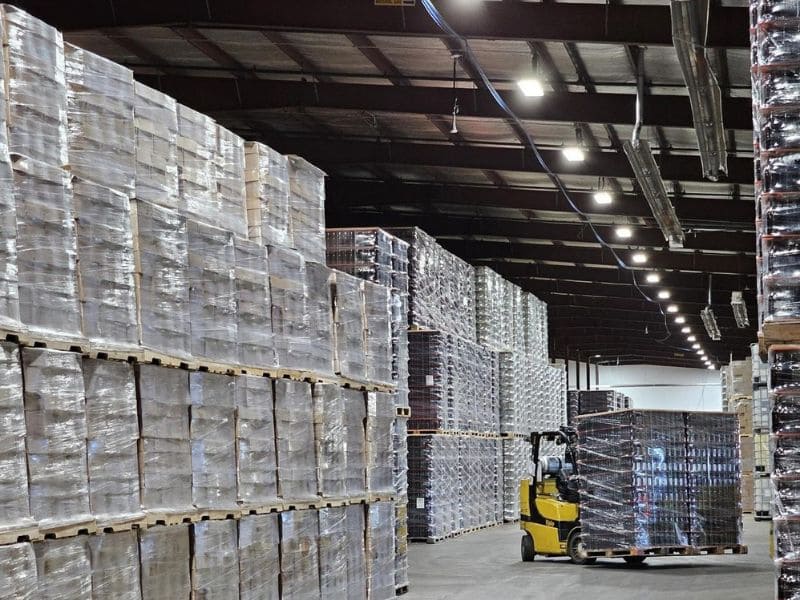
A distribution center operates at a larger scale, moving inventory in bulk from manufacturers to stores, regional warehouses, or other fulfillment points. For example, a grocery chain may receive truckloads of beverages, sort them by destination, and ship them to individual stores.
Distribution centers often use cross-docking, where inbound freight is moved directly to outbound trucks with little or no storage. They typically handle larger, heavier shipments and serve B2B customers such as retailers, distributors, and other warehouses.
Understanding the nuances between distribution vs retail supply chain models is important when deciding which infrastructure your brand actually needs.
Here is a straightforward breakdown of how the two facility types differ across the dimensions that matter most to logistics decision-makers.
The fulfillment center vs distribution center decision is not always binary. Many businesses need both, and some facilities are designed to handle both functions under one roof.
The smartest supply chains integrate both models rather than choosing one over the other. Here is a practical example: a beverage brand ships full truckloads of product from its manufacturing plant to a distribution center. From there, bulk orders go out to grocery chains and big-box retailers.
Separately, the brand also sells branded merchandise and gift sets through its own e-commerce website. Those individual online orders get routed to a fulfillment center where they are picked, packed, and shipped to individual buyers.
Buske Logistics has supported both large-scale distribution and direct-to-consumer fulfillment for leading North American brands, including PepsiCo, Molson Coors, and Diageo. With more than 100 years of industry experience, Buske brings expertise across high-volume distribution, fulfillment, and custom packaging that newer 3PL providers may not have.
A well-designed retail warehouse strategy often sits at the intersection of these two models, especially for brands that sell through both physical retail and online channels simultaneously.
Hybrid fulfillment distribution centers are increasingly common among mid-market brands expanding into omnichannel retail. Instead of maintaining separate facilities, teams, leases, and technology, one facility handles both B2B and B2C operations.
This model works well when both order volumes are significant but don’t require dedicated facilities. However, managing individual orders and bulk freight under one roof requires strong warehouse management systems, clear zoning, and experienced leadership.
According to the U.S. Bureau of Labor Statistics, the transportation and warehousing sector is expected to add nearly 199,000 jobs between 2024 and 2034, driven in part by continued demand for e-commerce logistics and distribution services. As brands face growing fulfillment demands, a hybrid facility can be a smart way to scale capacity without doubling your fixed cost base.
Different industries lean heavily toward one model or the other, though many use both.
The Consumer Brands Association has emphasized the importance of resilient supply chains and continued investment in transportation and supply-chain infrastructure for the CPG industry, reinforcing why choosing the right facility type is a strategic decision, not just an operational one.
When you are evaluating 3PL partners, understanding whether you are working with a distributor or a fulfillment provider affects the contract terms, the KPIs you set, and the technology integrations you need.
A distributor typically moves products between supply chain tiers, such as from manufacturers to retailers. For example, a fulfillment provider focuses on the consumer-facing side, picking, packing, and shipping individual orders. Some 3PLs, including Buske Logistics, support both models, giving clients flexibility as their sales channels evolve.
When evaluating providers, ask whether they have experience with your specific order profile. A 3PL that excels at pallet-level distribution may not be equipped for high-SKU, high-volume e-commerce fulfillment, and vice versa.
Buske operates more than 40 facilities with over 8.5 million square feet of warehousing, packaging, and distribution space across the U.S. and Canada, providing the infrastructure to support both models at scale.
You can explore Buske's full range of 3PL services, or contact us directly and discuss which facility model fits your specific operation.
Amazon’s network shows how fulfillment and distribution can be optimized for different roles. Its fulfillment centers handle individual consumer orders, while distribution and sortation centers move and route packages efficiently.
The key lesson is simple: match your infrastructure to your order profile. Brands shipping mostly pallets to retailers need distribution infrastructure, while those shipping individual parcels to consumers need fulfillment capabilities. If you do both, choose a partner equipped to handle both at scale.
Before signing any 3PL agreement, it helps to work through a few key questions about your current and projected operation.
Your answers will point you clearly toward a fulfillment center, a distribution center, or a hybrid model. If your answers are still shifting because your business is growing or pivoting channels, that is actually the strongest case for partnering with a 3PL that can flex with you.
If you are ready to talk specifics, the team at Buske Logistics can walk through your current supply chain and recommend the right facility model for where your business is headed. Connect with Buske Logistics to get started.
If you are still weighing which facility type fits your business, the worst move is guessing. A wrong infrastructure decision can tie up capital, inflate your cost per order, and slow down your ability to scale when demand spikes.
Buske Logistics has spent over 100 years building supply chain solutions across North America, and our team has seen every combination of fulfillment and distribution challenge a growing brand can face.
Contact Buske Logistics today and tell us where your operation stands right now, and where you need it to be in 12 months. One conversation with our team can save you months of costly trial and error.
A fulfillment center ships individual orders directly to end consumers, while a distribution center ships bulk freight to retailers, wholesalers, or other facilities in the supply chain.
The key distinction comes down to the customer on the receiving end. Fulfillment centers focus on B2C orders, while distribution centers handle B2B shipments at the pallet or case level. Some 3PL providers, including Buske Logistics, can handle both.
Yes, and for many mid-size to large brands, using both is the standard approach rather than the exception. A consumer packaged goods brand, for example, may use a distribution center for bulk shipments to retailers while using a fulfillment center for individual e-commerce orders. Both can be managed through one 3PL partner with the right infrastructure, such as Buske Logistics.
No. Amazon separates its fulfillment centers, which handle individual consumer orders, from its regional distribution and sortation centers, which sort and route packages between facilities.
Amazon’s network shows why these facility types serve distinct roles. Fulfillment centers handle pick, pack, and ship, while distribution and sortation centers focus on bulk movement and routing. Combining these functions without careful planning can create bottlenecks and increase shipping costs.
Start by looking at your order profile: if the majority of your shipments are individual parcels going to consumers, you need fulfillment infrastructure; if most shipments are pallets or cases going to retailers, you need distribution infrastructure.
Consider your SKU count, seasonal volume, delivery SLAs, and B2B-to-B2C mix. If your channels are shifting or you’re expanding into omnichannel retail, a hybrid facility or 3PL supporting both models may be the best fit. Defining these needs upfront leads to more productive 3PL discussions and accurate contract terms.
Look for a 3PL with documented experience across both B2C fulfillment and B2B distribution, a technology stack that can handle both order types, and physical infrastructure at a scale that matches your current and projected volume.
References from recognizable brands can signal proven operational capability. Buske Logistics serves clients including PepsiCo, Ball Corporation, and Stellantis. Beyond client names, evaluate facility count, square footage, WMS capabilities, and how the 3PL handles volume surges. With 40+ facilities across the U.S. and Canada, Buske offers the infrastructure to support complex, high-volume operations.

Buske Logistics is a Top 20 Private Warehousing 3PL. Let's build a solution for your supply chain.